Echo Chamber: After dark, under urgency

Chris Bishop and Tamatha Paul.
A week of urgency has seen a flurry of laws speed through the legislative process, and some late nights for MPs.
A little under 30 minutes before question time was set to roll on Tuesday afternoon, a power outage took the lights out around parliament. Magnetic doors clicked shut, computer screens flicked off, and MPs took questions from reporters underneath the dim luminescence of battery-powered Christmas lights. Power was restored before full anarchy reigned, but it was a good reminder that democracy is a hard thing to do well in the dark.
Inside the debating chamber, the show went on. Some corrections were in order, and not just for the fuse box: independent MPs Tākuta Ferris and Mariameno Kapa-Kingi had points of order for votes cast last week. Mr Speaker, let the record show that we didn’t mean to vote against the Medicines Amendment Bill – we’re actually in favour. Green MP Ricardo Menéndez March, who lodged the votes for the MPs in their absence, sank down in his chair.
That question time session largely revolved around the economy, and National minister Chris Bishop’s diverting of $27m in Kāinga Ora funding to build a new bridge in his electorate. Bishop got two clips around the ear from Labour: one from MP Tangi Utikere, who questioned Bishop on the funding in his role as transport minister, and another from MP Kieran McAnulty, who had the same questions, but for the housing minister (aka Bishop). The déjà vu of it all briefly threw Winston Peters off course: “What day is it?”
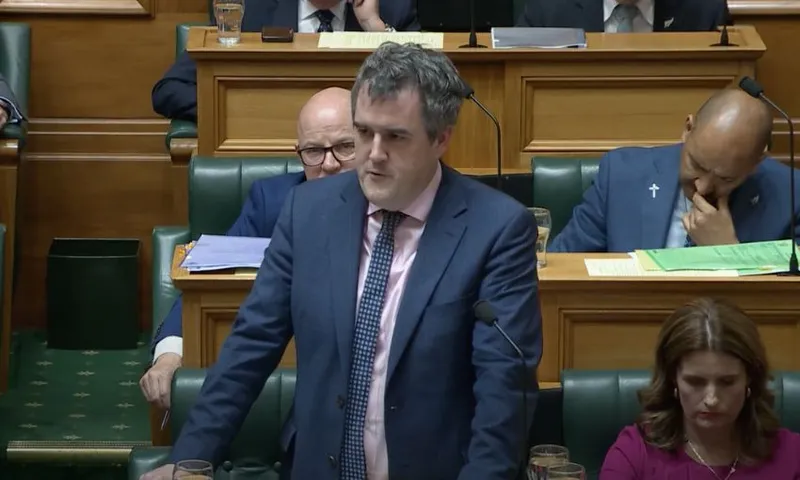
Afterwards, with the House sitting under urgency for the week (and the workload at risk of keeping some MPs here until Saturday), a number of bill readings were knocked out. These included the first reading on Bishop’s bill to digitise the road user charge system, and eventually replace fuel tax with charges based on distance, time, location and vehicle type.
Building and construction minister Chris Penk managed two first readings for bills in his portfolio, and education minister Erica Stanford and associate education minister David Seymour’s Education and Training (System Reform) Amendment Bill, which gives the education minister further power to change school curriculums and create alternative options, passed its first reading too. Defence minister Judith Collins managed to get through the second reading of the Defence (Workforce) Amendment Bill, which allows defence personnel to stand in for civilian staff on strike.
Collins’ bill was passed by Wednesday morning, with every amendment suggested by the opposition voted down. At the third reading, Green MP Teanau Tuiono wondered why the bill was worth progressing under urgency – is it because Christmas is around the corner? Is the minister aware of future strike action? Is it cost-cutting? “If so, just be straight up about it,” was Tuiono’s advice.
And Te Pāti Māori MP Oriini Kaipara, speaking on the bill in her perpetual broadcaster voice, accidentally spilled a glass of water over her bench and cut off her microphone. On the other side of the House, National backbencher Tim Costley eased the awkwardness by singing a bit of Beyoncé as Kaipara shuffled to another seat: “To the left, to the left.” Kaipara laughed: “That’s right!” For those interested, the last time ‘Irreplaceable’ was mentioned in the House was by Labour’s Barbara Edmonds in March 2024.
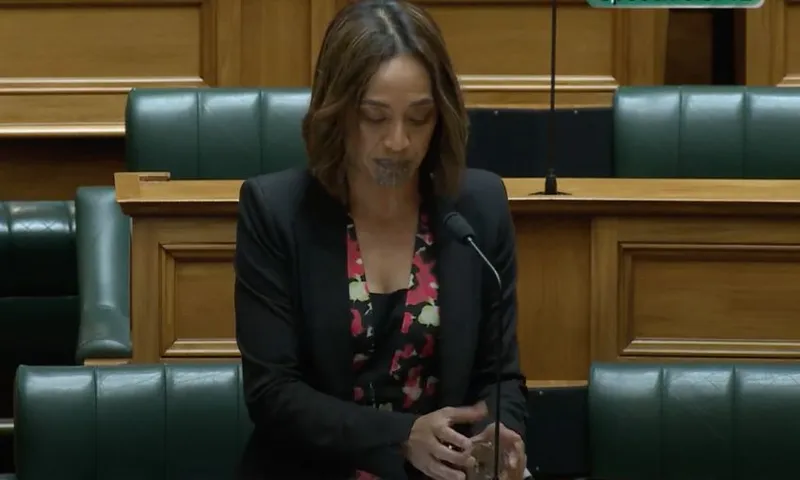
Smoking rates and food prices took up much of oral questions on Wednesday, with associate health minister Casey Costello celebrating some really great news: there’s been a 0.1% decrease in smoking since last year. “Thankfully, young people aren’t taking [smoking] up,” Costello declared, but the opposition wanted her to finish the thought: “they’re vaping!”
It was another headachey session for Bishop, who was questioned by Kaipara on how Auckland’s new housing plan might affect urupā and wāhi tapu. Over shouting matches on the opposition side, Bishop let Kaipara know that he wasn’t very sure what the answer would be, and maybe she should’ve given him a heads up next time she wants to know something.
NZ First’s Shane Jones rose, but he was shot down by speaker Gerry Brownlee, who let him know the party had run out of supplementaries. “Amateur!” Ngarewa-Packer called. “First rodeo?” asked Green co-leader Chlöe Swarbrick.
When Ngarewa-Packer left the House, her MP Hana Rawhiti Maipi-Clarke went to sit with Mariameno Kapa-Kingi and Tākuta Ferris in the no man’s land of the back backbenches. And an hour later, when the press gallery reporters were just about ready to leave as well, an email landed in inboxes: health minister Simeon Brown announcing a ban on puberty blockers.
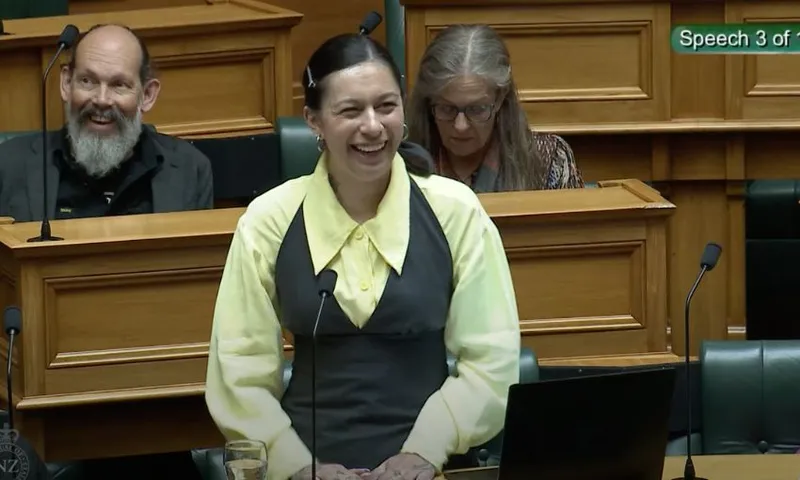
Later that night, while much of the country was already in bed, parliament sped through a committee of the whole and a third reading of justice minister Paul Goldsmith’s amendment to the Crimes Act, which criminalises stalking and harassment. There was a win for Green MP Tamatha Paul, who had the whole House back her amendment to the bill over police notifying victims ahead of perpetrators if the latter is issued with a notice of offending. It wasn’t a “strictly necessary” amendment, Goldsmith said, but since it was brought up in the select committee, we’re happy to accept it.
“This is a bill that’s gone through this term that I will probably remember for the rest of my life,” Paul said. “I think a lot of the people in this room right now can be so proud of themselves for being a part of history … we’re finally here passing New Zealand’s first bill that defines and acknowledges stalking as a form of abuse.” Just a few minutes past 11pm, the amendment became law.
Thursday was all about Bishop’s amendment bill to review the Clean Car Standard, which will see a decrease in the CO² emissions targets vehicle importers are expected to meet. It passed just before question time, where Green MP Julie Anne Genter questioned Bishop over “his government completely [giving] up on electrifying our vehicle fleet because it’s inconvenient for the importers of highly polluting motor vehicles”.
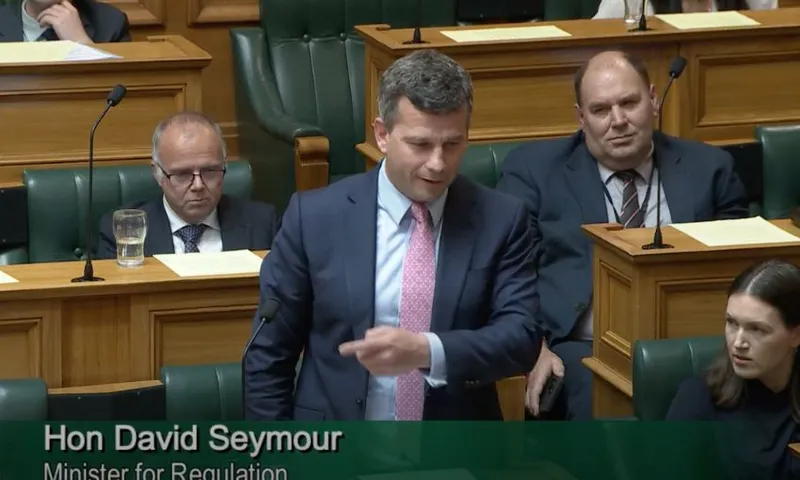
When Bishop was done telling Genter that her take on the situation was a “mischaracterisation”, David Seymour rose for a point of order. Mr Speaker, Seymour began – you’ve forbidden members from wearing the badges of political parties, so why should Genter be allowed to wear a Palestinian flag pin on her lapel?
And Brownlee, having last week whipped the party whips into letting the MPs know “that type of display isn’t acceptable”, asked Genter to remove the pin, or leave the House altogether. Genter looked offended, but she removed the pin from her lapel, and the parade continued. But it does make you think: what would Chlöe Swarbrick do?

Lyric Waiwiri-Smith
Lyric is an award-nominated politics reporter at The Spinoff. She covers parliament from the press gallery, pens the weekly column One MP, One Pint and is endlessly curious about what makes our decision-makers tick. Off the clock, Lyric loves a live gig, a cold brew, and being a Wellingtonian (on a good day).


