Violent metaphors and dark insinuations: Auckland’s big housing showdown, live

Scenes from Auckland Council’s extraordinary policy and planning committee meeting today
Two million potential houses. At least two million potential complaints.
Auckland Council’s policy and planning committee is meeting today to vote on a new plan that would zone for two million homes, primarily around train stations and rapid bus routes. The plan is a response to legislation put forward by housing minister Chris Bishop, who has allowed the council to opt out of an ambitious, bipartisan 2023 townhouse law, but forced it to allow at least as many houses as would have been there before.
It’s been controversial. Some councillors say we don’t need to zone for that much housing. Act leader David Seymour has raised concerns about inadequate infrastructure for apartments in inner city suburbs like Parnell. It’s unclear exactly what these opponents want, but some are murmuring about pulling a Christchurch and simply refusing to follow the government’s legislation. Others will at least try to keep as many apartments as possible out of richer, inner-city suburbs like Mt Eden, Parnell, Herne Bay, and Grey Lynn.
Advocates for the plan, including mayor Wayne Brown, argue the council can’t just opt out of following the government’s legislation. They say councillors can either adopt it, or go back to the townhouse bill which allowed three houses of three stories on almost every section, including on flood plains. They argue it’s better to build in places with pipes and public transport routes, rather than in greenfields areas with no infrastructure on the outskirts of the city. We’re updating live as the two factions go head to head in the council chambers from 10am.
Things are kicking off

Councillors are settling in. Proposed amendments are being distributed. The mayor is already grumpy. Council sources are telling The Spinoff that the plan will likely pass but it will be a “long, horrible, day”. Exciting stuff! Buckle in!
An innovative approach
As policy and planning committee chair Richard Hills kicks things off, Waitematā local board member Allan Matson stands up and tries to raise a point of order. One problem: he’s not actually a councillor and isn’t voting in this meeting. His attempt has been rejected, most likely primarily because raising a point of order is not a thing he’s allowed to do.
Christine Fletcher proposing amendments
Albert-Eden-Puketāpapa councillor Christine Fletcher has been one of the loudest opponents of the government’s proposed upzoning. She’s putting forward a host of amendments, which seem to be primarily aimed at extending the timeframe for council to adopt this plan and allowing for more changes based on community consultation. A cynic might think it’s buying time to rally more opposition, and perhaps convince the government to amend or back off its legislation. But a proponent of the changes might argue it’s simply enabling good process.
Some housing mythbusting
The council’s strategy chief Megan Tyler delivers an overview of the council’s new plan. She makes an effort to head off a few of the main objections to the plan, reiterating that zoning for two million homes isn’t actually the same as actually building two million homes. Opponents have persistently blurred the lines between enabled housing capacity and actual housing, telling people the government is making council build two million houses to cater for a projected future Auckland population of six million people. That line of thinking assumes developers will build the maximum number of possible houses on every single section, and that simply won’t be the case, says Tyler.
Auckland deputy mayor Desley Simpson has followed with a little mythbusting of her own, asking planning staff to confirm the council itself asked government for a chance to opt out of its housing bill, and that it isn’t allowed to zone for fewer than two million houses. She also gets them to confirm a “staged approach” to upzoning isn’t on the cards. The staged approach has been advocated by Albert-Eden-Puketāpapa councillor Christine Fletcher. Mayoral candidate Kerrin Leoni has also said she’ll look into it in appearances on the campaign trail.
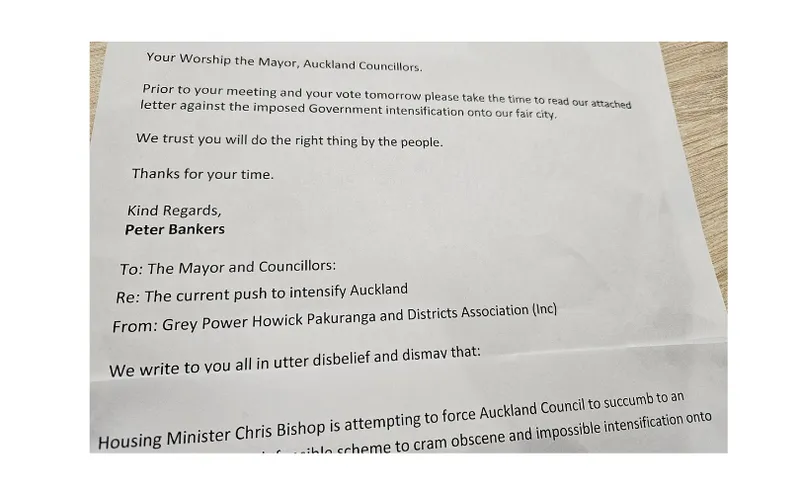
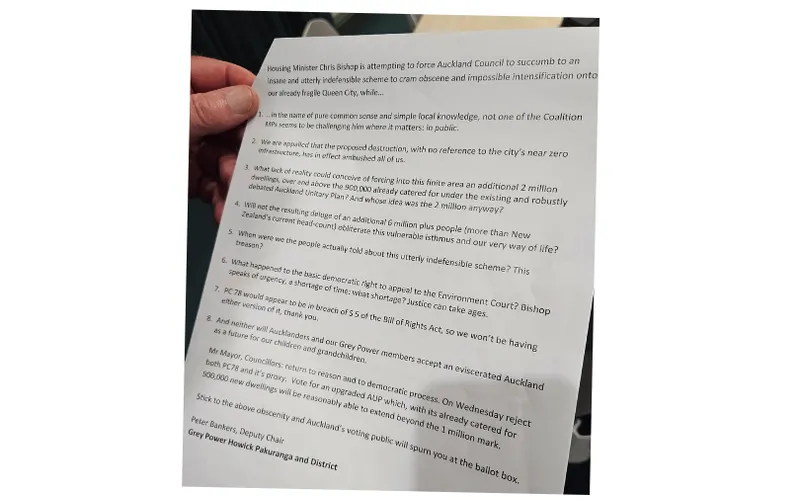
An incendiary letter from Howick Grey Power
Councillors have received a stirring letter from Howick Grey Power’s deputy chair Peter Bankers ahead of the meeting. It raises concerns about the city being “eviscerated” by “an additional two million dwellings”. “We are appalled at the proposed destruction, with no references to the city’s near zero infrastructure, has in effect ambushed all of us,” the letter says. A few things to note:
1. The plan enables capacity for two million dwellings total, not two million additional dwellings.
2. Evisceration refers to the removal of internal organs from a body, whereas this plan enables new housing, meaning in the metaphor it would be more like adding some some extra kidneys, intestines, and suchlike.
Christine Fletcher just wants more time
It’s question time. That means councillors are allowed to ask council officers to clarify stuff but not argue their political positions. Many of them have found a sly way to get around those rules: asking incredibly long questions infused with lashings of subjective speechifying. Usually they get away with it too, but Albert-Eden-Puketāpapa councillor Christine Fletcher has just pushed things a little too far lamenting what she believes is the inordinate pressure Aucklanders have been under to give feedback on this plan change in a short amount of time. “Can we just state a question,” interrupts planning committee chair Richard Hills.
Fletcher’s main question is whether the council can ask for more time to notify its new plan. She seems to have given up on zoning for fewer than two million houses, after seemingly being threatened with – in her words – “planning prison” during workshops ahead of the meeting. “What information is available to us that we need not submit a draft plan change by the 10th of October – not challenging the yield, not challenging these other matters – just providing a little bit more time to make sure planning errors are corrected?” she asks.
The answer is: not much. Officers say councillors have to be able to explain to housing minister Chris Bishop how they’re going to provide for two million houses by October 10, and that’s going to be difficult without approving a plan change.
Waitematā councillor Mike Lee has continued in a similar vein, asking officers whether a plan change of this magnitude has ever had such a short consultation period before. As a reminder, this plan is a response to the Medium Density Residential Standards, which were passed in 2021, and were themselves an amendment to the National Policy Statement on Urban Development, which was put in place in 2020.
Mike Lee repeats some misinformation
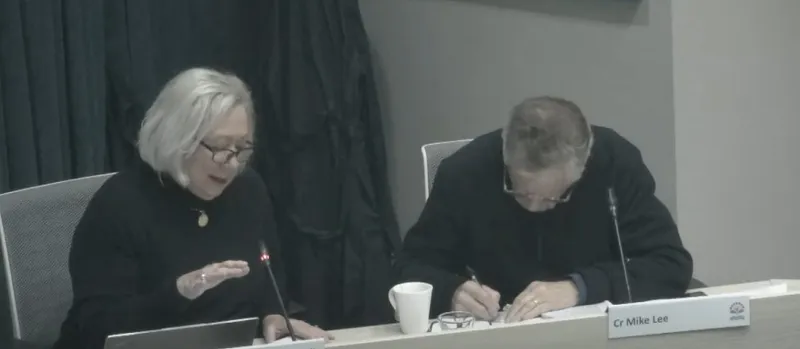
We’re going round in circles a bit here. Waitematā’s Mike Lee has repeated concerns about the council being forced to allow two million dwellings for a population of seven million people. “How can one explain the two million dwellings, succinctly please if you could?” he asks.
Council strategy chief Megan Tyler’s answer is that it would be concerning if the council was being forced to provide for two million houses and seven million people. It’s a relief then that it’s not. “I would be very concerned like you if enabled capacity meant dwellings on the ground, but it doesn’t,” she says. “By any reality in this life, or possibly future lives.”
Basically, the council has to enable two million houses, but far fewer will actually be built. Council economist Gary Blick explains the benefits of zoning for more houses than you need. First, even if you allow apartments on a piece of land, that doesn’t mean the owners will want to sell, or that developers will want to build there. Second, if lots of places are zoned for apartments, it will reduce the premium people have to pay for that land. “The idea of having abundant capacity is that you will have more competition among landowners,” he says. “That will reduce their individual market power and put the price of land, the price of housing, on a more moderate path than would otherwise be the case.”
“Marching in lockstep, and a march of folly,” replies Lee, ominously.
There’s a lengthy pause.
“OK,” says planning committee chair Richard Hills, before moving onto the next question.
It all comes back to the two million capacity
Waitākere councillor Ken Turner uses his questions to hit the same themes as Christine Fletcher and Mike Lee before him. He’s very thankful for all the one-on-one workshops and information from council officers, but just doesn’t want to zone for two million potential houses. “I can’t get over being told we have to sign up to a capacity that we’ll never use in our lifetimes and maybe not in the lifetimes of others,” he says.
There’s clapping from the public gallery.
“Hear hear,” comes one, relatively muted, cry.
Officers have already answered this one though. In summary, if you just zone for the exact number of houses you need, there’s little choice about where to build, and no Plan B if some of that land doesn’t get developed. “Plan-enabled capacity is about providing choice,” says council strategy chief Megan Tyler.
Council economist Gary Blick echoes her point. “It does provide choice and provide the market over time more affordable options than otherwise,” he says. These staff are tasked with providing information on a complicated plan change, but their toughest challenge today is finding different ways to answer the same question.
Break time!
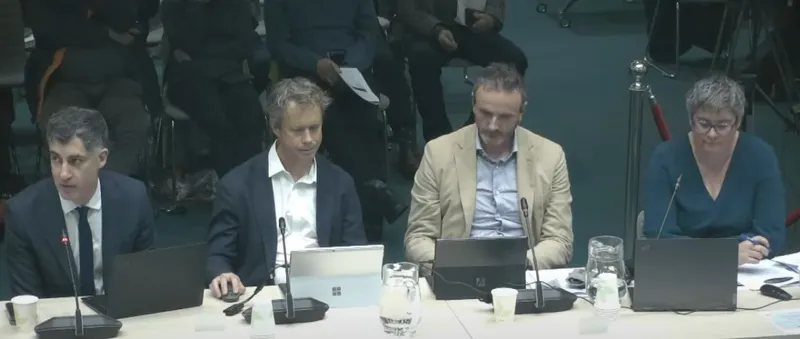
Planning committee chair Richard Hills has interrupted the scintillating urban planning discussion to allow people to go to the bathroom.
Before he did, Waitākere councillor Shane Henderson got council economist Gary Blick to confirm that enabling more houses brings prices down. It was easily the shortest question of the day.
Wayne Walker weighs in
Another opponent of this plan, Albany councillor Wayne Walker, uses his questions to return to one of his favourite arguments: that because upzoning increases the value of land, enabling apartments makes housing more unaffordable. “If you can put five or six houses on this property, would it be correct to say an ordinary person is going to be priced out of buying that property if they don’t want to put five or six houses on it,” he asks council economist Gary Blick.
Well, yes, maybe, replies Blick. But zoning an abundance of land for apartments decreases the premium people have to pay for it, and developers build houses for ordinary people, and those houses are generally cheaper than what was there before. In other words…
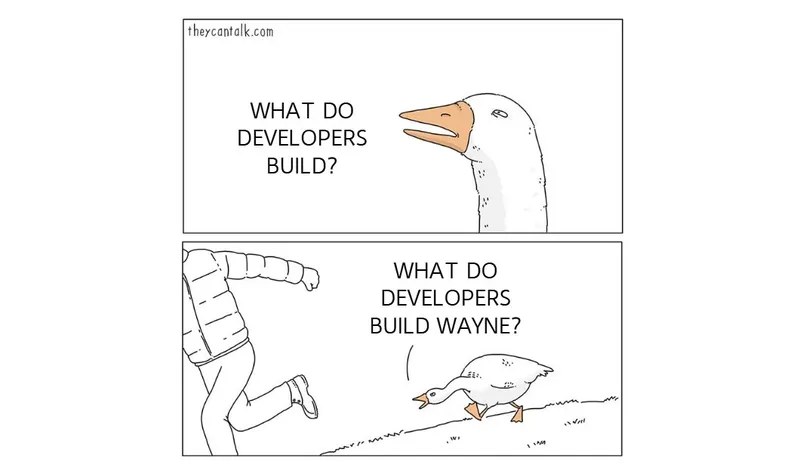
Walker spends much of the rest of his time asking whether development will increase the number of impermeable surfaces – and thus flood risk – in the city. Actually controls on impermeable surfaces will be strengthened, reply staff. Walker’s voice gets louder as he launches into a complaint about this “politically driven” process.
“This isn’t a debate,” says Hills, in a doomed attempt to protect the sanctity of question time.
“No, this is a question. It’s my question. I have the floor,” Walker argues.
“Hurry up man,” interjects Independent Māori Statutory Board member Tau Henare.
Walker’s question goes on for a minute or two more.
‘We’ve been given the choice between the firing squad and a lethal injection’
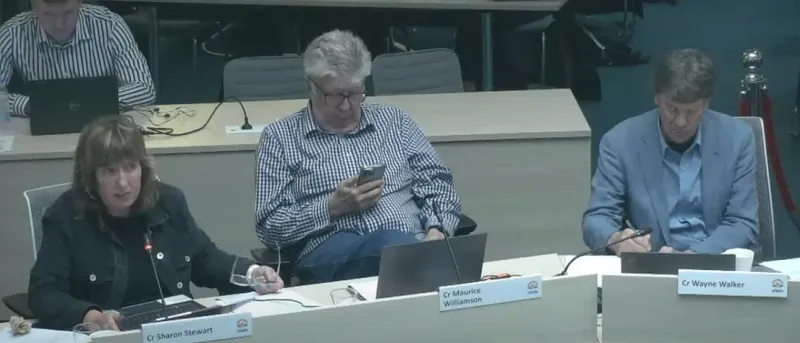
Howick councillor and former National MP Maurice Williamson has delivered a scathing critique of the council’s housing plan, cleverly disguised in the form of questions. He says the government was stupid to agree to the bipartisan townhouse law with Labour back in 2021, and even more stupid to make the council zone for as many houses as it would have enabled in the replacement plan they’re debating today. “I think they’ve lost the plot completely,” he says.
Incisive stuff. But then, a controversial moment. “We’ve been almost given the choice between the firing squad and a lethal injection,” says Williamson. There’s a hubbub around the council table. It’s not the first time councillors have used questionable metaphors when opposing dense housing, with Albert-Eden-Puketāpapa councillor Christine Fletcher comparing the townhouse law to “gang rape” in a meeting four years ago. “I’m asking for the violent language to stop when we talk about housing,” says committee chair Richard Hills. “It’s a metaphor,” grouses Williamson, though he agrees to amend to “two ghastly options”.
Dark insinuations about council corruption
Waitematā’s Mike Lee has hinted darkly about developers putting pressure on council staff to allow more apartments. “We all know in this building that the council senior management comes under intense pressure from the property market and developers. Some people call it hammer sessions,” he says. He wants to know how much upzoning, particularly in the “Grammar zones”, is motivated by developer pressure.
“Are you saying staff are being pressured by developers? Is that what you’re saying? Because I think that’s really inappropriate,” says Hills.
“Don’t talk about the war. Don’t talk about special interests putting pressure on the council,” retorts Lee.
Hills gets Auckland Council chief executive Phil Wilson to defend his staff. He notes that today’s plan change is a response to government legislation which forces the council to zone for two million homes. There’s nothing council officers can do to change that number. “I don’t think there is an evidence base for what is being described,” he says. “There is a construct here not of our making, and council is bringing two options to meet the constraint that’s being put on us by the government.”
Lunch at last
Planning committee chair Richard Hills has mercifully relented on his efforts to starve everyone in the room to death and allowed us to break for lunch.
The last half hour or so have been primarily taken up by stabbing hunger pains, audible yawns, and questions from Albany’s John Watson and Albert-Eden-Puketāpapa’s Christine Fletcher. Watson has asked council strategy chief Megan Tyler to discern what housing minister Chris Bishop was thinking when he promised communities would have a say on Auckland’s new housing plan. Unfortunately Tyler doesn’t appear to have access to the inside of Bishop’s brain. “I don’t think I can answer that one,” she says. Fletcher wants to know how much it’s going to cost the council if it doesn’t get its plan change completely right before it goes out asking for public submissions. It could be millions, she posits. Even tens of millions.
Tyler replies that no matter how much the council tries to perfect its planning document, it’s still likely to need amendment, and will still be open to legal challenge.
And we’re back
The meeting has resumed, and after a gruelling morning of questions, it’s time for a gruelling afternoon of speeches. Whereas before councillors were forced to couch their political arguments in the form of requests for information, they’re now free to unleash an unbroken torrent of opinion upon us all.
Journalists have been taking bets on how long this thing will go. Though the words “8pm” have been voiced, most are settling in on 6 or 7pm. Buckle up your seatbelt. Strap on your lifejacket. It’s time for roughly four hours of pure local government.
The case for the council plan
Committee chair Richard Hills has kicked off the debate by putting the case for the council’s plan. He reminds everyone the Auckland Anniversary weekend floods happened nearly three years ago. Six days afterward, we were talking about an urgent need to downzone flood-prone areas. It’s now been more than 950 days. He’s appealing to his naysaying colleagues, reeling off a list of areas that have been downzoned under the council’s replacement plan. Torbay. Murrays Bay. Flat Bush. Some special character areas have been downzoned.
Hills wants to counter some of the strongest objections to the plan. People say it will enable housing in places with inadequate infrastructure. Actually those places have been downzoned, and the places where apartments are enabled have some of the best infrastructure in the city, he argues. “This actually gives us the future where we accept that more people will live along our bus stations, live along our train stations, live along our metro centres,” he says. “We do not get the choice to not do anything. We do not get to thumb our nose at the government.”
An urgent appeal for delay
Albert-Eden-Puketāpapa councillor Christine Fletcher is putting forward an amendment asking for more delay. As a reminder, we’re here because the government has granted the council’s unanimous request to replace the medium density residential standards – which allow for three houses of up to three storeys on nearly every residential section – with its own bespoke plan that allows just as much development capacity. All day, Fletcher’s been trying to make the case that the council doesn’t have to approve all the detail of its plan right now, and that it can ask for three months extra consultation. Council staff have been sceptical, telling her the council needs to tell the government how it will deliver two million more homes by October 10, and they don’t see how it will be able to do that without a notified plan change in place.
Mayor Wayne Brown has spoken strongly against Fletcher’s motion. He’s talking about a conversation he had this morning with housing minister Chris Bishop. “The minister has made it quite clear, if we don’t make a decision today, he will,” he says. Brown doesn’t want to go out for three months of extra consultation, saying it won’t serve any purpose. “Just kicking the can down the road because you feel you don’t want to make a decision is not serving the people of Auckland. You’re just dithering.”
Hurry up and go slow, say councillors
More councillors are adding their voices to Christine Fletcher’s appeal for three months’ extra consultation before today’s proposed plan change is notified. Albany’s John Watson quotes housing minister Chris Bishop, who’s said Aucklanders will get to have a say on the new plan. He thinks the minister will agree to the time extension given that commitment, though mayor Wayne Brown disagrees, citing a direct conversation with Bishop. “A lot of people have no idea what’s in store for them, because it hasn’t been very well publicised,” says Watson.
Waitematā’s Mike Lee has played some of the hits, saying we need extra time to drum up opposition to the plan change, which is all about putting money in the pockets of developers. This is about “intensification and high-rise in very commercially desirable areas,” he says. “That isn’t about affordability. It’s about profits.” But would allowing that intensification in the poorest areas somehow be the more egalitarian choice? It’s hard to say. Lee’s already moved on. He’s calling housing minister Chris Bishop “hapless” and accusing him of causing damage to the ratepayers of Auckland.
Christine Fletcher’s amendment is voted down
Councillors have voted down Albert-Eden-Puketāpapa councillor Christine Fletcher’s amendment calling for three months of extra consultation on today’s plan change. The vote is 15-8 against, though it’s initially mistakenly announced as being carried, 15-8, to a chorus of slightly freaked out laughter.
Most of the votes calling for the extra consultation are predictable: Christine Fletcher, Ken Turner, Wayne Walker, John Watson, Maurice Williamson, Sharon Stewart, Daniel Newman, and Mike Lee.
Now we’re moving onto the debate on the plan change itself.
An earlier version of this post said councillor Kerrin Leoni voted for this amendment. I misheard. She voted against.
Wtf is going on
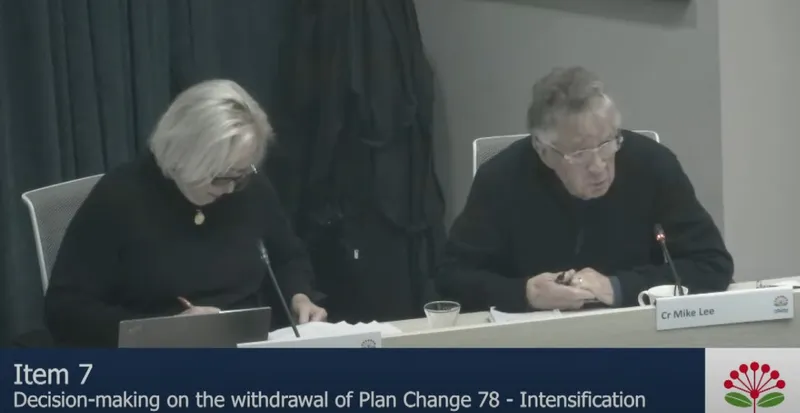
Waitematā councillor Mike Lee is speaking against today’s proposed plan change. Or at least I think he is. He’s talking about the Byzantine emperor Theophiles, who reigned from 829 to 842AD. “The emperor was processing from one end of Constantinople to another as he did every week and he was stopped by an elderly widow who complained to the emperor that a relation, I think it was his brother-in-law, was expanding the palace so much so to block all her light,” he says. “And the emperor responded by having his brother-in-law tear down the palace. And I think we should take an example from that.”
Something to think about, for sure.
One last forlorn plea to cut back special character
One of the strongest pro-housing voices on council, Waitākere councillor Shane Henderson, has rejected arguments against the plan. On it allegedly helping the already privileged, he says enabling more housing supply stablises, or sometimes reduces, housing prices. In response to infrastructure concerns, he says we know the central isthmus can take more development, and that its wastewater and stormwater systems are equipped to handle intensification. “When we allow more houses in the best places for them, everyone along the spectrum benefits.”
But he does have some problems with the new plan; its just that they’re pretty much the opposite to those of the people speaking against it. He doesn’t accept that we should be keeping 73% of the special character areas established under the 2016 Auckland unitary plan. “Special character areas don’t protect heritage. The category is a council invention that sets up wealthy areas of the central city to operate as gated communities,” he says.
Auckland deputy mayor Desley Simpson, mayoral candidate Kerrin Leoni, and Manurewa-Papakura councillor Daniel Newman have also spoken in favour of the council’s plan. It’s looking like it will likely pass.
“There’s no point in spending $6 billion on something if there’s nobody on the damn thing.”
Mayor Wayne Brown is pleading with his councillors to adopt the new plan to make the most of the City Rail Link. It allows 15 storey apartments near train stations, and that’s necessary to make sure there’s enough passengers on such an expensive piece of infrastructure, he says. “There’s no point in spending $6 billion on something if there’s nobody on the damn thing.”
He’s got backup from Albert-Eden-Puketāpapa’s Julie Fairey, who’s trying to list the positives with the plan after a day of it getting trashed from all corners. It’s better for emissions reductions and affordability, she says. “More homes next to transport routes where people don’t have to have a car will significantly reduce the cost of transport for them.” Opponents of the plan paint themselves as being concerned about infrastructure and rising council debt. But they’re essentially advocating for sprawl, which is more expensive to service with infrastructure, Fairey says. “And infrastructure is funded with council debt, so join up the lines.” I’m no body language expert but she seems a bit fed up with some of her colleagues.
Just a small note
It’s looking like this plan is going to get approved today, and that’s relatively exciting, but please be aware it’ll still be 18 months before it’s fully enacted. It’ll go before an Independent Hearings Panel next year. Thankfully we know nothing’s ever gone wrong when plan changes go before Independent Hearings Panels so there’s no need to worry about that.
A closing speech
As the debate winds down, planning committee chair Richard Hills makes a callback to Waitematā councillor Mike Lee’s reference to the Byzantine emperor Theophilus. “I don’t know about Theophilus but I do know one Theo, and that’s my four-year-old child,” he says. He wants to build a better city for Theo; one where he’ll have the opportunity to buy a house. He’s now calling for a vote. It’ll be by division.
The new plan change is carried, we’re getting some apartments everyone
The new plan is approved, 18 votes to five. That means the government’s 2021 townhouse law is set to be thrown out and replaced with these new rules, which downzone some flood-prone areas, and increase building heights and density around train stations and busways. One big surprise in the final vote: Howick’s Maurice Williamson voted for the new plan after spending most of the day saying it was absolutely sick-making, and at one point comparing it to death by lethal injection. He apparently deemed it better than his other option, which he described as “death by firing squad”.
The only votes against the new plan came from Albert-Eden-Puketāpapa’s Christine Fletcher, Albany’s Wayne Walker and John Watson, Waitematā’s Mike Lee, and Waitākere’s Ken Turner.
Now begins the 18 month process for this thing to become a *Emperor Palpatine voice* fully operational plan change.
And we are done here
The meeting is over. Councillors are filing out. Greater Auckland blogger and Waitematā local board candidate Connor Sharp is slowly unfurling his limbs after frantically live tweeting every exchange from his position in the public gallery. It’s time for me to go as well. Thanks for following along, and good luck getting one of the new apartments next to the City Rail Link.
Hayden Donnell
Hayden Donnell is a senior writer for The Spinoff. He previously worked at RNZ, TVNZ and the New Zealand Herald, alongside other media companies that have since closed down or been renamed. His primary passions are local politics and the Big Fresh animatronic fruit and veggies.


