Everyone’s betting on the next season of The Traitors NZ – will it pay off?

The Traitors NZ just received a Screen Canterbury grant.
With a Screen Canterbury grant announced for The Traitors NZ as well as NZ On Air funding, there’s a lot of public money riding on the treacherous reality franchise.
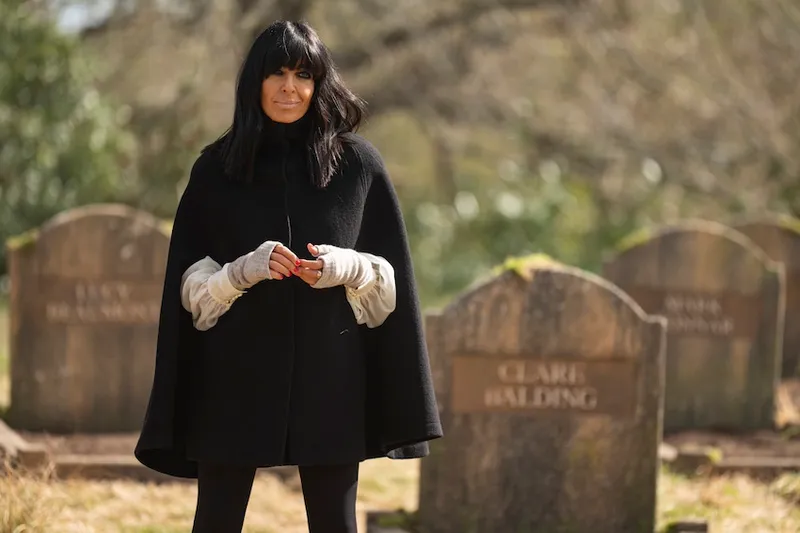
In just a few short years, The Traitors has become the most talked-about reality franchise of the moment. As audiences tired of Love Island’s shallow bickering and Married at First Sight’s descent into the manosphere, The Traitors emerged from the darkness, lantern in hand. From beneath its signature scary cloak, the series beckoned us into an old castle where backstabbing is an essential part of the game, murder arrives as routinely as a cocktail party, and people from all walks of life reveal just how deceptive and fallible human beings can be.
The format gathers a group of strangers together and secretly assigns a trio as Traitors, leaving the remaining Faithfuls to sniff out the rats before they get “murdered” (eliminated) themselves. Originating in The Netherlands in 2021, the series quickly spread around the world and got its hooks into Aotearoa. First came the UK seasons arriving express on ThreeNow, soon followed by local iterations of The Traitors NZ in 2023 and 2024. Season one eased us in with a half celebrity cast, but it was the all-normie season two which took the gameplay to a new level.
Even just over the last two months in Aotearoa, the delightful Celebrity Traitors UK has had 773,000 streams, making it ThreeNow’s biggest title of the year. While we haven’t delivered anything as resplendent as Celia Imrie’s fart, the local versions have done pretty well by comparison, with ThreeNow streams increasing from 473,000 in season one to 657,000 in season two.
Despite the numbers, The Traitors NZ looked to be banished from our lives when Warner Bros Discovery announced a raft of changes at Three last year, including the shock shuttering of Newshub. The announcement also stated that “new local programming would only be in collaboration with local funding bodies and other partners.” Duncan Greive wrote at the time that this could be the death of reality TV in Aotearoa, unless NZ On Air had a change of heart about the genre. “It funded some franchises a long while ago,” he wrote. “It could do so again.”
This year, NZ On Air revealed itself to be more faithful to the reality genre than was previously thought, with both Three’s The Traitors NZ and TVNZ’s Celebrity Treasure Island receiving $1,436,911 and $1,349,000 respectively in August’s non-fiction round. “We’re supporting content with demonstrated audience appeal and cultural relevance,” NZ On Air chief executive Cameron Harland said of the decision. “Rather than waiting for market conditions to improve, we’re taking action to ensure local content not only survives but flourishes.”
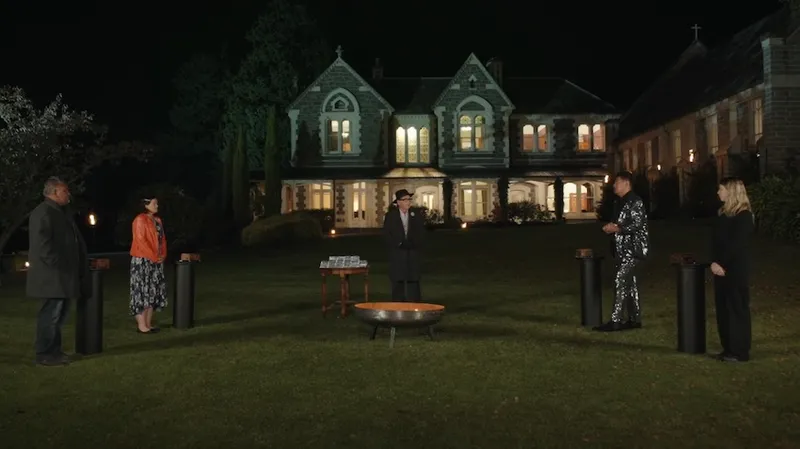
But wait, there’s more. Just last week it was announced that The Traitors NZ has received an additional $75,000 in the latest funding round from Screen Canterbury, a Christchurch City Council-backed grant to attract productions to the region. The round also provided grants for a docuseries about how digital technologies affect children and an onscreen adaption of rural theatre phenomenon The Bitches’ Box, but The Traitors NZ marks the first time a reality show has received support from this regional initiative (as with the second season, the series will continue to be filmed at Claremont Castle in Timaru).
As Screen Canterbury manager Meg Huston explains, the purpose of the grant is less about format and more about growing jobs in the local industry (approved productions must employ a minimum of 40% Canterbury-based crew) and getting more of the region on screen. “In the Traitors case, those will be global screens as it is one of the most popular reality formats, and the New Zealand version has a great reputation globally,” she says. “Global formats put our landscapes and scenery on the world stage and add to New Zealand’s global profile.”
Huston also notes that The Traitors NZ brings unique job benefits. “Reality formats often bring sustained employment, repeatable production cycles, and large, long-running crews, which translate into stable local spending and crew upskilling,” she says. Andrew Szusterman, managing director of South Pacific Pictures, indicated in the announcement that The Traitors will stay faithful to Timaru in the future – especially with the upcoming season of The Traitors Australia being filmed there too. “Our goal is to keep producing multiple versions for years to come,” he said.
The Traitors NZ finding two different public funding streams makes sense to Rebecca Trelease, senior lecturer in critical media studies at AUT. “The Traitors is not the same as something like CTI, where it is easier to get that extra commercial funding through product integration – ‘Briscoes have given you these pillows’ or something like that,” she explains. “But then you think about the Celebrity Traitors UK and that moment with Alan Carr running across the train, you could see how regional sponsorship could have that same challenge happening on the train to Greymouth.”
While you only have to look as far as any comment section to find people describing reality television as vacuous junk, Trelease says these recent funding decisions further legitimise the genre. “When you have important funding bodies saying ‘yes, this show deserves to be made’ it is definitely a pretty big tick of approval.” And with The Traitors inviting people from all walks of life to apply, she adds there is cultural value in a show that “has as wide of a range of representation as possible, because the only requirement is knowing human behaviour.”
What remains to be seen, Trelease notes, is what prioritising these big established reality franchises means for the future of showcasing new ideas and giving opportunities to smaller players (although several smaller projects did receive funding in the same round). “It’s not just that The Traitors is an international franchise, it’s also that it is being made by a really well established production company,” she says. Ever the reality fan, she draws upon the big dog theory recently explored in the Celebrity Traitors UK to explain the conundrum.
“Basically, it’s still big dogs getting all the money,” she says. “And how do we grow if we don’t teach any of the puppies how to walk?”

Alex Casey
Alex Casey is a senior writer at The Spinoff with over a decade of experience writing about popular culture and social issues in Aotearoa. She lives in Ōtautahi and likes watching reality TV and walking the dog, occasionally at the same time.


