Seaweed taxonomist Roberta D’Archino tells Shanti Mathias about the slow process of identifying new species that had been lumped together in a box many years ago – and why this biological puzzle solving is so important.
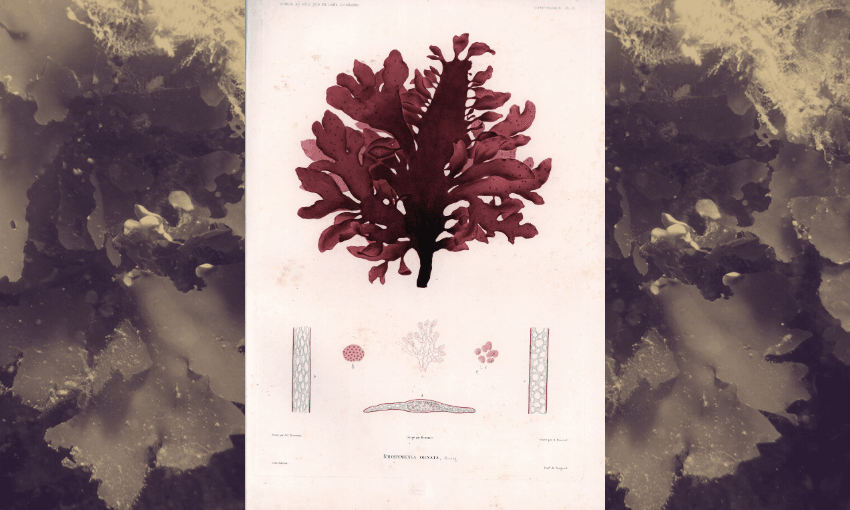
It started with a box of seaweed samples in Te Papa. All red, but different shades. Some had branching blades with pointy ends, others had frilly edges like the fanciest of lettuce. All had been identified as Callophyllis ornata, but they were so different that they surely belonged to multiple species.
The specimens had been sitting there a long time. The first C ornata specimens were gathered by European explorers in the Auckland Islands in 1842, then dried and taken to Paris. Similar-looking species from the Subantarctic Islands had been placed in the Te Papa box in the years since. To Roberta D’Archino, a taxonomist who works at Earth Sciences New Zealand, it was obvious that there were multiple species, but which ones? Would it be possible to identify them without going to the Subantarctic Islands?
There are thousands of species of seaweeds – technically large photosynthesising algae, which can grow from the tide line to more than 150 metres deep in clear water. Seaweed provides a habitat for fish and absorbs carbon while releasing oxygen, essential for life on land and in the sea. Aotearoa’s waters, which stretch from the Subantarctic Islands to the subtropical Kermadecs, are a biodiversity hotspot for seaweed, with more than a thousand species found here. While many people recognise bull kelp or Neptune’s necklace, there are hundreds of species which haven’t been identified.
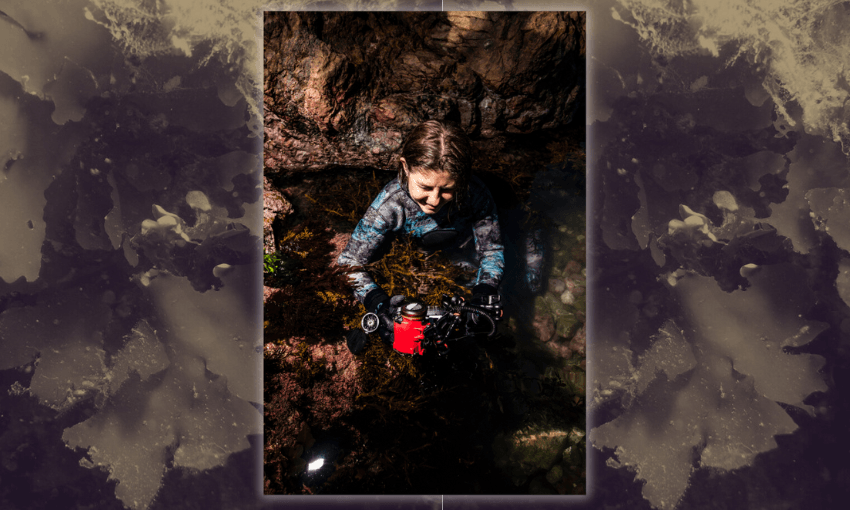
For a scientist like D’Archino, the puzzle of identifying a new species is part of the joy. She first became interested in seaweed when diving off the coast of her native Italy, seeing a red carpet of … something. What was it called? She took some of the samples back to her university and no one could tell her what it was. “I realised no one was studying seaweed and there was so much to discover,” she says.
Seaweed taxonomy is a small and tightly knit field: D’Archino communicates with other experts around the world, which was her process with the C ornata specimens. “You can see the different shapes,” she says, showing me a photo of the different specimens in the C ornata box. “Some have branches, some have single blades, the texture is different.” She looks at the species under the microscope, to see the cell structure, and tries to identify how the species reproduces, which can be a key tell. With C ornata, a fragment of the original specimens borrowed from Paris showed distinct specialised cells which she could look for other examples of. Some species are smooth and silky, others tough and rubbery. “I use my sense of smell – there’s a genus that smells like chlorine, I have no doubt what it is,” she says. “I’ve never quite got as far as tasting yet!”
D’Archino extracts the DNA to figure out the relationship between different species, a newer tool in the old practice of taxonomy. This can help with a problem: how do you know that what you’re looking at hasn’t been described before?
It’s all made more difficult by the paucity of evidence: 50% of species are known from just one to five samples. Is this a normal-sized leaf or a juvenile? How widespread is this species – is it rare or common? Has its distribution changed? Which season does it reproduce in? “We know it exists, but we don’t know anything else,” she says.
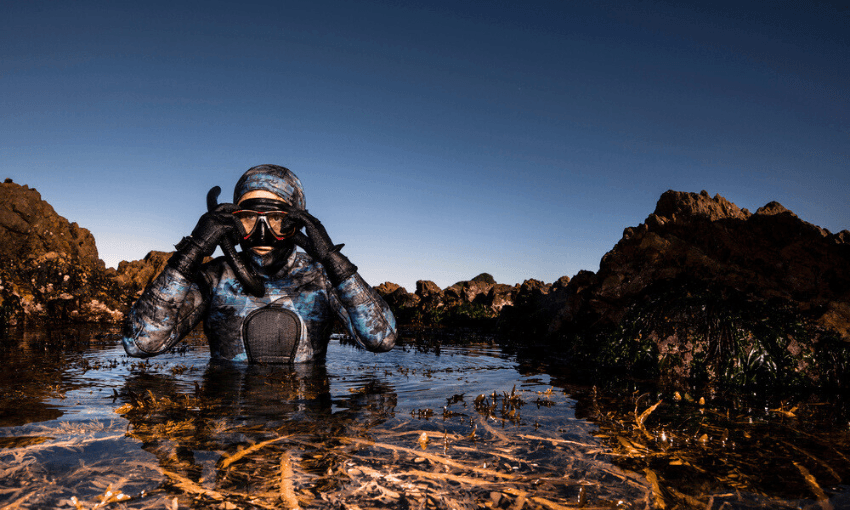
“It was like doing a puzzle, it was bothering me for years not knowing what it is,” D’Archino says of C ornata. Many seaweeds are known only from specimens found drifting in the waves, potentially very far from where they grow. Finally, in 2015, a drift seaweed from the Auckland Islands could link the 1842 specimen to others found in Rakiura, meaning the species could be transferred to a new genus, Motumaha. (A genus is a slightly broader category above a species, denoting species which are closely related and have similar characteristics. Genera is the plural of genus.)
Through this slow, meticulous work, D’Archino has identified 27 species and 13 new genera. As well as Motumaha, there were two other genera in the box, Alseida and Thetisia. It gives her a sense of how many more unknown species are still out there, dozens or hundreds of varieties which humans do not yet understand.
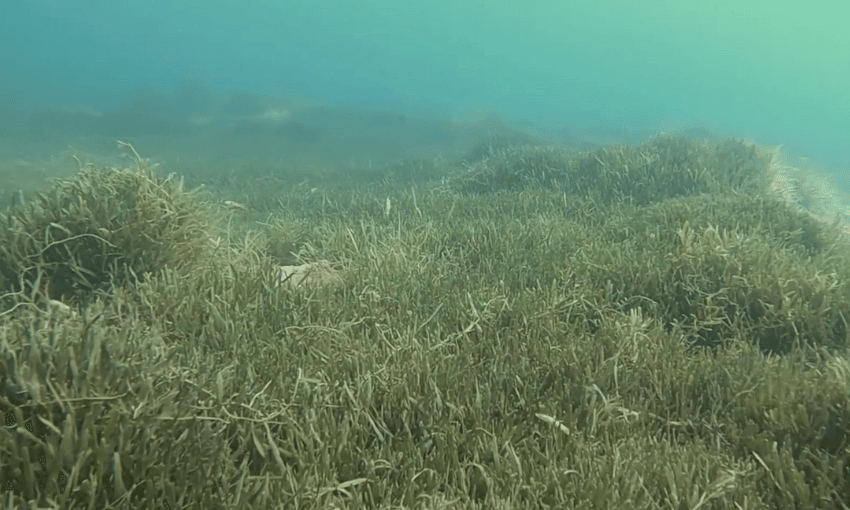
Seaweed growing in the Subantarctic Islands, which are incredibly difficult to get to, is hard to study; D’Archino describes the specimens as “precious”. But understanding what is happening underwater is important. Take the spread of caulerpa through North Island waters, an invasive seaweed that can smother underwater landscapes at the expense of all other species. An expanse of invasive seaweed is like the difference between a native forest and a pine plantation. “If you can see lots of colours of seaweed, it provides food and oxygen, it buffers the energy of the waves, it’s full of life.”
In a heating ocean, understanding which species exist in areas like the Auckland Islands can be useful. Closer to shore, changes could be because of other human activities, but analysis of species in remote parts of the ocean are easier to attribute to climate change. “It’s an indication to see how the environment is changing,” D’Archino says. As well as producing oxygen, seaweed can be useful to humans: kelp buffers the impact of waves and native seaweed species in Aotearoa have potential as a valuable nutritional source.
Training as a taxonomist is rare, and D’Archino doesn’t expect many others to want to spend days with microscopes and new samples of plants. But most of Aotearoa’s population lives near the coast – and paying attention to seaweed biodiversity can start small. she’d love to see more people noticing seaweed biodiversity. “For some people seaweed is all the same, but it’s absolutely not true. You don’t have to be a specialist to notice the diversity.” Look for the frilly edges, the slender stems, the crabs scurrying between the tides, maybe even the smell of chlorine. Remember, as you breathe oxygen through a snorkel, that seaweed is part of your life.