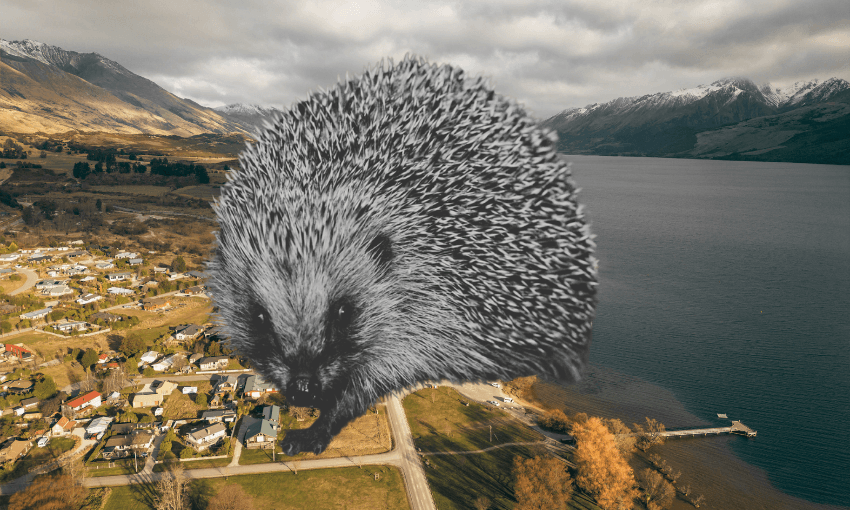

Allison Hess reports on a conservation mystery.
Think hedgehogs are harmless garden cuties? In New Zealand, they’re far from it, hunting native bird eggs, chicks and insects like wētā. They have spread to just about every corner of the country… except Glenorchy, a tiny town at the edge of South Island wilderness.
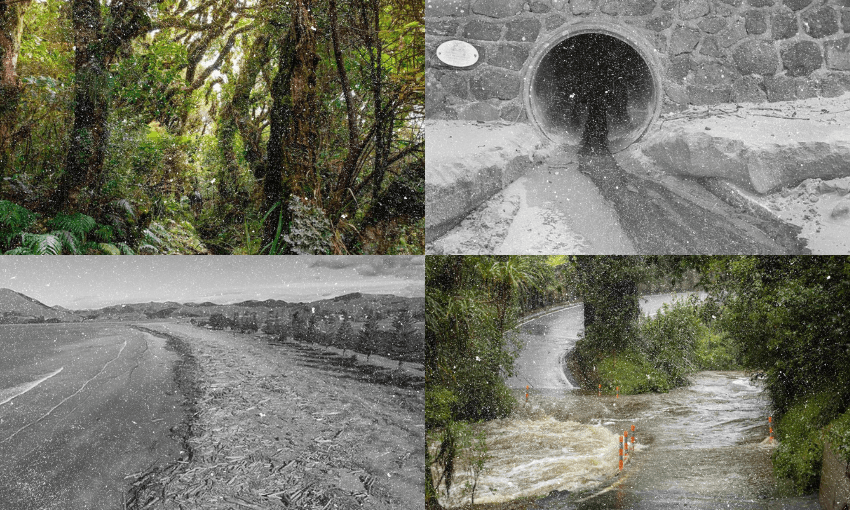
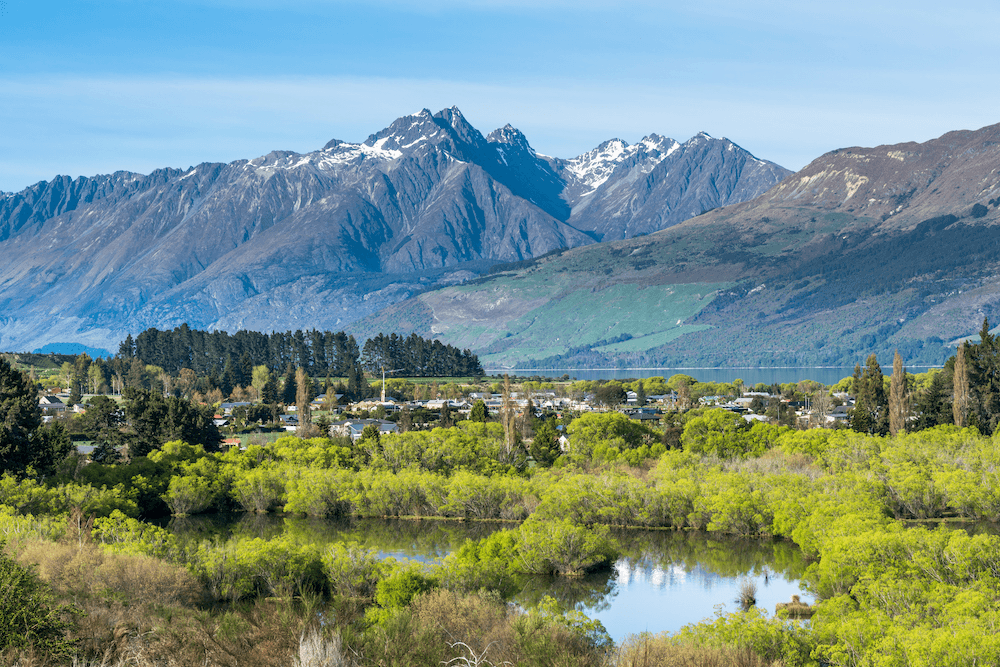
Glenorchy, population 500, sits at the headwaters of Lake Whakatipu, where the sealed road from Queenstown peters out. Snow-capped peaks, braided rivers, golden tussocks, and beech forest stretch as far as the eye can see, made famous as a backdrop for Mission Impossible: Fallout, The Hobbit Trilogy, X-Men Origins: Wolverine, and even a Taylor Swift music video.
On the stony beaches of the Dart and Rees rivers, black-fronted terns defend their gravel patch, wrybills probe the water with sideways bills, and banded dotterels guard eggs disguised as stones.
Glenorchy is also home to a strange conservation mystery: in a country where hedgehogs have spread to almost every habitat, none live here.
Hedgehogs might look bumbling, but in New Zealand, they are a deadly predator of vulnerable native species. European settlers introduced them to control garden pests like slugs and snails, but they quickly expanded their palate to include wētā, lizards and bird eggs.
Standing guard against the spiky invaders is Glenorchy local, Russell “Rusty” Varcoe.
He’s the muscle behind the Routeburn Dart Wildlife Trust, a conservation project bringing the birdsong back to the head of Lake Whakatipu. A handful of trustees, locals of Queenstown and Glenorchy, raise money and awareness behind the scenes to enable Rusty to get the work done in the field.
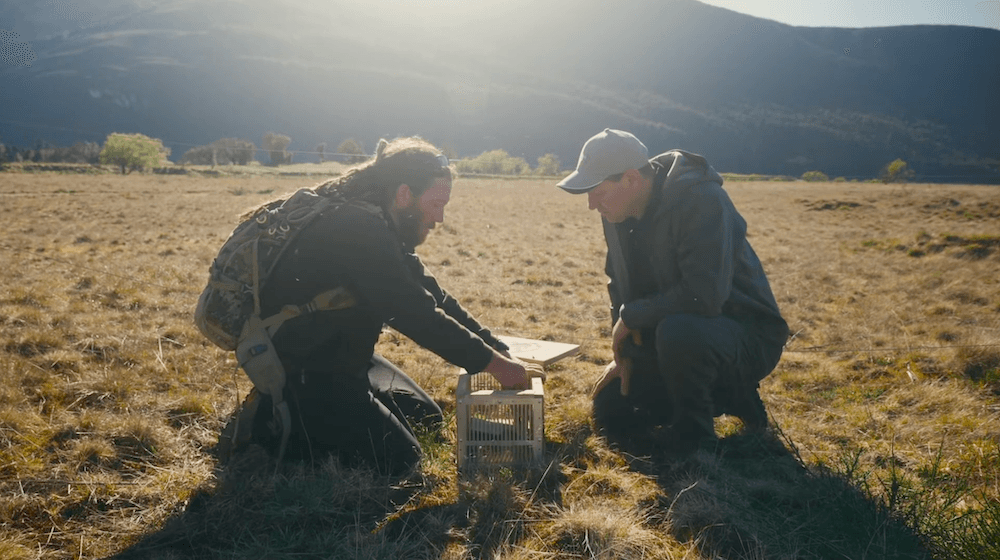
When Rusty isn’t servicing 600 predator traps, he’s volunteering as the town’s ambulance officer. When he was hired by the Trust in 2017 and began asking for permission from landowners to run traplines through their property, a majority of them agreed: when you’re the one patching people up after accidents, you earn a lot of trust.
His 120km trapline extends up the Routeburn Valley to Chinaman’s Bluff, then down the Dart Valley past Diamond Lake. Stoats and rats fill his humane traps, and he spends the winter live-cage trapping feral cats, catching up to 60.
“The mahi continues seven days a week,” he says. “But it’s my dream job.”
Rusty has a keen eye for the birds he’s trying to protect. While you’re staring at a rock in the distance waiting for it to move, he’s already clocked three species.
“The braided river systems amaze me, such a barren, inhospitable-looking terrain that supports the breeding of multiple birds, each with such different characteristics,” he says.
“The black bills fly in murmurations, the South Island pied oystercatchers emit a little squawk to let you know they’ve spotted you, the wrybill’s camouflage skills, the floating and falling flight of the black fronted tern, and the territorial call of the banded dotterel, which sounds like an old cell phone alert.”
But his sharpest focus is reserved for what’s not there: hedgehogs.
It’s not clear why they haven’t established. There’s plenty of their favoured grassland and braided river habitat. Manaaki Whenua ecologist Chris Jones says hedgehog spread often depends on whether there are high densities of hedgehogs pressuring dispersal and how easily the terrain can be traversed. “And, simply, is it worth it – are there sufficient resources to sustain a population year-round?” he says.
The Department of Conservation calls hedgehogs “our most underrated predator,” and warns that even just six hedgehogs per square kilometre on river braids can “cause significant losses to ground nesting bird colonies.” In the Mackenzie Basin, a study found hedgehogs were responsible for one in five predator attacks on braided river bird nests. One hedgehog caused an entire colony of nationally endangered black-fronted terns to abandon their nests. Another was filmed eating banded dotterel eggs.
Even with active predator control keeping rats, stoats and feral cats in check, braided river bird numbers in the Routeburn Dart area are still slowly declining. Rusty reckons it wouldn’t take many hedgehogs to push them into freefall.
In May 2021, two hedgehogs turned up in traps inside the project area.
“I called everyone I knew doing predator control around the country, asking how do I get rid of them. No one knew; back then, hedgehogs were generally only an annoying bycatch for them, clogging up their traps set for stoats. I was on my own, making it up,” says Rusty.
Trustees raised extra funding for traps, and Rusty spent the winter (when hedgehogs hibernate) establishing a dense network of traps. Over the summer, seven hedgehogs were caught, then just one the following year.
To be sure the incursion was stamped out, the Trust called in handler Adriana Theobald with Zach, a Department of Conservation-certified hedgehog dog.
After searching multiple areas, they were given the all-clear in March 2023: no hedgehogs detected.
“I was so relieved, our extra effort worked,” Rusty says.
But hedgehogs are creeping closer. Conservation groups on the eastern shores of Lake Whakatipu and the Greenstone Valley caught nearly 200 over summer, which indicates the threat is moving in from both sides of the lake.
And in June, one was caught south of the Greenstone River – uncomfortably close to the Routeburn Dart Wildlife Trust project area.
All winter, Rusty has kept up his steady trapping of stoats, rats and feral cats and waited. In November, when the hedgehogs awake, Adriana and her dog Zach will return for another sweep. If they are found within the project area, the Trust will need fresh funding to launch another trapping blitz.
Why the headwaters of Lake Whakatipu are spiky-free is a mystery. Maybe it’s the terrain, weather or luck. If hedgehogs gain a foothold, they could undo years of protection. On a shoestring budget, every trapline and dog sweep relies on donations, grants and the Routeburn Dart Wildlife Trust’s bloody-minded persistence. For now, Rusty keeps the traps set and the dog on-call, guarding a special and fragile wilderness at the end of the road.