Pacific profiles: Hele Christopher-Ikimotu on keeping Banaban culture alive

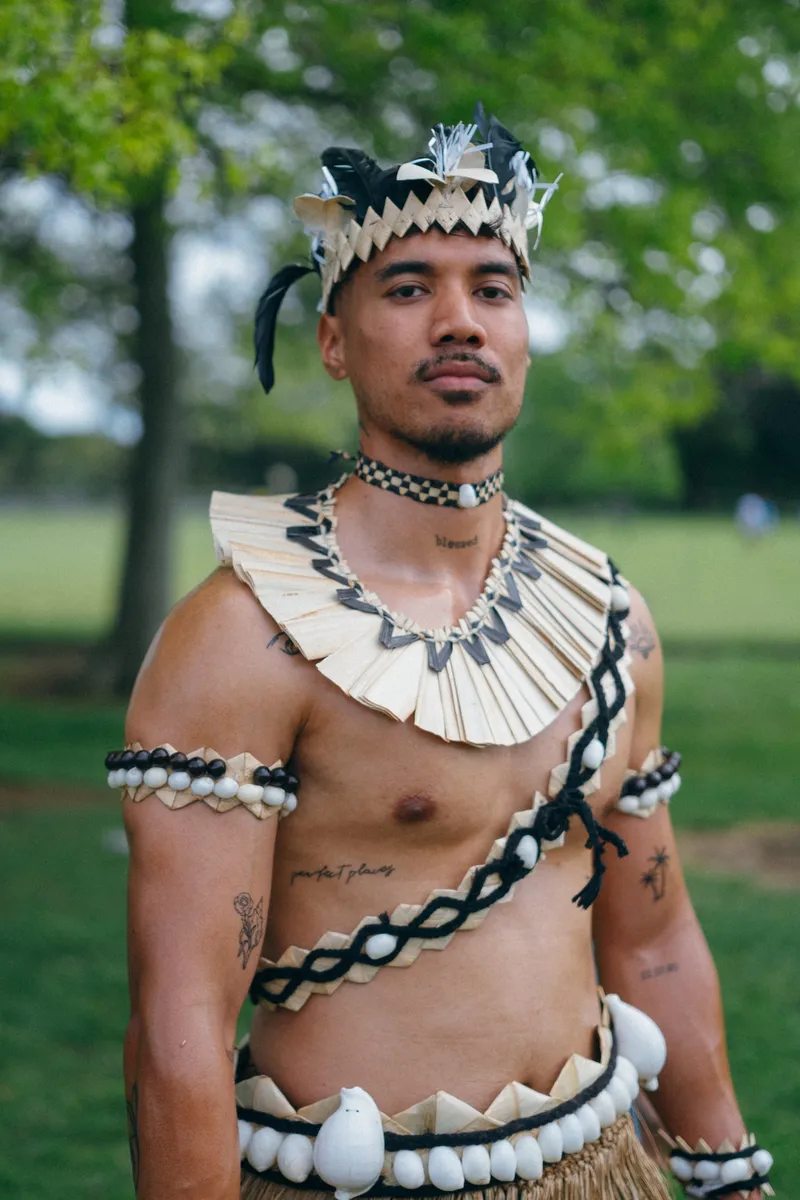
Hele Christopher-Ikimotu (Photo: Geoffery Matautia)
Made with the support of
The Pacific profiles series shines a light on Pacific people in Aotearoa doing interesting and important work in their communities, as nominated by members of the public. Today, we meet Hele Christopher-Ikimotu, a writer, photographer, content creator and youth chair of the Banaba Cultural Community of Tāmaki Makaurau.
All photos by Geoffery Matautia.
On a thundery Friday evening, I connected over a video call with Hele Christopher-Ikimotu, a proud Banaban, Niuean and I-Kiribati multidisciplinary creative, based in Mangere, South Auckland. A passionate storyteller, advocate and youth leader, Hele uses his voice to share his pride for his Banaban heritage and spread awareness about Banaba’s devastating history, but also his community’s hopes for a more prosperous future.
Where are you from?
My name is Hele, I’m the youngest of five, and I’m from the islands of Banaba, Niue and Kiribati. I was born in Niue, and my family moved here when I was six. I consider Mangere, South Auckland, my home. I’m proud to be from all of those places and the communities that have raised me. I’m a writer, photographer, content creator and youth chair of the Banaba Cultural Community of Tāmaki Makaurau.
Were you always interested in storytelling?
All my schooling was in South Auckland, and then I studied communications at AUT, majoring in journalism. Now I’m in the communications and media space for a Pacific health organisation. For me, storytelling has always been part of my family and communities. Both my parents are educators, and I’ve always loved reading, writing, and any subjects where I could harness my creativity. At university, I immersed myself in a degree with a lot of writing. I saw the need for Pacific communities to take the lead in telling their stories. Although I work full-time in content creation, I like to keep my creativity alive outside of my work.
Tell me more about your work within the Banaban Cultural Centre. I suspect a lot of people won’t know too much about the Banaban people and their unique cultural identity.
Yes, to understand the need for this community, it’s important to understand our history. Banaba is a solitary, raised coral island in the Micronesian region – it’s only 6km squared – and our nearest neighbour is Nauru. Banaba is now part of the Republic of Kiribati, but there’s an important political history to that. In 1900, high-grade phosphate was discovered by prospector Albert Ellis, who was working for the British Phosphate Commission. The BPC manipulated the Indigenous Banaban population to let them mine the island. We weren’t aware we were living on a goldmine, and over 20 million tonnes of topsoil was mined to fertilise the settler colonies in Britain, Australia and New Zealand. Now, 80 per cent of our island has been strip mined. My mum always says that our land died so others could live because that phosphate enabled their agricultural industries to thrive.
The suffering for our community continued during WWII when Japan invaded the island and our people were subjected to severe violence and punishment. When the British returned at the end of WWII following the Japanese invasion, those who remained of our community were shipped off to Rabi Island, Fiji, where many still live. This devastation and displacement isn’t often discussed when we talk about Pacific history.
Our cultural identity can be confusing to some as we’re politically part of Kiribati and we speak their language, but we’re still a culturally and geographically distinct group. We will always maintain our unique identity.
In your role as a youth leader, what kind of initiatives does the centre run to strengthen connections and pride in your Banaba heritage?
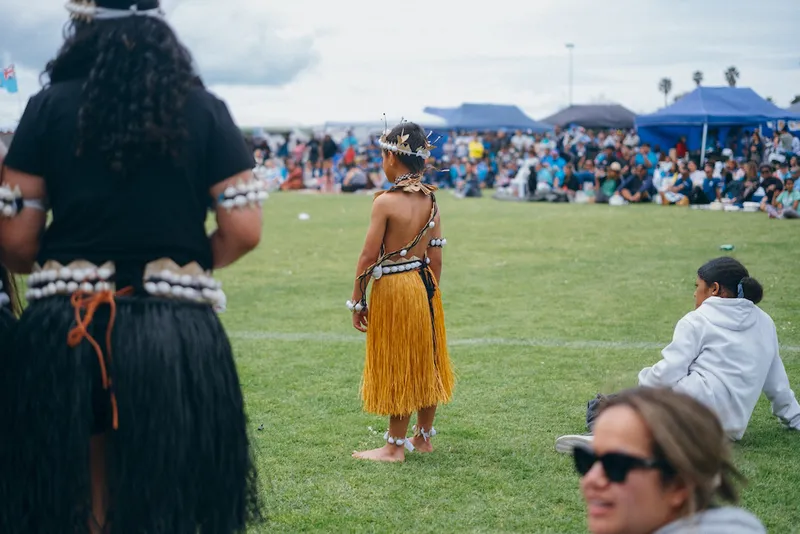
The purpose of our group is to facilitate opportunities for our community to gain knowledge of our history and build pride in our heritage. Within the context of the Pacific diaspora in Aotearoa, it can be intimidating for our young people to take pride in their identity as they’re often the only ones in the room. Many people – even within our Pacific communities – don’t know we exist. It’s important for me to do work that strengthens our cultural pride, and I seek opportunities for us to be platformed so that we can be represented and have our stories told. Recently, we started a cultural dance group, and we performed in public for the first time. We’re not big in numbers, but it was huge for us to share our dances with others. We can’t change the past, but we can keep our identity alive for the future.
Outside of dance and song, it’s important for our elders to share knowledge and connect with the youth to forge those intergenerational connections. They’ve taught us skills like how to sew, arts and crafts, and how to cook traditional dishes. Every 15 December, we have a commemoration event to share stories. Throughout the year, we aim to meet regularly and keep everyone engaged.
What’s the group’s membership like?
We’re tiny. I’d say there are just over 100 members in Auckland. The diaspora is spread across Auckland, Fiji, Australia and Kiribati and pockets in other cities. Many of the families are based in and around Warkworth, so that’s where we meet.
Displacement from land often displaces people from their language, too. Is that something your community has experienced?
Yes. The reason we speak the I-Kiribati language is that in the late 19th century, Christian missionaries came to Banaba spreading the gospel. They used Kiribati bibles so our people learnt to read and write in that language, leading to the death of our mother tongue. Following the mining and Japanese occupation, our population was scattered, and thus our people had to learn the languages of the new islands they were sent to. In essence, our language was lost through our displacement. You hear remnants of it in traditional songs and chants, but it was never written down. That makes it difficult for us to re-learn.
I often get approached during Kiribati language week because they think we are synonymous, but I have to decline and have honest conversations about our cultural distinction.
What’s the state of Banaba Island now?
There’s a caretaker population on the island – approximately 300 people who returned to protect what remains. When the BPC left, they left their machinery and toxic waste, so only a small part of it is habitable. There’s no clean water, so they have to get a shipment of food and water from the Kiribati government. Getting there is only by boat, but it’s a long journey.
Do you have aspirations to return there? Is that even possible?
With this year being the 80th anniversary commemoration of our arrival in Rabi, it’s a good opportunity for us to continue speaking our truth. I’d love to find a way to go back – it’s not a reality for our elders, but for our young people, I do hold hope that it’s possible for us. I believe it is important for us to document who we are, whether through stories, photos and films, to keep our culture alive. More people need to know who we are. I don’t have any big goals, just to continue being represented and platformed in Pacific spaces. It means a lot when people are curious about who we are and want to keep the identity alive. But staying close to our elders is the most important thing right now.
This is Public Interest Journalism funded by NZ On Air.

Litia Tuiburelevu
Litia Tuiburelevu is a professional teaching fellow at the University of Auckland’s Faculty of Law, overseeing the Pacific law students’ academic programme. She teaches an elective course titled “Pacific Peoples and the Law: Critical Perspectives” and is also interested in film and photography.


