

Northland, Thames-Coromandel, Hauraki and the Bay of Plenty are in states of emergency. People around the North Island are being evacuated or warned to prepare to evacuate. Here’s what you need to know and where to get help.
The following was up to date as of 4.30pm, January 21, but this is a rapidly evolving situation.
What’s happening?
A subtropical low-pressure system is moving over the country today, bringing heavy rain to many areas. Red heavy rain warnings – the strongest possible – are in place for Northland, Coromandel, Bay of Plenty and northern Gisborne, and the Thames-Coromandel, Hauraki and Whangārei District Council regions have entered precautionary states of emergency in anticipation of severe rainfall tonight. Metservice says the wet weather will continue until at least Friday morning.
Where’s being hit hardest?
Northland
A red heavy rain warning is in place until 11pm tonight, with 90-120mm expected on top of what has already accumulated, and peak rainfall rates predicted to hit this afternoon. The district was already attempting to recover from severe rainfall and flooding over the weekend, including landslides that wiped out bridges, isolating communities along the Tūtūkākā Coast, and causing severe damage to the Ōakura Community Hall.
In Ōakura, 22 homes are currently being evacuated due to ongoing risks from slips, and around 80 campers at Whangaruru Campground in Northland have been trapped after rain triggered a 50m-wide slip across the only point of access.
RNZ reports that a series of slips along the back road to Russell means residents from Elliotts Bay to Rāwhiti are now cut off in both directions, and a TVNZ crew is trapped between the two slips. Hundreds of homes are without power.

Auckland
An orange heavy rain warning is in place for Auckland and Great Barrier Island until 2am tomorrow morning, with the heaviest rainfall expected in the east.
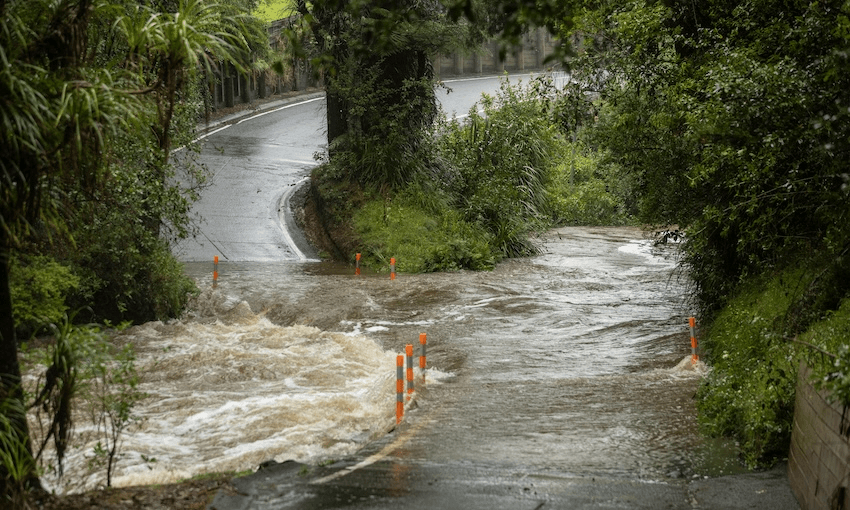
A search is ongoing for a man who was swept away in his car while trying to cross the Mahurangi River near Warkworth, north Auckland, this morning, with his passenger narrowly escaping.
Mayor Wayne Brown is encouraging residents to listen to Auckland Emergency Management and to follow their advice. Residents already affected by flooding have been evacuated and the councils are warning others to prepare to do so. A strong wind watch is in place, and lanes may be closed on the Harbour Bridge this evening and tomorrow morning.
Coromandel and Hauraki
A red heavy rain warning is in place until 3am tomorrow morning, and Waikato Civil Defence sent an emergency alert to phones in Coromandel Peninsula this morning to advise residents of this. Metservice is predicting a further 200-250mm of rain to fall on top of what has already accumulated, especially about the higher ground, with peak rainfall rates this afternoon. Around 70 houses are without power. Thames-Coromandel District Council has made sandbags available and volunteers are being called for to help deliver them to those affected.

Flooding has closed SH25 between Coromandel town to the south of Whitianga and between Hikuai to Tairua at the intersection to Pauanui. State Highway 25A is blocked just north of the intersection with State Highway 26 in Kopu after a truck rolled, seriously injuring the driver. SH2 Karangahake Gorge between Waihi and Paeroa is likely to close tonight around high tide as it has already reached maximum levels.
In the Hauraki district, a state of emergency was declared this afternoon.
Bay of Plenty
A red heavy rain warning is in place until 9am tomorrow and a precautionary state of emergency has been declared. Whakatāne District Council activated its Emergency Operations Centre around 1pm.
East Coast
A red heavy rain warning is in place until 11am tomorrow, with peak rainfall rates expected this evening. Residents in Tolaga Bay on the East Coast – especially those along the Hikuwai River – have been asked to leave, with the Civil Defence area manager Greg Shelton saying around 350mm of rain is estimated to fall in the area between now and 11am tomorrow.

What do I do?
The best thing to do is follow official advice. If you have been asked to evacuate, it’s best you grab what you can and leave immediately. Otherwise, people should be prepared to leave if circumstances worsen.
If it is safe to do so, you should clear drains and gutters, secure loose outdoor items, move valuables and vehicles away from flood-prone areas, relocate stock from low-lying land and bring pets indoors, have essential supplies ready in case of power outages or road closures, have a grab bag and evacuation plan ready.

If at any time you feel you, your whānau or your property are at immediate risk, call emergency services on 111.
For those in affected areas, official advice is to delay all unnecessary travel and avoid driving during heavy downpours. It’s also best to bring your pets inside, close all windows and doors, and pull curtains and blinds in the event of wind gusts or falling debris break the glass.
Your local district council is the best place to both report issues with and get updates on local infrastructure, such as local roads. You can stay up to date by checking MetService warnings and following your Civil Defence Group for local updates. You can also follow your local Civil Defence page on social media.
Take extreme care when driving and watch for flooding, landslips, and other hazardous driving conditions. Check NZTA Waka Kotahi website for road closures and driving information.
What if there is flooding in my area?
Be prepared for the fact that floods and flash floods can happen quickly. “If you see rising water do not wait for official warnings. Head for higher ground and stay away from floodwater,” says Civil Defence. Never try to walk, swim or drive through flood water, and always assume that the water is contaminated.
In the event that you need to leave your house in a hurry – think five minutes warning or less – there are a few essential items to pack. These include covered walking shoes, warm clothes, a raincoat, a hat, water and snack food, hand sanitiser, a portable phone charger, cash and copies of your ID and any other important documents.

It is also good to know where to find your medication, first aid kit, face masks, torch, radio and batteries in the event you need them at short notice.
FM radio stations like RNZ, The Hits, NewstalkZB and MoreFM will all have updates in case of an emergency, and we’ll list some more useful people/resources below.
Helpful follows
If life or property is at risk, call 111.
National
Metservice for weather warnings and updates.
FM radio stations like RNZ, The Hits, NewstalkZB and MoreFM will have regular updates in case of an emergency.
Northland
Civil Defence Northland, Whangarei District Council Facebook and Far North District Council Facebook.
NZ Transport Agency Waka Kotahi Auckland Northland for roading updates.
Coromandel and Hauraki
Waikato Civil Defence and the Waikato Civil Defence website.
Thames-Coromandel District Council and the Thames-Coromandel District Council website.
NZ Transport Agency Waka Kotahi – Waikato & Bay of Plenty for roading updates.
Bay of Plenty
Toi Moana Bay of Plenty Regional Council
Bay of Plenty Civil Defence and the Bay of Plenty Emergency Management website.
Te Tai Rāwhiti
Tairāwhiti Civil Defence and Emergency Management Te Tai Rāwhiti website.
MPs and councillors have previously been good at sharing information as it comes to hand. If you’re likely to use social media, consider following your local representatives and the emergency services for updates.