Christopher Luxon and the 195-country election

Geopolitics could feature more in this election than most. Design: Tina Tiller
The prime minister’s country tally is just one clue to an election year in which the outside world will play a big role.
In his set-piece speech to launch election year, Christopher Luxon diagnosed not just the state of the nation but the state of the world.
Volatile, was the word he kept returning to, and nobody could argue with that, not after a month punctuated among other things by a US military raid in Venezuela, an uprising in Iran and a jawdropping escalation of Trump’s appetite for seizing ownership of Greenland, prompted in part by a sulk at not being awarded the Nobel peace prize.
For Luxon, the volatility served also to explain why the year of growth – promised so volubly in the same speech a year earlier – hadn’t quite been as growthy as predicted. “In the middle of last year, when emerging green shoots were rapidly cut down by tariff shocks and global uncertainty, it felt like we were back at square one,” he lamented.
But the bigger picture is a tectonic shift. “For 70 years now, smaller countries like New Zealand have been able to manage our relationships with other countries according to established rules,” he said. But the scaffolding upon which an export-led economy is built is wobbling. “Today,” said Luxon, “our global rules-based system is rupturing.”
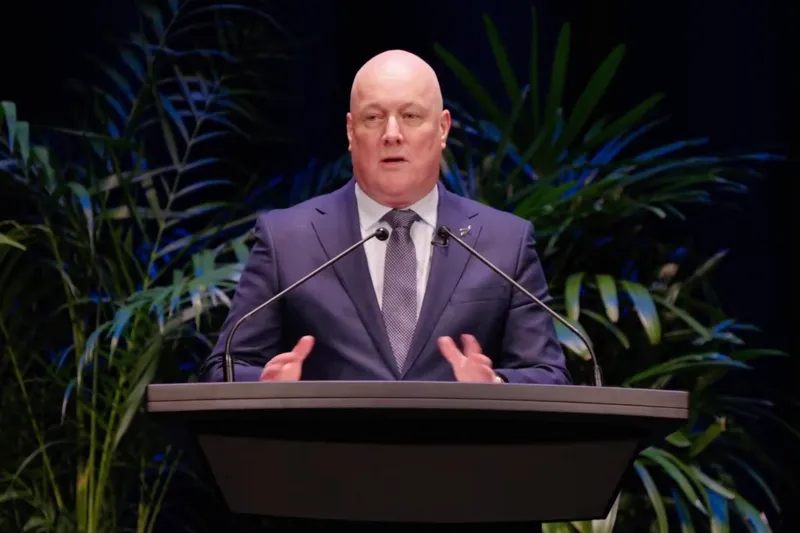
The statement came just hours after remarks on a similar theme by Mark Carney, prime minister of another Five Eyes nation, Canada. Speaking during a China visit, he suggested that US hostility towards that rules-based system heralded “a new world order”. Luxon stopped short of such a phrase, but the emphasis was enough for New Zealand’s biggest news site to offer the headline, “PM warns of new international order in state of nation speech”.
Luxon’s international outlook was underscored by repeated references – five of them, across his speech and subsequent interviews – that there are “195 countries in the world”. Counting “countries” is a fraught business – there is no simple definition. Luxon is relying, presumably, on the United Nations number: 193 member states and two non-member observer states. Which is fine, except that, in that latter category, we have the Holy See (Vatican) and Palestine, which New Zealand formally does not recognise as a state.
But if Luxon doesn’t count Palestine, maybe he swaps in Greenland? At least twice on Monday, he puzzlingly described Greenland as “a sovereign state”. It is not a sovereign state; it is an autonomous territory within the Kingdom of Denmark. And – notwithstanding the possibility that Luxon is subtly throwing his weight behind the considerable Greenlandic independence movement – this is not some esoteric detail; it’s kind of the point. Donald Trump, in his appetite to seize control of Greenland, is proposing to buy or take it from Denmark, a Nato ally, which throws the North Atlantic into crisis, prompting talk of the European Union deploying, for example, a “trade bazooka” in response.
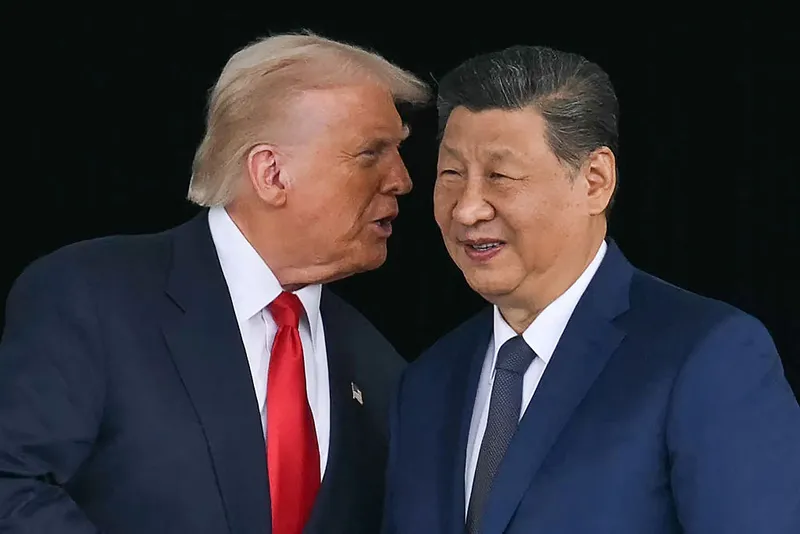
The delicacy of all this can be found in another example: Taiwan is not in those 195 countries, and hasn’t been recognised at the UN since the 70s. Just the other day, Xi Jinping – emboldened, perhaps, by events in Ukraine or Venezuela, or the rhetoric on Greenland – declared China’s claim on the island to be “unstoppable”. Beijing fiercely polices the language used to describe Taiwan. New Zealand is one of a number of countries that take an approach of “strategic ambiguity” on the territory.
Another couple of countries not included in the 195 are the Cook Islands and Niue – whose own status, as Winston Peters has been quick to emphasise in recent times, is one of “free association” as part of the Realm of New Zealand.
As Donald Trump, with characteristic modesty, pursues a “Donroe Doctrine” – an updated version of the Monroe doctrine which stresses US assertion of its primacy in the western hemisphere – rupturing the rules-based order with a fusillade of tariffs and increasingly inclined towards intervention and regime change, how does New Zealand respond?
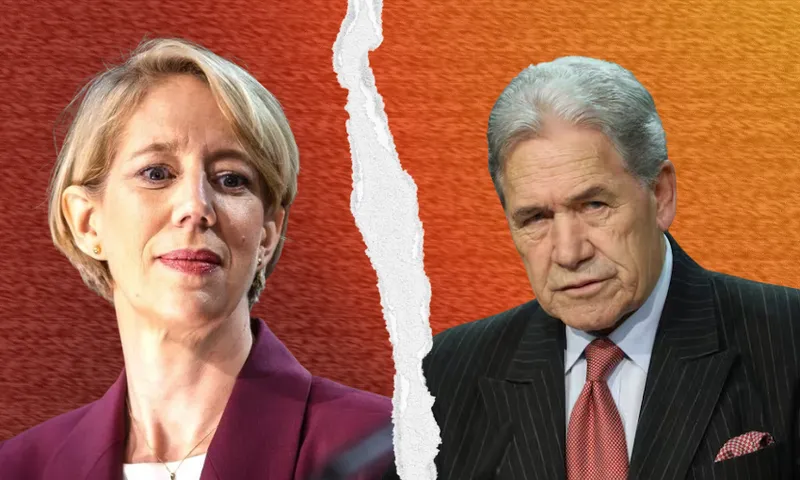
The foreign minister’s philosophy – call it the Winston doctrine – is to keep our heads below the parapet. Why, after all, poke the White House bear? That was evidenced in Peters’ controversial, tightly guarded General Assembly declaration of New Zealand’s position on Palestinian statehood. As it was in recent days in his public “stay in your lane” upbraiding of the new Reserve Bank governor, after she signed a letter of support for her embattled counterpart in the US.
If anyone knows about the foreign minister’s patch protection, it’s Luxon himself. In April last year, in the face of Trump tariff’s orgy, Luxon said he would fight for free trade, and rally together leaders in the CPTPP trans-Pacific trading bloc and the European Union, to “work together to champion rules-based trade and make specific commitments on how that support plays out in practice”. Peters admonished such talk as bellicose and hasty, saying: “We will continue to promote careful, pragmatic, quiet dialogue – aimed at deescalation and practical problem solving, rather than premature posturing.” Stay in your lane, he was saying, in effect.
After the state of the nation speech, Simon Bridges of the Auckland Business Chamber put the question to Luxon: in the face of all that volatility, should New Zealand “sit quietly and let it play out because we’re small and remote, or take a big, bold, values-based proposition and shout about it?”
Luxon said he preferred a “third way through” – a kind of serenity prayer in the face of an unstable world. But the third way is mostly, per the Winston doctrine, sit quietly: recognise what we can’t do (such as impact America’s trade policy), and “take control of what we can control”. To focus on domestic concerns, to “crack on and be pragmatic”.
Winston Peters might not have loved the “rupture” rhetoric – and let’s hope he didn’t see the “new international order” headline – but he can get on board with this, even if his New Zealand First Party opposes one of the main planks of Luxon’s “what we can control” measures, a free-trade agreement with India that stands as one of the prime minister’s biggest first-term achievements.
For a country so dependent on trade – the proverbial cork on the ocean – it is surprising how rarely foreign policy makes a serious dent in elections. This year, as Vernon Small wrote on Sunday, could be different, with international affairs threatening to have the biggest impact since the Springbok tour and nuclear-free debates of the 80s.
The impacts of Trumpworld – what Luxon calls a rupture in the rules-based system and Carney calls a new world order – are everywhere. Nato undermined. The UN increasingly isolated. The incessant thread of all-out trade warfare. Global markets on tenterhooks as tariffs are waved around like a wet towel at a picnic. The spectre of a bond market crisis. Action on climate change imperilled, as the risk of conflict propelled by its absence grows. In the manoeuvres on Greenland, confidence in basic respect for national borders shaken.
On it goes. An uprising against autocracy in Iran. Ongoing bloodshed in Ukraine. The fragile process playing out in the Middle East. Luxon, reportedly, has been invited to take a seat on Trump’s “board of peace” for Gaza. China and Taiwan. The South China Sea. The contest for power in the Pacific.
The pace of all this is dizzying. It is hard to fathom that it is just a year and a day since Donald Trump was inaugurating for a second term as president. In the nine or so months until an election campaign kicks off in New Zealand, it is hard to see how geopolitical unrest doesn’t continue to seep into our own politics, just as it seeps into our social feeds and consciences. That is only exacerbated by the fact that the US midterm elections, in many ways a referendum on the presidency so far, will most likely happen in the same fortnight as a general election in New Zealand.
It is a world, as Luxon rightly observes, in which “we are seeing rules give way to power”. It’s frightening. As the incumbents seek re-election in New Zealand, a message of security and safety, and staying well out of scuffles seems inevitable. But a volatile world may have other ideas.

Toby Manhire
Toby Manhire is editor-at-large at The Spinoff. He loves to cast a pod, whether it's Gone By Lunchtime, At Large or Juggernaut. He is a former editor of The Spinoff and has worked as a journalist in NZ and the UK since the last millennium.


