Why are New Zealand drivers so aggro?

tfw you see a cyclist
Anyone who’s ridden a bike or scooter on our roads has a story about a driver seemingly wanting to murder them. What’s going on?
Mark Weston almost got run over dozens of times before a driver actually tried to mow him down. The Christchurch business analyst has been cycling to work for the last 18 years, and near misses have been a weekly occurrence the whole time. Usually it’s just inattentive drivers passing within a metre. Sometimes they come within centimetres and follow up with abuse.
Weston’s encounter with Liam Foster in March last year was beyond anything he’d ever experienced. He was biking in the cycle path on Centaurus Rd in Cashmere when he moved into the road space to avoid being clipped by a vehicle on a narrow bend next to a pedestrian island. Foster, driving behind, honked his horn. Weston responded by giving the fingers after he pulled back over to the left. Foster sped forward, stopped his car, then started shouting more abuse. Weston slapped his wing mirror. That’s when Foster lined Weston up, revved the engine and ran him over at about 50km/h, before speeding off with Weston’s bike still under his wheels.
Foster, 29, was found guilty of causing grievous bodily harm with intent to injure and failing to stop after an accident. As judge Duncan Harvey sentenced him to four years and seven months in jail at the Christchurch District Court last month, he described the attack as a “dreadful act of violence”. Weston still lives with the damage. His back was broken in the incident and he hasn’t returned to work. Though Foster’s potentially deadly attack was unexpected, its trigger was familiar. Drivers often respond angrily to him taking the lane despite it being recommended in the road code. “Every roundabout I take the lane. I’ve taught my kids to take the lane. And I’ve had someone drive up on the centre of a roundabout trying to pass me. I’ve had another one drive around the outside of me on the roundabout, trying to pass,” he says. “It’s scary on the road.”
Almost everyone who’s used New Zealand’s roads will have a story about an angry, entitled, abusive or occasionally even violent driver. A nationwide survey carried out by IAG in 2021 showed 50% of respondents had encountered some form of road rage in the last year. According to an AA Insurance survey from March, 49% of us think the issue is getting worse.
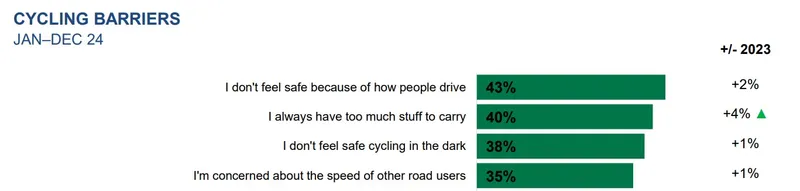
There’s evidence the problem is more pernicious for vulnerable road users. NZTA data shows safety fears around how people drive is the most common reason for not wanting to cycle, with 43% of people citing it as a concern. Just 55% of urban New Zealanders perceive cycling as safe. Looking at the comments section under RNZ’s Facebook post about Weston, you get a sense of why there’s such a high level of concern. “He took the lane. Someone decided to take it back. End of story,” says one person, sympathising with Foster’s violent vehicular vengeance. Auckland councillor Julie Fairey has encountered similar attitudes since being hit by a car while cycling earlier this year. “People were basically one step on from blaming me. It was like I deserved it and that it would be nice if they finished the job or if it happened again, and that’s hard to read,” she told RNZ.
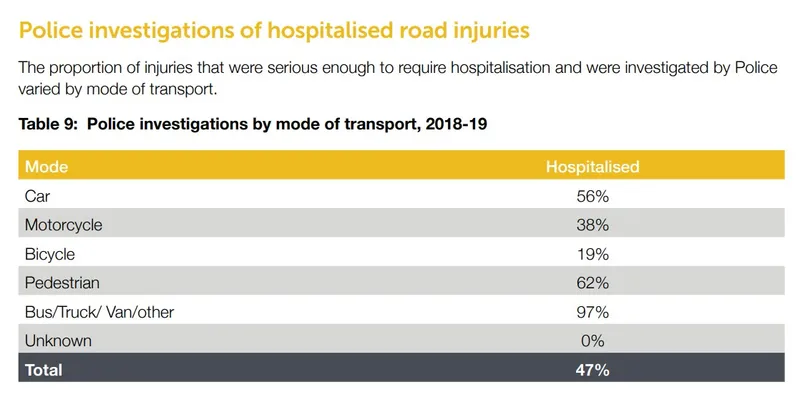
Why are New Zealand drivers so aggro? Auckland University senior research fellow Kirsty Wild lists potential causes. Driving is just stressful, filled with dangers you can’t control. It’s easy to dehumanise other road users when you’re cut off from them by a windscreen and a few tonnes of metal. Our increasingly oversized cars may encourage risky driving and bullying behaviour, and when people do hurt someone on the roads, they tend to get away with it. Only 19% of serious crashes involving a bike are even investigated by police.
None of those factors are unique to this country. But there’s reason to believe things might be worse here. We have the highest rate of car ownership in the world, with our 869 vehicles per 1,000 people eclipsing even the US. That’s no accident. People drive because we’ve essentially made it the only way of getting around in a lot of places. The resulting congestion makes for a stressful road environment, and that can amp up the anger when someone slows a driver down.
All that is exacerbated by transport design. Wild says motorists could be forgiven for thinking they’re kings of the road, because that’s the way a lot of roads are laid out. Protected bike paths are still sparse and lanes are designed to get cars from A to B as quickly as possible. All that leads to more “baked in” conflicts between cars and people travelling on foot or by bike. “Poor design encourages aggressive driving,” says Wild. “I know that there is a culture war element, on some level, around hatred of cyclists. But honestly, the research suggests that it’s primarily environmental. It’s quite stressful for drivers to interact with cyclists on poorly designed roads.”
Bike Auckland’s co-chair Donna Wynd agrees. She gets reports about drivers throwing bottles out their windows or bumping cyclists into parked cars. “Sometimes it feels like there is a sort of driver for whom a 60kg woman on a bike riding through traffic is utterly enraging,” she says. “Car drivers can be very entitled, largely because the whole system is geared to their needs.”
If you look at the countries where driving is seen as comparatively safe and pleasant, they all make it easy for people to get around in something other than a car. The Netherlands, famously home to the world’s most extensive network of protected urban bike lanes, was ranked by car insurers as the best place in the world to drive this year. Sweden and Norway consistently rank highly when it comes to road safety and driver experience. Both have good cycling infrastructure and comprehensive public transport networks. The same goes for places like Japan and Estonia.
The single-most soothing intervention for angry drivers might be the one many of them hate with a passion. A braying crowd of talkback callers materialises whenever councils so much as imagine a cycle lane, but reducing the number of potential collisions between cars, bikes and pedestrians keeps everyone more relaxed, says Wynd. It also may cut back on stress-inducing congestion. “We’d love to remind everyone that people on bikes aren’t rivals to drivers – they’re allies,” she says. “Every bike you pass represents one less car in front of you at the lights.”
In other words, politicians have a choice: make a bunch of motorists mad once by building a bike lane or two, or make thousands of them intermittently mad indefinitely. We’ve been almost exclusively hooning down the latter road for 70 years and it’s given us some of the most rarked up, cheesed off, generally ropeable drivers in the world. It could be time for a U-turn.

Hayden Donnell
Hayden Donnell is a senior writer for The Spinoff. He previously worked at RNZ, TVNZ and the New Zealand Herald, alongside other media companies that have since closed down or been renamed. His primary passions are local politics and the Big Fresh animatronic fruit and veggies.


