With the family opposed and the Marokopa community silent, police are set to hold a remarkable amount of sway over a Netflix documentary about their own conduct, writes Catherine McGregor in today’s excerpt from The Bulletin.
To receive The Bulletin in full each weekday, sign up here.
Police to review relationship with doco makers
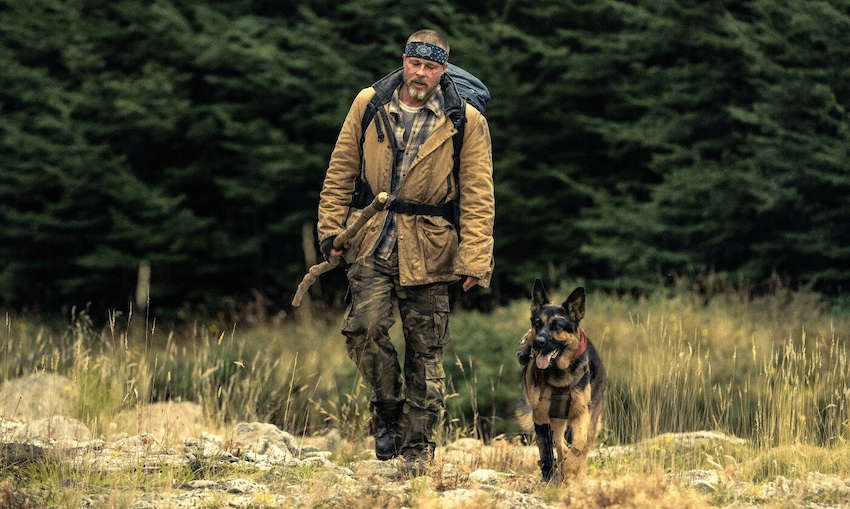
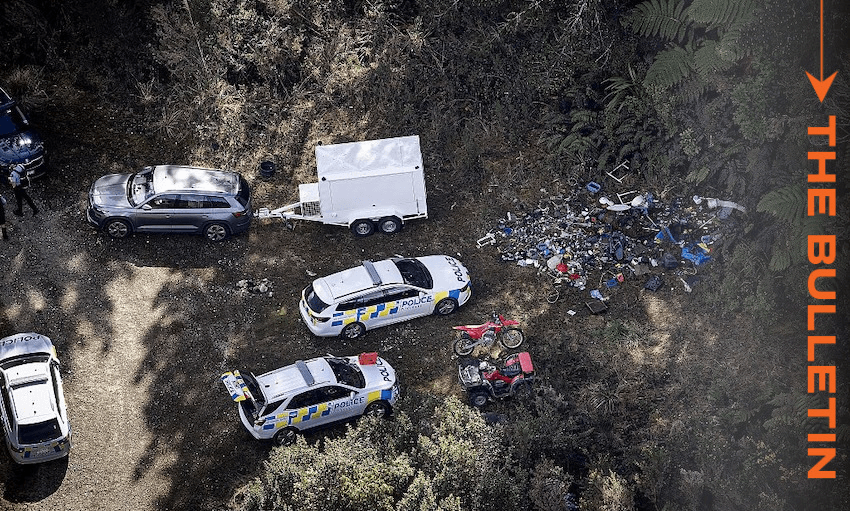
Police commissioner Richard Chambers has acknowledged that the making of The Marokopa Project – a Netflix documentary following the hunt for fugitive Tom Phillips and his children – “was not always handled in line with the usual protocols and processes that apply to documentaries police take part in”. Almost 300 pages of emails, texts and other documents released under the OIA reveal the specifics, Shayne Currie reports at the NZ Herald. Two failures stand out: the documentary crew was given access to an active crime scene without Chambers’ knowledge (“Had I known it was to happen, I would have stopped that”), and producer Dame Julie Christie was tipped off that Phillips had been shot before his own family was told.
Police are now reviewing their processes. Police minister Mark Mitchell says the review is “entirely appropriate”, but has pointed out that “police participation in documentaries about high-profile investigations is not new”, Sam Sherwood of RNZ reports. Chambers says he wants to be sure the project was “handled appropriately at all stages and to allow us to consider whether Police need to reassess the way we engage in such projects”.
The Netflix secret
The OIA release is the latest in a series of revelations raising questions about the way the police are approaching the documentary. Stuff’s Paddy Gower revealed in March that police had fought to keep Netflix’s involvement secret, claiming that naming the platform would “unreasonably prejudice the commercial position” of the streamer – before correcting themselves to say they were actually protecting Christie’s company NHNZ. Police apologised for the misleading information after an Ombudsman investigation forced the disclosure.
The deal is unprecedented: a list provided to Gower shows that, of 40 productions involving access to the police over the past 20 years, every other arrangement was with a NZ-based platform. Also, “there is no other show on the list that allows behind-the-scenes access to an investigation of the scale of that into Tom Phillips,” Gower writes. Netflix – available in 191 countries with an estimated 700 million viewers – will not pay anything for that access.
Family distances themselves
The Phillips family opposed the documentary from the moment it became public. “Our family is disturbed that anyone would want to profit from our tragedy,” Tom Phillips’ sister Rozzi said in a statement last year. The children’s mother has said she does not support or consent to the production.
Meanwhile the contract places police in a powerful position: they may preview the film, demand edits on broad grounds including security, sensitivity and privacy, and “act as binding arbiters of factual accuracy”. Documentary filmmaker Annie Goldson, writing in The Post (paywalled), argues these clauses give police “substantial practical influence over the film’s content and representations – effectively privileging the police narrative”.
The film’s only willing subjects?
Goldson situates The Marokopa Project in the broader true crime documentary boom, in which streamers battle over the most sought-after projects and questions of editorial control “are often sidelined”. Given the family’s refusal to participate and the Marokopa community’s general silence, police are likely to be among the film’s only willing subjects – meaning their input will likely be even stronger than the contract stipulates. “The police will be able to tell the story that they want to tell”, Goldson writes, “removing themselves from deeper scrutiny”.
Another viewpoint was offered last September – before the extent of police involvement was made public – in The Press (paywalled) by Martin van Beynen, the journalist behind the Black Hands book and podcast on David Bain. “The process of producing the documentary will require ethical decisions all the way through, with the interests of the children as a significant factor. Good journalists and good documentary makers will get most of those decisions right,” he wrote.
“But it is important for them to make those decisions. That is what we mean by freedom of expression. And we stand to be judged by the quality of our work.”