
The late election date gives the coalition extra time for the economy to turn – and for the opposition to hammer home its message that NZ needs a change, writes Catherine McGregor in today’s excerpt from The Bulletin.
To receive The Bulletin in full each weekday, sign up here.
A long road to November 7
When it came, Christopher Luxon’s announcement that New Zealand will vote on November 7 felt like a formality, given that one of our top political minds had already called it a week ago. Luxon’s confirmation fires the starter’s pistol on what the Herald’s Thomas Coughlan says is a “very, very, long campaign by New Zealand standards” – as a reminder, the last three elections were held on September 23, October 17 and October 14. The new timetable means parliament will be dissolved on 1 October, clearing the way for an intense final month in which advance voting opens on 26 October and runs right up to polling day. Official results will not be declared until 27 November, by which time coalition negotiations should be well advanced. There’s just under seven weeks between polling day and Christmas Day – one week more than the length of time 2023’s coalition negotiations took – but Luxon says he’s confident that talks won’t drag into the Christmas period this year.
The date could also add an interesting wrinkle to the campaign’s final weeks, suggests Coughlan: because the vote falls just two days after Guy Fawkes, leaders may find themselves debating whether to ban the sale of fireworks – the subject of a current NZ First members bill – while canvassing streets littered with skyrockets. Still, this will ultimately be an “economics election”, he says. “Forecasts suggest the economy may just have improved enough to propel a National coalition to victory, but it’ll be a close run thing.”
Hipkins’ optimistic pitch
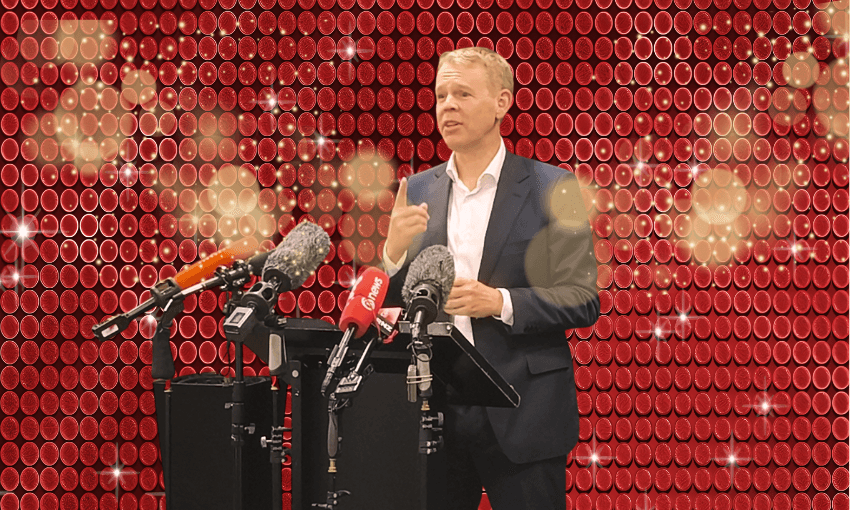
At Labour’s caucus retreat in West Auckland, Chris Hipkins used his first big speech of the year to put a positive spin on polling that still suggests the current coalition will be returned to power. Speaking in a drab hotel conference room, he told MPs that New Zealanders were desperate for “a sense of hope” after what he cast as relentless “doom and gloom” from the government. He accused the coalition of “slash and burn” cuts that derailed a recovery Labour claims was already under way in 2023, and promised a “real and compelling alternative, because better is possible”.
In The Spinoff this morning, Joel MacManus says the dreary venue only made Hipkins seem more energetic, “like an enthusiastic Michael Scott”, a striking contrast with Luxon’s flashier but “more dour” state of the nation event two days earlier. Hipkins hammered away at basic cost‑of‑living concerns – “jobs, health, homes” – and MacManus observed that he repeated some version of “better is possible” three times, reading it as a road‑test for a campaign slogan built on disciplined, simplified messaging. In MacManus’s telling, Labour’s path to victory mirrors National’s 2023 playbook: stay relentlessly on a small set of kitchen‑table issues while painting the government as negative, distracted and out of touch.
Retirements, returns and a new speaker-in-waiting
The caucus retreat also doubled as an early farewell to former speaker Adrian Rurawhe, who confirmed his retirement; his last day is set for Waitangi Day. As Stuff’s Glenn McConnell writes, his departure finally opens the door for Georgie Dansey, long on Labour’s fringes after runs in Hamilton West and Hamilton East, who will now enter Parliament in February and contest Hamilton East again in November. For Greg O’Connor, Rurawhe’s exit presents a potential opportunity. There had been questions about his future after the abolition of his Ōhāriu electorate and his failure to secure selection in the new Wellington North seat, but he has confirmed a re‑election bid via the Labour list – and openly signalled his ambition to become Speaker should Labour return to power.