Motuhaketanga: The long road home for wāhine Māori after prison

Motuhaketanga follows three wāhine Māori as they reenter society after prison. (Image: Supplied).
With wāhine Māori being one of the most incarcerated groups in the world, Motuhaketanga examines the jagged paths to redemption for three determined wāhine after they’re released from prison.
Māori remain severely over represented in the criminal justice system. Despite being only 17% of the population, Māori men make up 53% of the prison population and Māori women fare even worse at 68%. The prison population has fallen to its lowest in 14 years, yet the disproportionate incarceration rate of Māori has increased. It’s a dire set of statistics that begs a simple question – why?
Wāhine Māori commonly face intergenerational barriers, systems and traumas that work against them. According to Te Kāhui Tika Tangata Human Rights Commission, 75% of female inmates have been victims of whānau violence, rape or sexual assault; 80% of Māori women have substance abuse issues; and 75% have been diagnosed with having mental health needs in the last 12 months and are three times more likely to be abused than non-Māori women. A rudimentary take on it could be the impacts of colonisation have often been attributed with creating cycles of abuse and trauma, ultimately contributing to an increased probability of offending.
It’s all very theoretical – the statistics and academic garb can easily detach you from the humans behind the figures. What Motuhaketanga does so deftly is ground those numbers in an empathetic narrative and opens a reflective kōrero into the ever looming question of why.
Motuhaketanga is a two-part documentary series that intimately follows three women as they leave prison and return to their whānau. We watch Arohatonu, Tristin and Lesley as they discover their own paths, navigate the challenges of reintegrating and rebuilding trust with their children, wider whanau and ultimately themselves.
The series begins with the release of all three women from prison. There is a sense of hope and excitement sitting just below their nervous smiles but they speak bravely about their anxiety about what waits on the other side: How have their relationships with their children changed? Will their whānau be a safe haven or create more anguish? Will they be able to avoid relapse? And the underlying question of whether the women can forgive and ultimately love themselves. This is where the series really starts to sing. Producer/director Kathleen Mantel commits to a cognisant tone and knows how to remain there through the joy and, more importantly, the intimate struggles. She doesn’t overplay the pain or vulnerability but rather lets the utter compelling nature of these women lead the way.
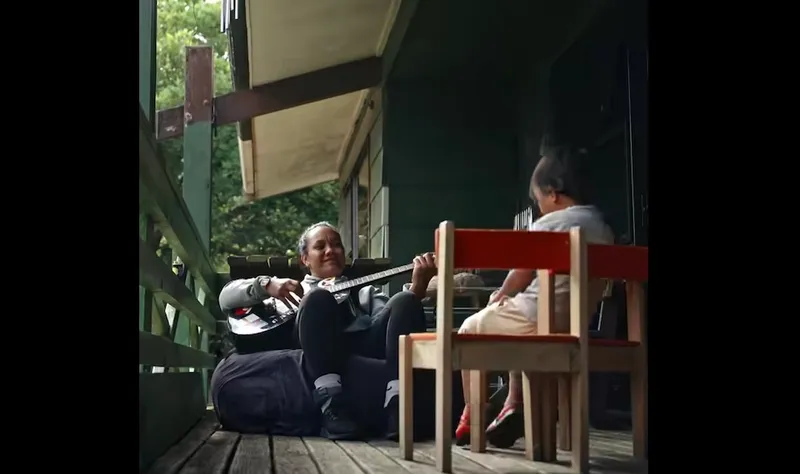
Lesley, clever and chatty, had just reached her teenage years when she had to care for her siblings in the chaos of a drug-addicted household. At 13, she was put into a youth justice facility where she was the only girl among many males. While there, she was exposed to real and visceral harm – pain she has evidently carried into her adult years. Lesley ended up burning the facility to the ground. Now, toxic relationships are her kryptonite, with one being the reason for her relapse.
Arohatonu, strong in her Māoritanga, lost her beloved sister to renal failure. Outside of prison, she struggles with her ever changing and tenuous relationship with her children. She is haunted by her absence in their formative years, grappling with the emotional impact it has had on them in real time. However, Arohatonu finds strength from her taha Māori – a joy you can see radiate from her. Unfortunately, tensions with her mother and overwhelming circumstances derail her recovery and she relapses. She has to admit this to her probation officer and it is genuinely heartbreaking to see her choke back tears when she whispers “I relapsed”, heavy with the shame of a setback.
Tristin, guarded yet loving, has 40 convictions behind her. She has a caring but complicated whānau who wraps around her on her release. She still reels from the effects of an abusive ex who went on to raise their children with her mother. Eventually, her ex and mother started up a relationship. Tristin’s vulnerability pierces through the screen when she confronts her about the impact of this betrayal: “That quite hurt me mum, to be honest. You crossed that line and went there with him. I had no one after that, cos I lost you. It broke my heart,” she shares in the documentary. The trauma visibly stays with Tristin as she tries to navigate her culpability in the way she raised her own children.
All three women find their purpose and struggle intertwined with their roles as mothers. Each of them fights to keep their relationships with their tamariki alive. Arohatonu persists in the face of her youngest child’s rejection, Lesley emanates with pride when speaking of her daughter’s stable life working in the army and Tristin recreates a 21st party for her son that she missed whilst she was inside. Here, they start to recognise a semblance of real hope in their lives and Mantel does well to keep this sentiment at the heart of its last act.
At the guts of Motuhaketanga is an exploration of how New Zealand values wāhine Māori. It’s not always easy watching and it’s clear there is a long road ahead, but the filmmakers speak to their kaupapa best when they allow Lesley, Tristin and Arohatonu to tell their own stories. They’re fallible, they’re susceptible to vices and they don’t always make the right choices, but they’re also resilient, warm and determined to fight for a better future. This is the humanity, flaws and all, that statistics so often obscure but Motuhaketanga doggedly brings to the forefront, and it does so with immense care and honesty.
Motuhaketanga is available to stream now on Māori+.

Dana Leaming
Dana (Ngāpuhi, Te Rarawa) is a wāhine Māori filmmaker living in Te Whanganui-a-Tara. Dana gained her MA at the International Institute of Modern Letters where she won the David Carson-Parker Embassy Prize for best script. Her award winning debut series Not Even premiered in early 2023 with Season 2 released in September 2024. Most recently she has been working on writers tables in Aotearoa.


