How many Māori seats should there be in parliament?

What does the future hold for the Māori seats in parliament? (Design: Tina Tiller).
A proposed law would prevent the number of Māori electorate seats from increasing until at least 2032. With a growing Māori population, is that fair?
The government has introduced a bill changing how often electorate boundaries are reviewed in Aotearoa. Among other things, the Electoral (District Boundaries) Amendment Bill proposes changes that will prevent an increase in the number of Māori seats in parliament until at least 2032.
However, Te Pāti Māori says there are already enough voters on the Māori electoral roll to justify the introduction of an eighth Māori electorate, and the proposed changes will have a detrimental effect on Māori representation in parliament.
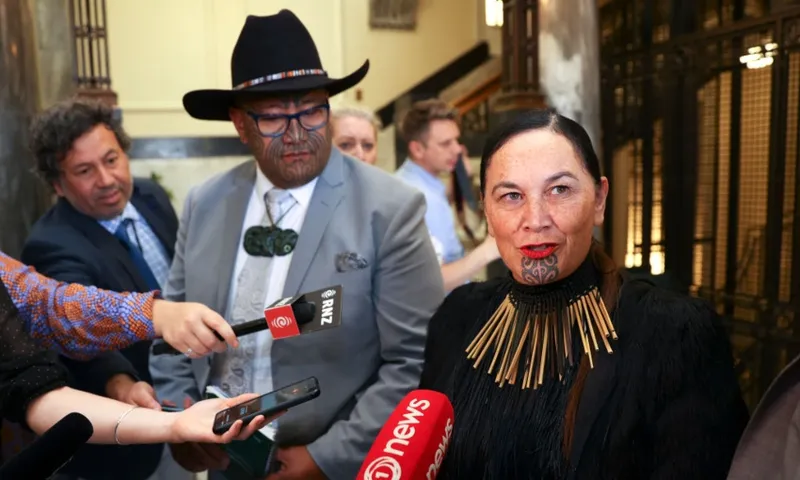
“Not only will this bill harm our people for the next six years, it will also ensure that we are underrepresented in all future elections,” Te Pāti Māori co-leader Rawiri Waititi said in a press release last week.
What are the proposed changes?
The government says the bill has been introduced in response to changes in how our national census data is collected. With data (for the most part administrative data already held) now being collected annually, instead of via a nationwide survey every five years, the bill proposes a review of our electorate boundaries be conducted every two parliamentary terms (at least once every six years), rather than once every five years after each census as it has been to date. Another part of the proposed legislation means the first review will be delayed until 2032.
How are electorate boundaries worked out?
The Representation Commission is an independent body that reviews the boundaries and names of electorates. Whenever a review of electorate boundaries is carried out, the commission is responsible for ensuring every electorate in the country has roughly the same number of people in it.
The commission has seven members, including one government representative and one from the opposition. When considering the Māori electorate boundaries, the chief executive of Te Puni Kōkiri and a Māori representative from the government and the opposition also join the commission.
When was the last review and what did it change?
Last year, the commission carried out its review based on 2023 census data and data from the electoral rolls as at April 1, 2024. This led to the boundaries of 49 general and three Māori electorates being adjusted and to the total number of general electorates reducing by one, in the North Island (South Island electorates are fixed at 16 to ensure representation for its sparser population). The population quotas (provided by the government statistician) were set at 70,037 people for South Island general electorates, 69,875 people for North Island general electorates, and 74,367 people for the Māori electorates, and the electoral population of each of these had to lie within 5% of the quotas.
How is the number of Māori electorates calculated?
Electorates are supposed to have roughly the same number of voters in, but there are various complicating factors, including that the South Island has to always have 16. The number of Māori electoral districts, meanwhile, varies according to the proportion of Māori who choose to be on the Māori electoral roll. There’s a relatively complex calculation used when figuring out how many Māori seats parliament should have, referred to as the Māori ratio. Effectively, it boils down to the number of Māori on the Māori roll and the size of the Māori population: the more Māori on the Māori roll, the more seats in parliament set aside for Māori, but the size of the general Māori population is also taken into account.
There are currently seven Māori electorate seats in parliament. When the commission carried out its review last year, the Māori electoral population calculation it used was based on data from the 2023 census. However, Māori population data released in June 2025 showed an increase in the number of people who identify as Māori. The Māori electoral population is based on the Māori descent population – not just those who identify as Māori – which historically sits about 10% higher than the Māori ethnic population.
This means more than 1 million people in New Zealand have Māori whakapapa. The higher the Māori population, the higher the Māori electoral population is, meaning more Māori seats in parliament.
According to data released by Stats NZ on April 1 this year, there are more than 257,000 Māori on the general roll and more than 305,000 on the Māori roll. Based on the latest data, including population data from the 2023 census, the latest enrolment data, and Māori population estimates from Stats NZ, Māori should currently have at least eight seats in parliament.
Currently, just over half of all eligible Māori voters are on the Māori roll. Based on current data, if all eligible Māori switched to the Māori roll today, there would be about 16 Māori seats in parliament.
What does the future hold for Māori seats?
The Māori seats remain a political football. In January, the Green Party announced a bill in the name of Hūhana Lyndon seeking to entrench the Māori seats. In February, New Zealand First announced it would be campaigning for the abolition of the seats from parliament.
“The arguments for a separate franchise based on race have become irrelevant,” Peters said in a statement at the time.
The Māori population is young and growing – a third of all those under 25 years old in New Zealand are Māori. This will mark a significant shift in the makeup of the country’s voting population in coming years. By 2048, there could be as many as 20 Māori seats in parliament. Combined with a growing shift of Māori joining the Māori electoral roll, it is likely the number of Māori seats in parliament will continue to grow.
“It will be completely undemocratic for the government to restrict Māori representation until 2032 when we are projected to have the numbers for nine or 10 Māori seats by then,” Waititi said.
What’s next?
Submissions on the bill closed last week and will now be reviewed by the justice committee, whose report back to parliament is currently due on July 6. Submissions have not been uploaded to parliament’s website yet, but the New Zealand Council for Civil Liberties has published its own, which supports the stance of Te Pāti Māori, arguing the Māori electorates should be adjusted before every election.
The seats remain as they are, for now. Any change to their number and the makeup of our parliamentary electorates seems unlikely to take place before 2032. At that point, the number of Māori seats in parliament appears likely to grow – if they still exist by then.

Liam Rātana
Liam Rātana (Ngāti Wairupe/Ngāti Kurī) is editor of The Spinoff's Ātea section. He is passionate about indigenous and minority issues. Liam enjoys cooking, poetry, photography, and exploring the outdoors.


