‘Indigenous excellence’ isn’t what you think

The Parade of Nations for Wipce 2025. (Image: Supplied).
The world’s biggest Indigenous education conference returned to Aotearoa for the first time in 20 years – and asked people to rethink what ‘excellence’ really means.
In her opening keynote address for the World Indigenous Peoples’ Conference on Education (Wipce), leading scholar and researcher in Indigenous studies Linda Tuhiwai Smith asked us to be aspirational about Indigenous excellence by thinking intergenerationally. It set the tone for a conference where Indigenous peoples from around the world gathered, shared and proved their own metrics of “excellence”.
Last held in Aotearoa back in 2005 in Tūrangawaewae, this year’s event was spread across Aotea Square, Event Cinemas, Ngā Wai o Horotiu Marae and Auckland University of Technology (AUT). Approximately 4,000 people attended the conference, which was divided into eight themes over four days: Education systems and practices; science and technology; politics, self-determination and decolonisation; youth; health and wellbeing; environment and climate; linguistic and cultural revitalisation; and creative arts and media. Each theme had a keynote speaker who would set the tone of the breakout sessions that followed.
There were greats in kaupapa Māori theory, praxis and Indigenous education – Ani Mikaere spoke about the historic upheaval of colonialism, while reminding us that we already have the solutions as Indigenous peoples to our planetary issues. She also talked about her life’s work across university institutions eventually leading her to Te Wānanga o Raukawa, illustrating an inspirational story arc of tino rangatiratanga. However, Mikaere warned us to beware of the seepage of colonialism and to always think critically about why we do the work we do, where we do it and our positions amongst all of it.
As the youth keynote speaker, Eru Kapa-Kingi challenged the conference committee by positioning rangatahi as the generation tasked with speaking up for change, yet facing prohibitively expensive barriers to even register for the conference (standard registration was $2,185). Kapa-Kingi reminded us to critically examine ourselves within the context of power, but also through misogyny and sexism within te ao Māori.
Marine biologist Teina Rongo connected us across Te Moana-nui-a-Kiwa to Rarotonga through the environmental and educational work of NGO Kōrero o te ‘Ōrau. Rongo illustrated the group’s intergenerational work around coral reef ecology, ciguatera poisoning and climate change, finishing with a quote that still reverberates in my mind on the destructive consequences of sea-bed mining: “Exploration will always lead to exploitation. The bottom of the sea is sacred to our people. It is tapu. It is where our atua dwell. We do not belong there.”
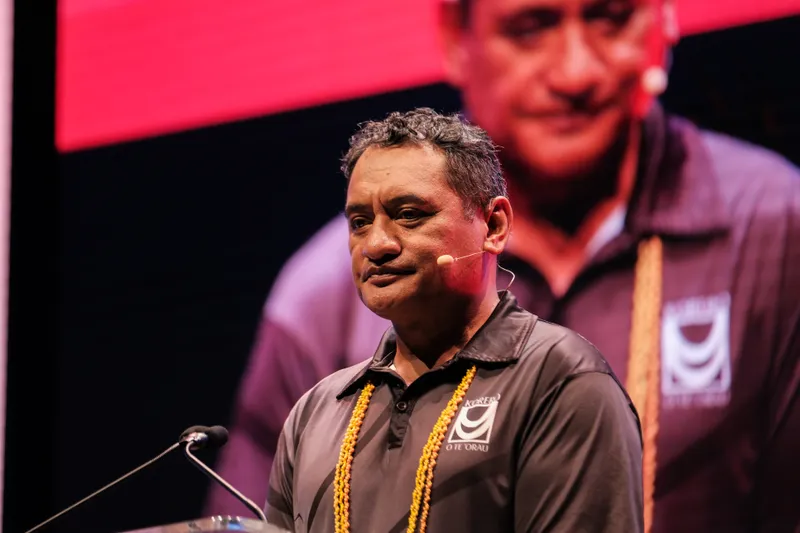
The quote around the damage of seabed mining rang particularly true for the Taranaki region, where my whakapapa, work and life are situated. The last keynote I witnessed was given by co-chair of Te Kōhanga Reo National Trust Rāniera Proctor and Te Hiku Media CEO Peter-Lucas Jones. They highlighted challenges for our current generation, such as AI with te reo Māori normalisation practices and challenges around the elite Māori discourse on social media.
Kabini Sanga, Jonathan Kamakawiwoʻole Osorio, Lilikalā Kameʻeleihiwa, Tiffany Prete, Jenny-Lee Morgan, Catherine Mitchell, Graham Hingangaroa Smith, Leonie Pihama and Tiberius Fayant-McLeod were all the speakers that I enjoyed throughout the conference. They discussed different subjects and research, but were weaved together by being Indigenous and seeing the world as such. They spoke with joy and sadness, critiquing colonialism and their Indigenous communities, while illustrating their own intergenerational metrics for Indigenous excellence. For most of these speakers, Indigenous excellence looked like our communities and places being well across generations – inferring a need for collective self-determination of reciprocity that sits outside of colonial metrics of individual excellence centred on wealth or social status.
Looking to the next Wipce – due to be held in Waikōloa, Hawai’i in 2028 – when creating an Indigenous conference as Indigenous peoples, we must be careful to not reproduce harmful colonial metrics of excellence or reproduce colonial conventions of conferences that don’t work for us.
As Tuhiwai-Smith hinted with her keynote, we have an opportunity to slow down, deconstruct what we think is a “legitimate conference” and turn it on its head by envisioning and reimagining beyond what we know. As Kapa-Kingi pointed out, the financial inaccessibility to the conference with no tiered pricing for rangatahi or kaumātua jeopardised potentially important discussions and viewpoints from reaching our Indigenous communities.
I was with my kaumātua throughout the conference, and the venues were small and physically inaccessible for them with a lack of seating, many stairs and limited lifts. Tuhiwai Smith asked us to reimagine, and a conference being accessible is an opportunity to do just that.
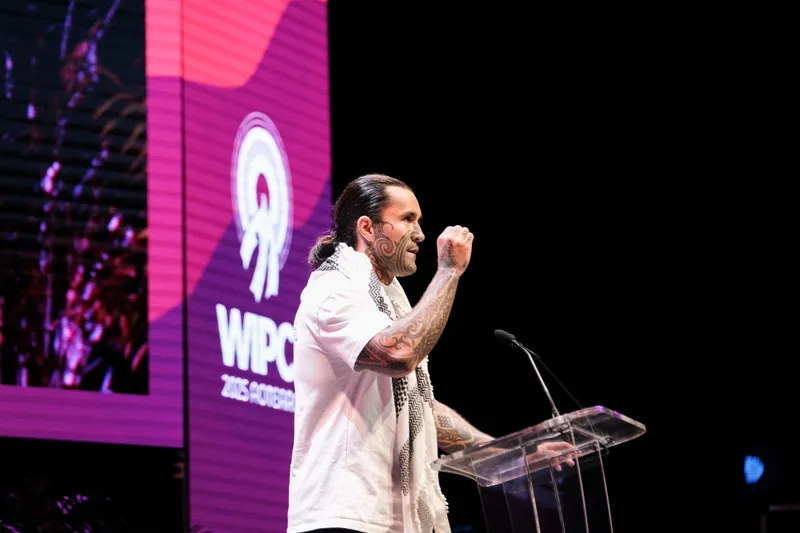
Another critique of the conference came from Kameʻeleihiwa during her panel, where she stated the conference committee should ensure that Wipce is held by an Indigenous delegation – not a specific university institution (AUT was the official host) – and that Māori should have spoken first at Wipce, as the mauri of the conference is on whenua Māori.
Mikaere spoke about colonialism being something that “seeps into everything, like the air we breathe [and] is a pollutant.” This makes us Indigenous peoples more susceptible to being dependent on colonial metrics because it’s what we know. However, it also makes us more likely to reproduce colonial settings without being fully aware that it isn’t reflective of things we are passionate about as Indigenous peoples.
Being in a space that is organised by Indigenous peoples and is for Indigenous peoples hits different – it’s a space where you can be unapologetically Indigenous. You don’t have to hide it or worry about the colonial labour of attending non-Indigenous conferences – such as facing racism – and you can feel proud to be representing an Indigenous collective. It reminded me that our Indigenous connections extend beyond colonialism and we have intimate relationships with one another based on our shared knowledge of how to live together respectfully.

Meri Haami
Dr Meri Haami (she/her) descends from Te Āti Haunui-a-Pāpārangi, Ngāti Rangi, Ngaa Rauru Kiitahi, Ngāti Tūwharetoa and has ethnic and regional affiliations to Southeast Asia, specifically, Singapore. Meri works in a variety of kaupapa Māori research with her communities. Meri works as a Kairangahau for a kaupapa Māori development and liberation organisation called, Tū Tama Wāhine o Taranaki.


