
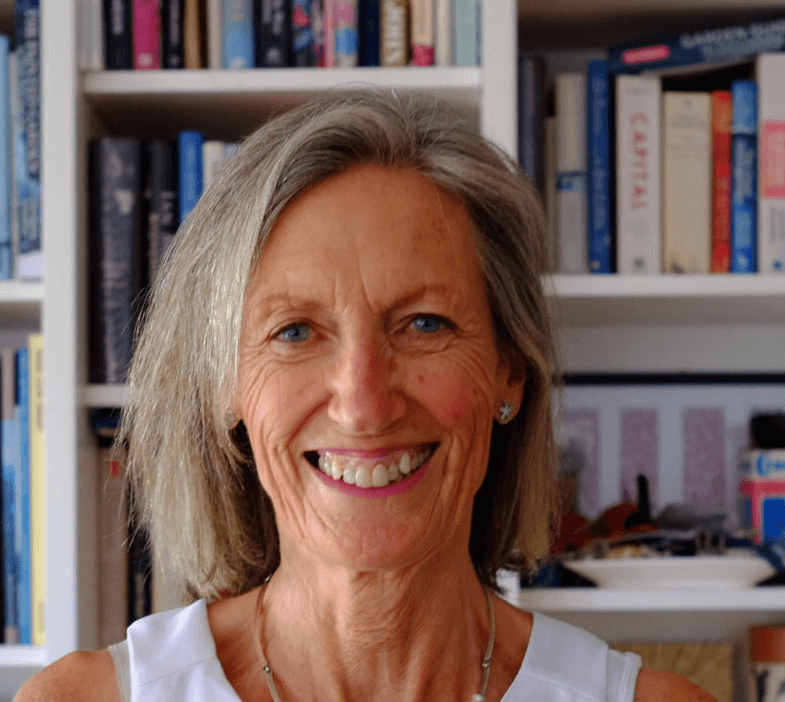


It’s election year. That means endless arguments with your family members about politics. Here journalist Mark Crysell, who recently ran for Auckland Council’s Waitematā local board, takes on his mother-in-law, publisher and former Act MP Deborah Coddington, about the state of New Zealand and what should be done.
Mark Crysell: The increase in the price of petrol makes me feel like the economy has leaned back and kneed us in the nuts – again. How many more times does this country have to struggle back off the canvas before we reach the promised land?
For the lowest income earners, it’s a crisis – a proper one. It’s the difference between getting to work and not, between the kids eating well and not.
But here’s what’s shifted: it’s not just them anymore. The middle class has had a gutsful. They’re working their arses off and going backwards. Statistics NZ tells us the wealthiest 10% hold 48.5% of all the wealth in this country. The bottom 50% share 6.7% between them. That’s not a cost of living crisis – that’s a rigged game.
Deborah Coddington: The kick from petrol prices hurts more, perhaps, because it’s not this country’s fault. Trump took a spoon to a knife fight and we’re collateral damage.
I disagree with you that this crisis is worse for the lowest income earners, Mark, because they are not driving to work: they are on welfare either as job seekers or superannuitants. The hardest hit are those who we take for granted in normal times – posties, truckies, builders, plumbers, sparkies, first responders, linesmen when your power goes out – the real working class. They are the “squeezed middle”. Political candidates should campaign to these guys this election.
I’ll tell you what’s rigged: housing. It’s the single biggest reason why it’s so tough, financially, in this country. New Zealand has the glorious honour of being one of the hardest places in the developed world to buy a house. Yet, we have these nimbys in Auckland’s inner-city, high-wealth suburbs, the ones who cluster around that nebulous group who call themselves the Character Coalition.
They pay lip service to protecting heritage houses but in reality have a pull-up-the-ladder attitude because they are fine and dandy in their McMansions. These people believe when they bought their houses they also purchased the lifelong right to glorious views, unimpeded by nasty new apartment blocks. They did not. If they find it distasteful to see neighbouring sections divided and built upon, they should buy them, not lobby their local MPs to force Chris Bishop to pull his head in.
So, congratulations to Luxon and Seymour (both lead parties which supposedly believe in property rights), who have fallen for it. You just made it even harder for strugglers to get a home of their own near schools, work, and transport hubs.
Still, if we leave housing out of the equation and look at income, in real terms the gap between middle and low-wage earners has actually shrunk, mainly because of big increases in the minimum wage and welfare increases.
MC: With the greatest respect, Deborah, I think we’re coming perilously close to agreeing with each other. You’re right that the working class are copping it hardest. They can’t work from home, they can’t UberEats their way around a budget, and they sure as hell can’t ride an e-bike to a job site in Pokeno.
But I’m not letting you off the hook on the wealth gap. Shrinking the gap at the bottom while the top keeps pulling away isn’t progress – that’s running on a treadmill to nowhere.
Plus, we can’t leave housing out of the equation – we’ve built an economy where the most reliable path to wealth is owning the thing everyone else desperately needs. That’s not a market; that’s a toll road with a very exclusive guest list, and the same people have been collecting the tolls for 30 years.
Meanwhile, every three years, the election campaigns resemble something between a beauty pageant and an open mic night, while inequality, homelessness, superannuation and climate change get kicked down the road. Except as my wife (your daughter) put it: you can’t kick a can down a road that’s been washed away by a landslip.
DC: I’m not agreeing with you, Mark (except at Christmas dinner), because you’re a pinko and I’m a right-wing harridan, but, yes, it’s true that living costs have risen faster than incomes.
You talk about housing as a path to wealth, and yes, those who have managed to get on the property ladder keep growing their wealth. But, I’d just like to point out another reason, for owning a house, as opposed to renting: nesting. I remember discussing it once with Bob Jones. In general, people thrive better in their own home. They are more likely to have a garden, grow veges, keep the place tidy, and love it, because they have skin in the game. There are difficulties like rates, maintenance, insurance, but with a budget they can be managed.
You mention inequality and the homeless. There’s always going to be inequality. I’m very comfortable right now, but you know it hasn’t always been so for me and my kids. I might lose it all again.
What I struggle to understand is some of the responses to issues faced by the homeless. What was the point of 10 church groups holding an all-night prayer vigil at St Paul’s Cathedral recently to protest the “move on” orders? Churches could start paying rates to local bodies, and sell some valuable assets they currently rent out – that would raise enough dosh to house the homeless who sleep on the streets, instead of showboating with this handwringing and virtue signalling.
MC: Deborah, you’ve just invoked Bob Jones on the joys of home ownership and sent the churches a rates bill, I’m going to need a moment. As for calling me a pinko? I was once on a ZB panel and a listener texted in to call me Commie Crysell, so I can take it.
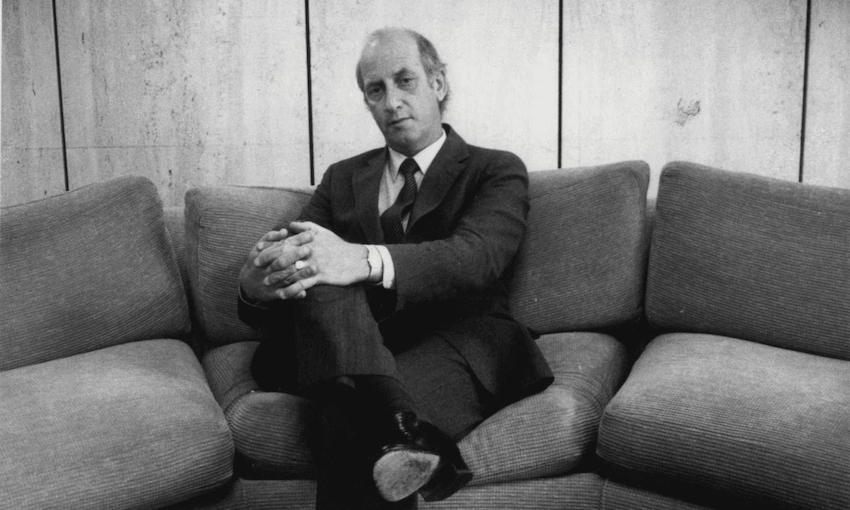
You’re not wrong about nesting. Former prime minister Norman Kirk put it better than anyone, when he said: all people really want is somewhere to live, someone to love, and something to hope for. It’s as simple as that. But we’ve let that truth become the justification for a system that makes ownership impossible for a generation of people who are doing everything right and still can’t get there. And the uncomfortable reality is that not everyone starts from the same starting line – big Norm knew that too.
The response to move-on orders? I take your point about churches, but “sell your assets and pay rates” is a fairly brisk solution to what is, at its core, a housing supply and mental health crisis dressed up as a moral failing. The prayer vigil might have been theatre, but at least they showed up.
And we all have to start showing up and coming up with solutions. We have to start asking, how do we make the waka go faster?
DC: My biggest concern right now is that we’re too far gone. New Zealand is seriously up the creek with nary a hoe in sight. Instead of being abstemious, our leaders have borrowed billions of dollars since John Key was PM, right through Jacinda Ardern’s watch, and now Nicola Willis is still at it. And what’s the response to the resulting crisis (before the oil crisis compounded it)? Word salad.
There’s been no realistic but necessarily painful cuts, just reassurance. Nobody is taking personal responsibility. National blames Labour, Labour shrugs, the Greens are focused on Gaza, Act wastes time redefining the Treaty principles, and Te Pāti Māori self destructs. At least Winston will take a sword to the energy gentailers (horrible word, that) and reduce power bills.
You ask how we make the waka go faster. I think there are individual MPs who could work together across the floor, like National’s housing minister Chris Bishop and Labour’s housing spokesperson Kieran McAnulty.
MC: Underneath all the pinko and harridan business, that’s where I think we actually agree: National and Labour working together. It’s exactly the kind of boring, practical, commonsense, good cross-party cooperation that I’m gagging for. Nobody tweets about it, nobody gets a damehood – it just works.
Knock off the political theatre, just bloody talk to each other and share a beer afterwards. It’s dangerous when people lose faith in democracy – that’s why we have Trump, why we have Brexit and why Nigel Farage and Pauline Hansen are surging.
By the way, I reserve the right to revisit the capital gains tax. You didn’t think I’d let that go, did you?
DC: Look, our Westminster system barely allows us all to paddle in the same waka – by its very nature it’s adversarial. Still, in my experience, you can work with MPs from all parties behind the scenes – in taxis, cafes, after hours – and persuade them to compromise/swallow some dead rats for the good of the nation. You can put your ego aside for progress.
I’m happy to take you on about a capital gains tax, Mark, but do you realise we already have one?