Windbag: The case for every Wellington mayoral candidate

Some of the candidates for Wellington mayor.
Twelve people are running to be the next mayor of Wellington. Here’s the best reason to vote for each of them.
This column is a thought experiment, part of my effort to make sense of this strange and messy election. There is a crowded field of candidates vying for the mayoralty, many of whom have overlapping policies or speak so vaguely that it’s hard to tell what they stand for. In an STV environment where you can rank multiple candidates – or all of them, if you wish – it gets even trickier to make an informed decision.
After attending several debates, reading policy proposals, analysing public statements and considering their political positioning relative to other candidates, this is my attempt to summarise the race. What is each candidate’s unique selling point? What is their central pitch to voters? Who will each candidate appeal to?
Andrew Little: Experience matters
As a former Labour Party leader and senior cabinet minister, Little is, by far, the most politically experienced candidate running. After nine years of chaotic councils led by one-term mayors, Little promises a steady hand and a certain gravitas that comes from knowing your way around the political world. Rebuilding the council’s relationship with central government and negotiating a city deal will be a critical goal for the next council, and Little can claim to be the best-placed candidate to do that.
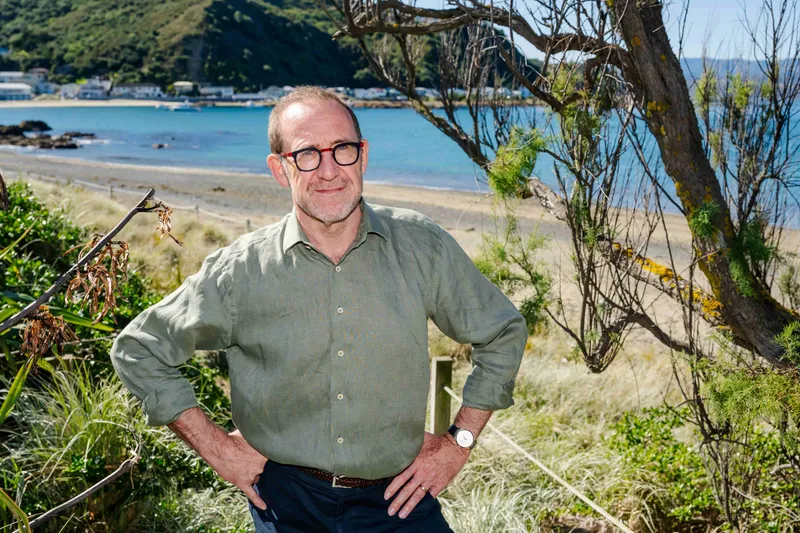
His core base of support comes from the Labour faithful. He’s generally respected as a competent senior minister, and there is significant goodwill for his selfless move of stepping aside for Jacinda Ardern to become the party leader ahead of the 2017 election. He also has appeal for centrists and some centre-right voters who just want someone stable in charge. Some progressives who initially thought he was too centrist may have been won over by his promises of cheaper public transport and his surprisingly strong housing policies.
Alex Baker: The progressive message
On most issues, Baker is the most progressive candidate running. He jumped into the race because he wanted to make sure someone was flying the left’s flag. He’s been the strongest defender of the cycleway rollout and the Golden Mile project, and managed to start a civic debate about switching to Land Value Rates. Most of Baker’s voters will probably rank Andrew Little second on their ballot, and they’ll know that a Little mayoralty is far more likely, but they want to give their first choice to someone who represents green, urbanist policies – both as an expression of their politics and to send a signal to the future mayor that they need to reach out to the New City.
Diane Calvert: The sensible conservative
Among the right-leaning candidates seeking the mayoral chains, Calvert has the most experience and credibility. After three terms on council, she has an excellent understanding of council processes, and her policy agenda is constrained and realistic.
She will appeal particularly to voters who are concerned about the council’s consultation processes. This has been a prominent complaint this election season; many residents feel they have been shut out from council decisions or that council staff aren’t taking feedback seriously. This is a drum Calvert has been beating for a long time. She wants the council to go slower and listen to the community more. She is generally opposed to expensive projects and wants to reduce spending, but hasn’t made extreme promises like Ray Chung’s claim of zero rates rises.
For fiscal conservatives who want a smaller council but still care about the boring business of governing effectively, she is the safest pick.
Ray Chung: Tear it all down
The case for Ray Chung’s candidacy is rooted in anger. There is a significant force of voters who are furious at the way the council has managed things over the past few years. Most of that rage comes from the rising cost of rates; a compulsory, rapidly rising bill that is beyond your personal control, leaving feelings of betrayal and frustration.
For many, this anger at costs blends with fury at anything else the council does which doesn’t appear to be a core service, or which clashes with their identity politics: climate policies, support for the queer community or Palestinian causes.
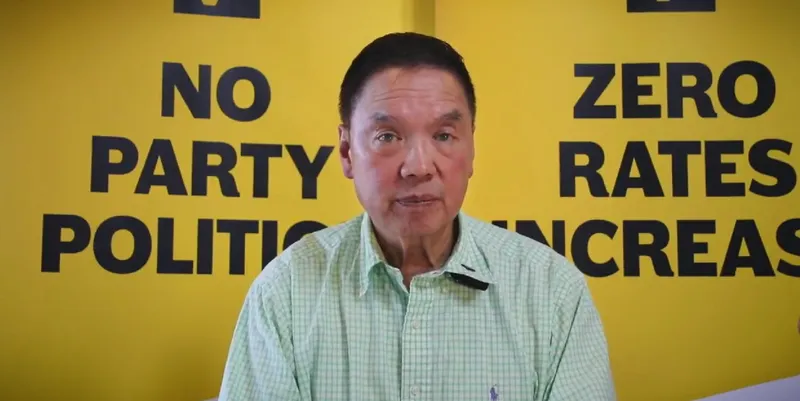
Ray Chung is a vessel for that anger. He represents the strongest repudiation of the current council direction. That’s why it doesn’t particularly matter that his zero rates policy is unrealistic and doesn’t add up: it’s a direction of travel. It sends a message.
Rob Goulden: The nostalgia play
What’s the point of Rob Goulden’s candidacy? He’s centre-right-ish and takes most of the positions one would expect from a centre-right-ish candidate, but policy-wise, there isn’t much to separate him from the pack. Goulden has a good understanding of council processes; he was a councillor for four terms from 1998 to 2010, which ended in a cloud of controversy. According to Stuff reporting from the time, he was trespassed from council offices, accused of erratic, angry outbursts and making some female council staff feel unsafe.
It’s that prior experience, specifically the timing of it, that is Goulden’s biggest selling point. To many Wellingtonians, the 90s and early 2000s represent a golden age when the city was cheap and vibrant and the bucket fountain was filled with Elijah Wood’s pee. In debates, Goulden repeatedly namechecks Kerry Prendergast, wanting to tie himself to a mayor who is remembered fondly by centre-right voters. In reality, he and Prendergast had a rocky relationship that ended poorly. But that’s not the point. Remember the 90s?
Karl Tiefenbacher: The anti-urbanist
Tiefenbacher is the strongest champion of car-friendly policies. He wants to remove cycleways, cancel the golden mile, and make it easier to drive. He thinks his Cuba Street ice cream shop is struggling because there aren’t enough car parks outside. He thinks the council shouldn’t focus on affordable housing because there is “an abundance of houses for sale and rent”.
Ray Chung and Diane Calvert are also sceptical of some active transport projects, but their opposition comes more from a place of cost concerns. Tiefenbacher’s opposition is much more central to his ideology and the way he believes the city should function. There are significant numbers of suburban voters who are frustrated about car parking in the centre city and will flock towards him.
As a successful entrepreneur, he will also attract support from voters who want more business-friendly policies. He has arguably done a better job than Chung or Calvert of articulating a theory of growth. He has pitched a way forward as a city that supports key industries, rather than just focusing on what he would cut and cancel.
Kelvin Hastie: ???
Honestly, this is the one I struggled with the most. Hastie is a bit of an oddball, and it’s hard to put him into a box. His greatest CV achievement is his involvement with Predator Free Crofton Downs. Some of his policies are environmentally themed, but he’s also a proponent of Simeon Brown’s long tunnel under the CBD and regional amalgamation, and has theories about social housing reform. He has lobbed attacks at the left and the right, and has been particularly critical of Andrew Little and Alex Baker.
He reminds me of TOP circa 2017 when Gareth Morgan was the leader, pushing some unusual ideas with limited appeal, but there was still value in having the discussion. That’s the case for Hastie: voters might not agree with everything he says or really know what he stands for, but they want someone who thinks outside the box.
Joan Shi: The only candidate named Joan Shi
Joan Shi will appeal to voters who are personal friends of Joan Shi.
Don McDonald: The eccentric genius
McDonald’s key policy of abolishing Thursdays will be popular among anti-Thursday voters. Others might choose him because they think a brilliant but poorly understood math whiz is exactly who the council needs to balance its books.
Pennywize the Rewilding Clown: The clown
The Wellington mayoralty is an STV election, which means there is no risk to ranking a joke candidate first and your actual preference second. And you’ve gotta hand it to Pennywize: getting dressed up in full clown makeup and writing an original song for 20+ mayoral debates is impressive. His policies of turning the Basin Reserve into a swamp will appeal to voters who hate cricket, and his constant mockery of Ray Chung will be a hit among people who dislike Ray Chung.
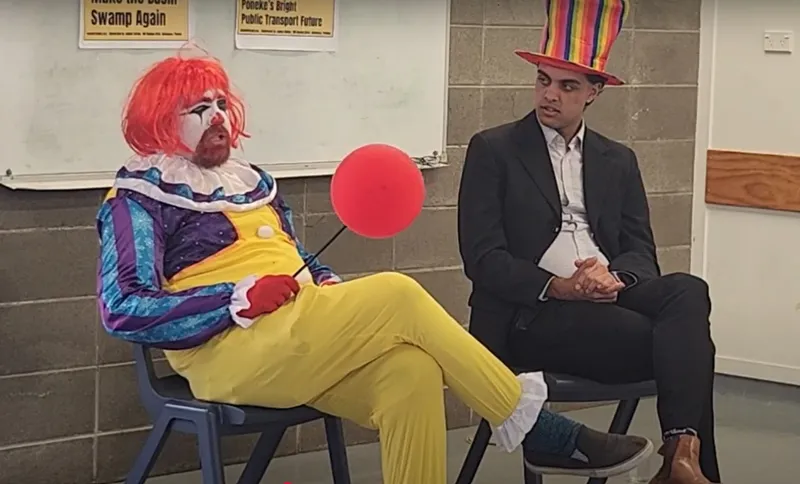
Josh Harford: The other clown
The candidate for the Silly Hat Party has a similar appeal to Pennywize, but for voters who prefer their political satire blunter and more obvious.
Scott Caldwell: The Aucklander
Auckland-based Caldwell has not set foot in Wellington since the campaign began. That is probably a poor campaign tactic for a Wellington-based position. But who knows, maybe there is a large and undertargeted demographic of Auckland-based Wellingtonians that no other candidate has managed to reach?
Joel MacManus
Joel MacManus is a senior writer for The Spinoff. He previously worked at RNZ and Stuff, and began his career at Critic Te Ārohi. His writing explores the political, economic and cultural systems that underpin modern New Zealand. He won the 2025 Voyager Media Award for Best Columnist, Opinion or Critique.


