The last time National had only one Māori cabinet minister was 1999.
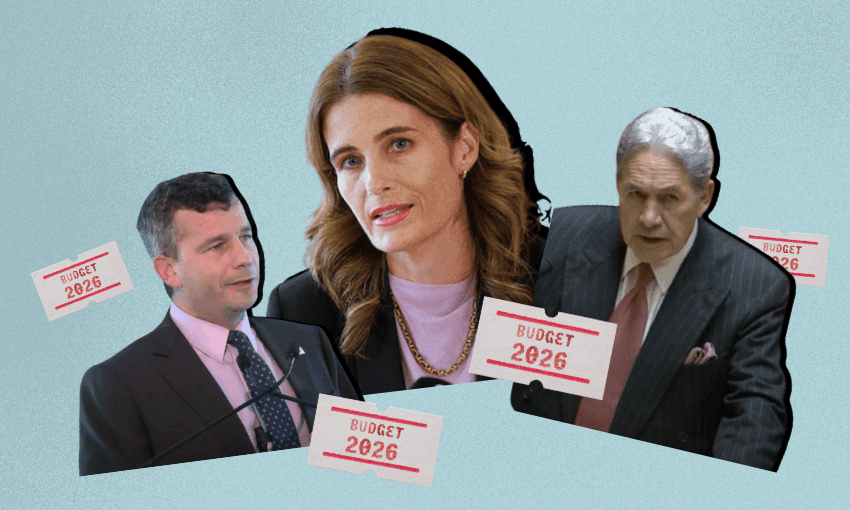
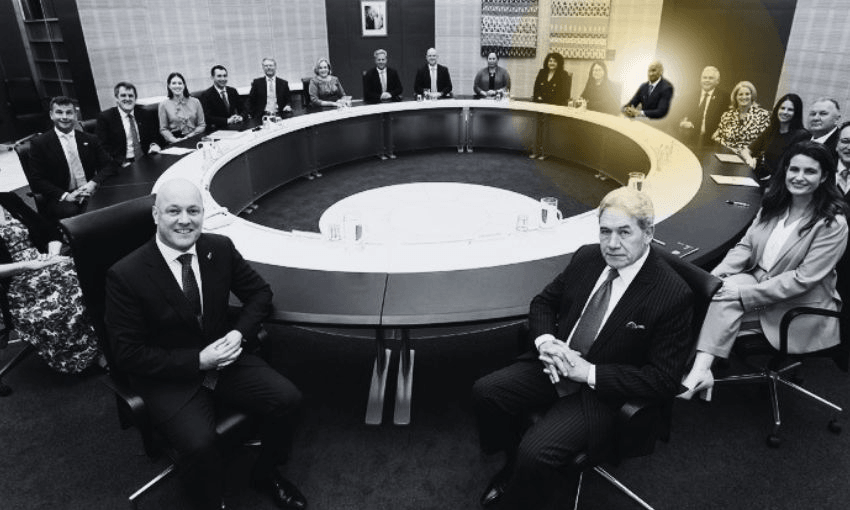
It could be said that tāngata whenua are well represented in cabinet currently, with 30%, or six out of the current 20 cabinet ministers, having Māori heritage. But the smaller coalition partners are doing the heavy lifting here: two of Act’s three ministers are Māori (David Seymour and Nicole McKee), as are all three of New Zealand First’s (Winston Peters, Shane Jones and Casey Costello).
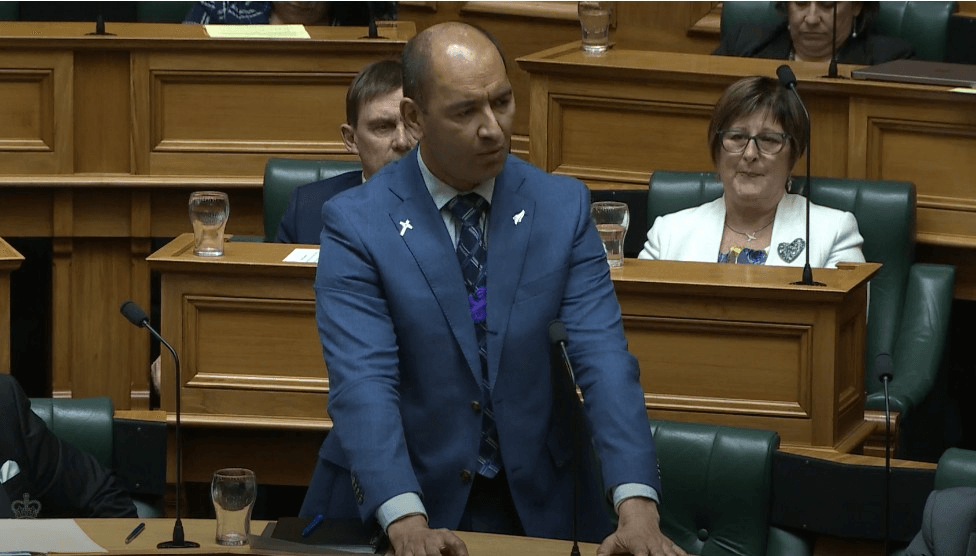
Compare that to the National Party, which, after relieving Shane Reti of his portfolios in the lead-up to his departure from politics at the November election, can boast only a single Māori in cabinet: James Meager. Hang on, sorry, Meager is a minister outsider cabinet, the final answer is Tova O’Brien. Oh, sorry, that was a slip of the tongue again. It’s actually [checks notes] Tama Potaka.
When shuffling cards and dealing out the top jobs to its caucus, a political party will often be judged on whether or not it has enough brown faces in the mix. Of course, promoting someone solely because of their race can come with its own problems – even if you make it into cabinet, who’s to say you’ll be remembered and respected among the flock? Who’s to say pointing these things out won’t have the likes of soon-to-depart MP Judith Collins sighing and asking “is there something wrong with me being white?”
The real issue is whether a government is faithfully representing the electorate. And with Potaka now National’s sole Māori – and sole non-Pākehā – voice around the cabinet table, this is National’s least ethnically diverse cabinet since 1999. Since that time, New Zealand’s Māori population has risen by about 67%, and as a proportion of the total population, from 16% to 17.5%.
Merit-based appointments, or slim pickings?
For the first half of 1998, the only Māori ministers in cabinet were Winston Peters, Tau Henare and Tuariki Delamere of New Zealand First. National hadn’t put a Māori minister in cabinet since 1990 – and that was Winston Peters, who was sacked from cabinet in 1991 and quit National to form NZ First in 1993. It wasn’t until Georgina te Heuheu was pulled into the fold later in 1998 – after Jenny Shipley had become prime minister and served Winston Peters with his second sacking from cabinet – that National once again put a Māori in the executive. A year later, Helen Clark’s Labour government was elected, staying in power for three terms.
Since then, every National government of the 21st century has always included at least two Māori ministers in its cabinets. John Key had te Heuheu and Paula Bennett from 2008, adding Hekia Parata in 2010 and losing te Heuheu in 2011. Simon Bridges joined cabinet in 2013 and he, Parata and Bennett remained there until 2017.
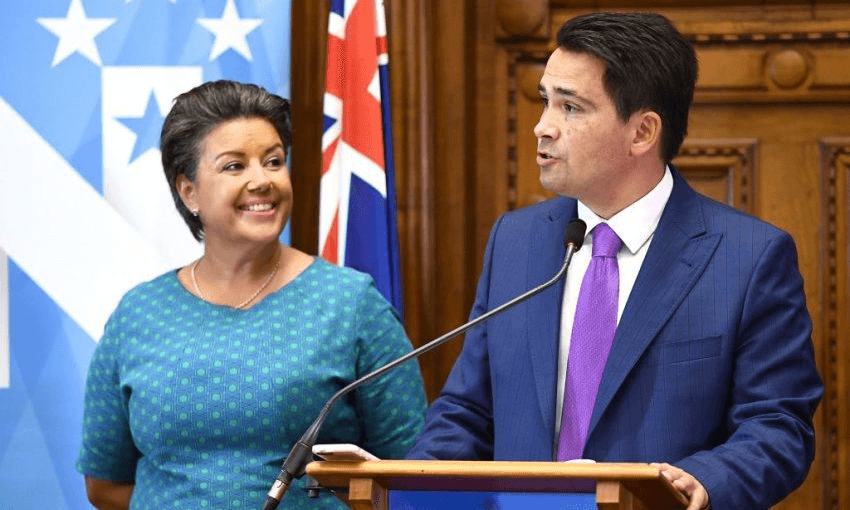
National’s last Pasifika cabinet minister was Alfred Ngaro, who is Cook Islands Māori, and joined cabinet just as Sam Lotu-Iiga (Samoan) left in late 2016. This term, National has no Pasifika MPs, let alone ministers. With Reti leaving, the Pacific peoples portfolio has passed to Paul Goldsmith, who can only claim Ngāti Epsom as his heritage.
Luxon gave a nervous laugh when asked last week what experience Goldsmith would bring to the role. The Pacific peoples portfolio, Luxon explained, sat “adjacent” to Goldsmith’s arts, culture and heritage portfolio – although, “I freely admit we don’t have a Pacific person in our National team.” He said it was something the party was working on, and it wanted more “representation of experience and more diversity as possible, and we’re seeing that in the candidates that we’re selecting.”
Helena Cook, senior lecturer in social and cultural studies at the University of Canterbury, told The Spinoff that while Reti as tangata whenua would have had a cultural “kinship” to the Pacific, what Goldsmith would bring to the table is less obvious. The party hasn’t had a Pasifika minister in a long time, Cooke says, and “it would be really lovely to see a Pacific person advocating for Pacific issues in that space”.

It’s not just the “symbolic power” that a diverse cabinet brings, but the ability to “make informed policy about their people”, Cook says. “We know that it’s better for Māori voices to be advocating for Māori issues, and that all issues are Māori issues. Te Tiriti o Waitangi recognises that there is a responsibility for tino rangatiratanga and for Māori to have a say in what happens to Māori. I think having one member of [National’s] cabinet that is Māori doesn’t really recognise the changing population in Aotearoa.”
There’s the argument that these sorts of processes should be above all merit-based, but it’s clear that they’re already not, says Cook. “We know it’s more complicated than that – there are selection committees, and geographical areas [hold different] kinds of voters.
“There’s things like how engaged in politics you were to begin with. Did you come up through the traditional party means like the Young Nats, were you involved with campaigns, are you known by the right people?” Cook says. “Those kinds of things affect who stands, who’s known and the kinds of spaces you feel comfortable moving in.”
If you look at the government as a whole, the percentage of Māori MPs mirrors the overall Māori population pretty well. Across the 68 government seats, Māori make up 19% with 13 seats – there are six Māori MPs in National, three in Act and four in New Zealand First. According to Stats NZ data from June 2025, Māori make up 17.5% of the nation’s general population.
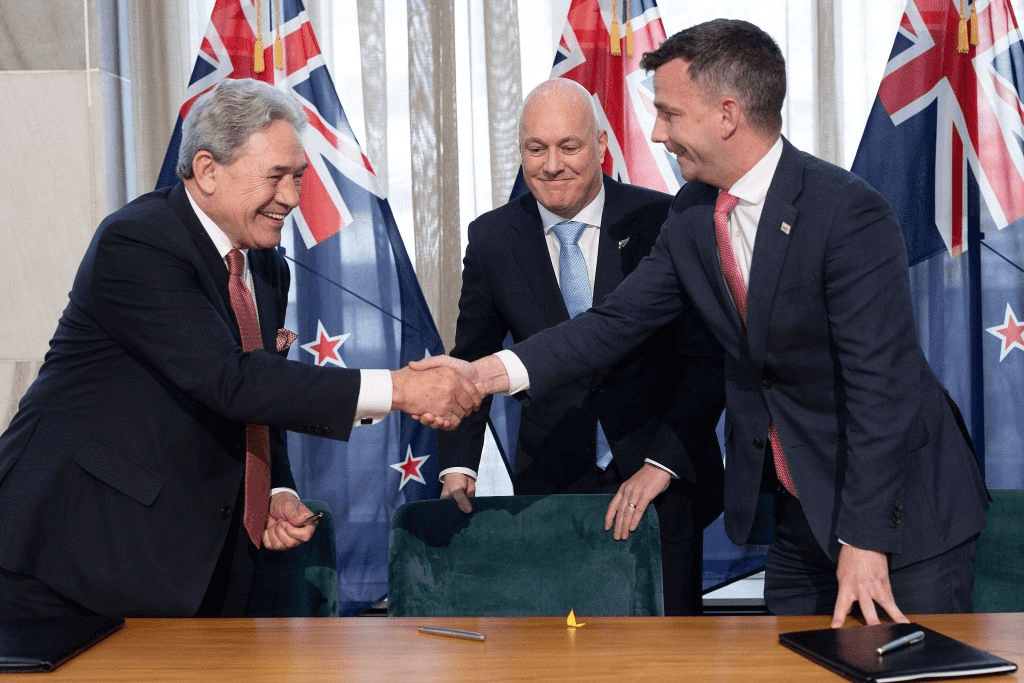
With Māori making up over a quarter of the Act caucus and half of NZ First, it also means there are more Māori represented on the right side of politics. “That demonstrates the complexity of representation,” says Cook. “Identity is really important, but there’s also policy and political positioning. Just to be Pasifika or female or Māori is not necessarily enough, [but there is an] amount of amazing young wāhine Māori in parliament and in social spaces, who are politically engaged and involved and could make real contributions to political spaces. Whether or not those are the kinds of contributions the National Party is looking for, I’m not sure.”
National’s fresh faces
While National has yet to announce any new Māori candidates for November’s general election, it is running Rarotongan lawyer Angee Nicholas in the newly created Henderson electorate. Nicholas has an impressive CV: she worked for the late Nikki Kaye, Auckland Central MP from 2008 to 2020, in her electorate office, was an in-house lawyer for the Pacific investigation portion of the royal commission of inquiry into abuse in care, and only missed out on making it into parliament in the last election by 131 votes, after narrowly failing to take Te Atatū off Labour’s Phil Twyford. Nicholas will be facing Twyford again in Henderson.
And while its Māori and Pasifika representation may be lacking, the party has had more success keeping up with New Zealand’s growing Asian population, fitting for a party that provided New Zealand’s first Asian cabinet minister, Pansy Wong, in 2008. It has four sitting Asian MPs and has so far announced three new Asian candidates for this year’s election, at least one of whom actually has a chance of winning a seat. But with Melissa Lee demoted from cabinet in 2024 following criticism of her handling of the media and communications portfolio, National also has zero of its Asian MPs in the executive.
Whether National’s lack of Māori in power hurts its chances of securing more Māori votes remains to be seen. Given the opposition parties are putting their focus on winning support from that demographic, it may not be something National’s focusing on anyway, says Cook. “They may consider that those votes are already used in other spaces, and it’s not a space worth putting their time and energy into in an election year.”
But could it exacerbate concerns that Māori-Crown relations have worsened since 2023? “Having diversity of representation is a clear signal to communities that you value and recognise them,” Cook says. “So to not have that could suggest to the public that it is not a priority.”