


No longer know what to think about the Jade Paul-Chris Hipkins saga? There’s a reason for that.
If there’s anything we can all agree on about the Jade Paul and Chris Hipkins tumult this week, it is surely that it was messy. Of course it was. Long relationships are messy. Marriage breakups are messy. But you know what else is really messy? Our own identities, values, experiences and memories get tangled up in stories like these. What we think about them, where we decide we stand on them, and how much of this we’re willing to say out loud (or in WhatsApp chats and comments sections) can have more to do with how we see ourselves than how we see Chris Hipkins or Jade Paul.
Of course, we view all news stories through the lens of our own experiences, but the Jade Paul-Chris Hipkins story was a doozy because it drew an emotionally-charged venn diagram, with political beliefs, feminism, fairness, privacy and marriage intersecting in a fiery centre.
Shit, it was uncomfortable, for Hipkins and Paul, of course, but also for anyone willing to soul search.
Here’s a woman making allegations (none of unlawful behaviour) on her private Facebook page about a powerful man. Should we believe her and take her at her word? Silly question. Don’t stop to collect $200, move straight to the feminism circle on that venn diagram. Women have been disbelieved and dismissed for time immemorial, especially when making difficult-to-prove allegations, especially when up against powerful men.
But what if being a post-#MeToo feminist clashed with deeply-held political affiliations? If you dared trawl social media earlier in the week (man, I hope you didn’t – seriously, prioritise your own welfare), you would have spotted some staunch left-wingers, who have previously been loud in their support of women, raging at Paul. Some even fell into 1950s tropes. Why hadn’t she spoken up earlier? Why now? Some spread allegations, without evidence, that Paul’s post was part of a dirty politics-type campaign.
I’m not trying to throw shade, or make accusations of hypocrisy, but to point out that if chunky parts of your identity are formed around politics, feminism, or anything else, and those parts find themselves suddenly in opposition to each other, shit gets messy real quick.
Hell, I found myself wrestling with my own mind, which ran in different directions, chasing different beliefs and parts of my identity. There’s a saying in journalism: “If your mother tells you she loves you, check it out”. In other words, verify everything before believing it. I do my best to live by it at work. On Monday, I, like half the journalists in New Zealand, contacted Paul. She didn’t respond. I made the call that The Spinoff would not publish any of her allegations without verifying them, which was near impossible given Paul wasn’t speaking. We also wouldn’t run anything on the saga until we could ensure it was accurate, fair and balanced.
The thing is, my phone was blowing up with people’s takes, formed partly off reading Paul’s screen-shotted post (which was spreading fast) and partly triggered by their own life experiences. Many of my friends were angry on Paul’s behalf, even disappointed, or disgusted. I was silent. I just couldn’t believe or disbelieve Paul’s version without more information from Paul and without Hipkins’ side of the story. A part of my mind told me this made me a good journalist (well done, Schmidt. Pat on the back). Another part told me I was a shit feminist, and gave me an actually quite violent kick in the flank.
Let’s look at the good in news media for a moment (defences of this popular and well-regarded industry always go down well). All media outlets that operate under the Broadcasting Standards Authority or Media Council are guided by the principals of accuracy, fairness and balance. That’s why the news media did not go out and publish Paul’s allegations, before first going to Hipkins for a response. If this story had occurred in ye olden days pre-social media, everyone would have heard both sides of the story at once (if they heard it at all – NZ media has largely kept away from politicians’ private lives).
But, of course, that’s not what happened. Social media spread Paul’s side of the story long before Hipkins had a chance to tell his. That was not fair, and it made it easy for a lot of people to take a position early. Stories seem so clear cut when they’re told from one side. It’s when all sides are canvassed that they get messy.

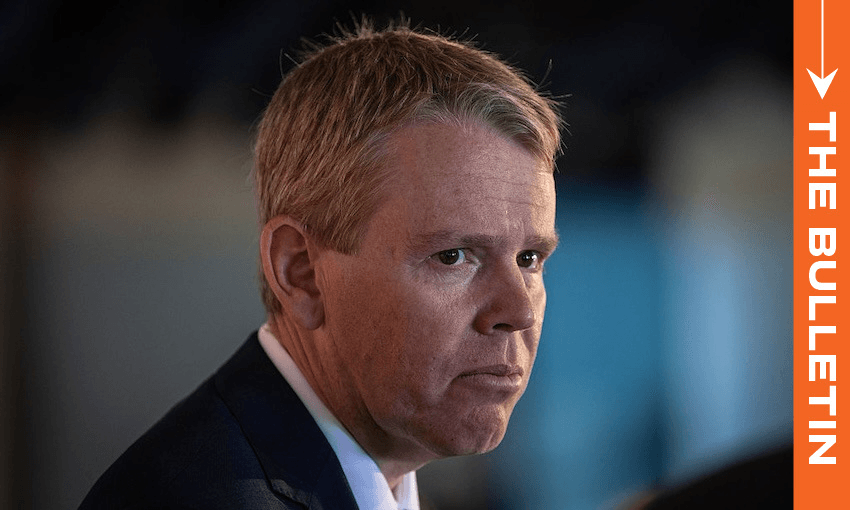
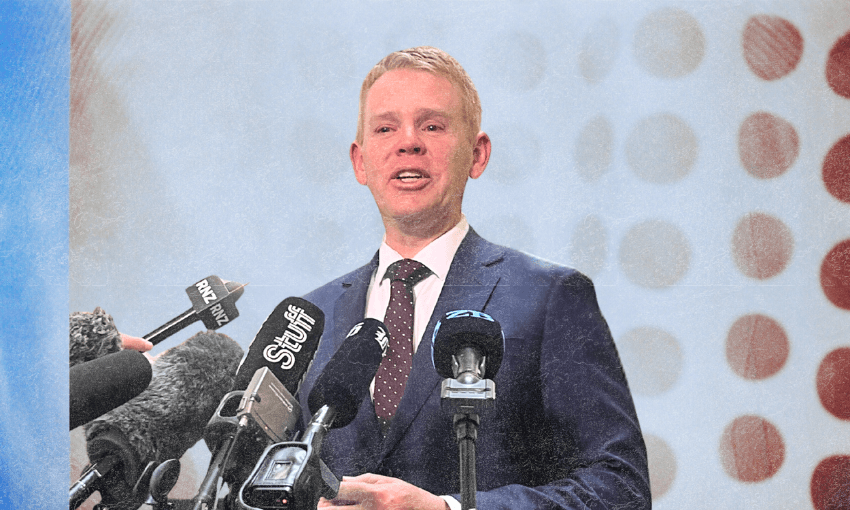
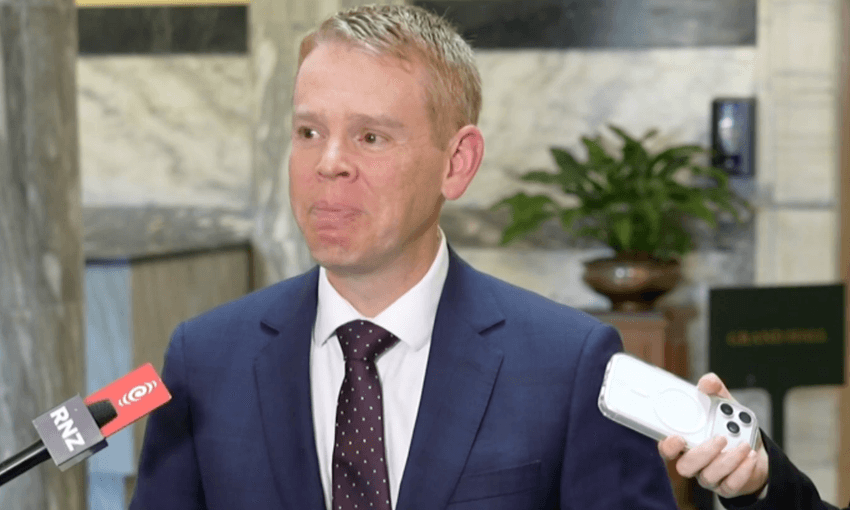
On Tuesday, it got messy. Hipkins stood on those familiar black and white tiles at parliament and denied the allegations Paul had made. It was an uncomfortable watch seeing him facing very personal questions in such a public environment, and then when he was asked about his children and choked up, the country gulped. We had seen Paul’s pain, and now we were seeing Hipkins’.
My phone blew up again. Yours no doubt did too. The people who had been sure of their positions earlier in the week were now recounting their own divorce horrors, the awful moments in their marriages. They were imagining the painful moments of their own relationships becoming public. They were talking about privacy. They hadn’t stopped feeling for Paul – the views they’d landed on were simply being buffeted by different memories, different aspects of who they were. Many said they no longer knew what to think.
Even the different parts of Sean Plunket’s mind seemed to be fighting each other – and a surprising part won. The Platform host, in the past happy to go hard on Hipkins when he deemed the politician had gone against his own principals, announced he had been soul-searching. In a social media post, he wrote about being a divorced dad, that he had his own messy private life and that he had decided he had “no right as a journalist or human to pass moral judgement on either of the parties involved”.
It felt like much of the country had now journeyed to the centre of the venn diagram, where feminism, politics, privacy, fairness and marriage meet. And guess what’s there? A fiery mess. Those things are each big alone and they don’t always play nicely together. Oftentimes they kick each other really quite violently in the flank.
It explains why this week, this story has felt so emotional. It’s not only because Hipkins and Paul had a messy marriage and a messy divorce, but because all of us are messy too.