

And yet we continue not to avoid them.
The good news: child poverty rates didn’t really change in the first year of National’s policies. The bad news: child poverty rates didn’t really change in the first year of National’s policies.
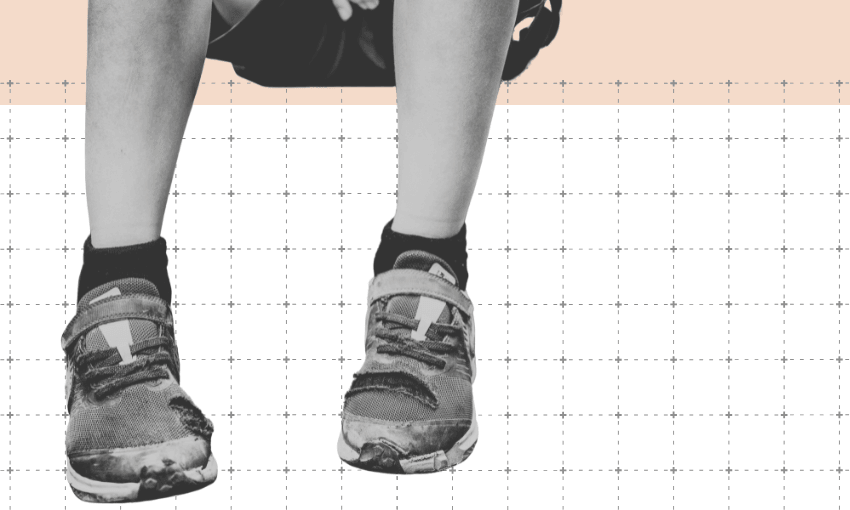
Setting aside the minutiae of year-on-year shifts, statistical artefacts and political posturing (more on which later), Thursday’s data release confirms one alarming truth. As a country, we are willing to have around 12-14% of children – that is, somewhere between one in seven and one in eight – live in poverty.
Early-years poverty has measurable, and dreadful, impacts, confirmed by survey after survey: worse health, right across the life course; worse school results; wasted talent and diminished prospects. Nonetheless, our politicians accept child poverty rates three times worse than those that affect children in other countries, or indeed pensioners in our own fair land. Our alarming rates of child poverty are entirely avoidable – and yet we continue not to avoid them.
We do so even though child poverty was doubled by Ruth Richardson in her Mother of All Budgets, and has been a subject of national concern since at least the GFC. Campaigns by NGOs last decade, amplified by Bryan Bruce’s documentaries and John Campbell’s reporting on kids’ empty lunchboxes, culminated in a 2017 election debate in which both Bill English and Jacinda Ardern pledged to lift 100,000 children out of poverty.
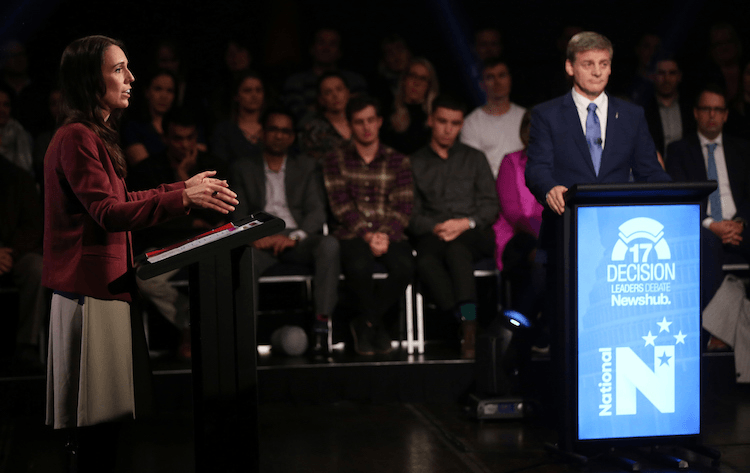
Ardern then passed the 2018 Child Poverty Reduction Act, one of the laws closest to her heart, and made initial inroads. The Families Package, which lifted both benefits and Working for Families payments, helped cut the number of children in families below the poverty line from around 185,000 in 2018 to 135,000 in 2022. This measure captures all the families who are living on less than half the typical household’s income – an internationally accepted measure of poverty.
Unfortunately, as is now well-worn, the cost-of-living crisis, and the failure to implement another Families Package, saw child poverty rates rise again. In the 12 months to June 2024, the last period in which Labour’s policies still held sway, child poverty was back up to around 150,000. This was still a net reduction, of around 35,000 overall – but not a very big one, and far short of the target Ardern had set herself.
This week’s data release, which covers the 12 months to June 2025, is effectively a report on the first year of National’s policies. It shows there are still nearly 150,000 children in poverty – roughly the population of Tauranga, or enough to fill Eden Park three times over. Essentially nothing changed in that first year – on this measure.
There are, however, many different ways one can attempt to define what counts as “poor”. As well as recording families’ income, statisticians can ask them which basic items they are going without. On that measure, generally known as material hardship, Ardern again enjoyed initial success, cutting the rate from around 150,000 to 120,000. But the rate increased so much post-pandemic that, in the 12 months to June 2024, there were 160,000 children in material hardship.
In National’s first year, that rate rose still further, to nearly 170,000. Why the “material hardship” measure has followed a slightly different track to the “income poverty” one is a puzzle even to hard-core statisticians.
Regardless, the rise in the former has allowed the government’s opponents, including Labour and the Council of Trade Unions, to claim that child poverty is worsening again – even though, on the first measure, it is essentially unchanged, and the official Statistics New Zealand verdict is that there has been no “statistically significant” shift on any of the various measures.
This politicking around the numbers is hardly unusual. When in opposition themselves, the right-wing parties cherry-picked and misrepresented data with gay abandon. The figures themselves are, in any case, subject to uncertainty, being often revised later on. And there is only so much that can be read into a single year’s data.
We should, instead, zoom out from the morass of contested statistics and ask ourselves more fundamental questions. The first is: how can we reconcile a verdict of no “statistically significant” change in child poverty with the destitution we see all around us, and with the reports of Auckland homelessness doubling under National?
For one thing, some of the data in this week’s release goes back to June 2024, and is thus nearly two years out of date. The statistics also fail to register changes in the depth of misery. A family may have slid from just below the poverty line to near-total destitution, but from the point of view of these statistics they were poor then and they are poor now.
In addition, and regardless of who is to blame, the rate of child material hardship – the number going without basic items like heating and decent clothes – has risen from around 120,000 in 2022 to 170,000 last year. We are witnessing misery that has built up over multiple years.
The second fundamental question is: what can be done about this? While a fuller answer awaits another day, we should recall that – as above – good policies can have immediate effect: the Families Package helped lift 50,000 children out of poverty in short order. And that was even though Labour’s anti-poverty strategy relied too heavily on things the government could change with the press of a button – benefit and tax-credit rates – and too little on other key policies like higher wages and cheaper housing.
Recall, too, that in countries like Denmark, child poverty rates are just 4-5% – roughly one-third of ours. Hardship rates for New Zealand’s over-65s are, similarly, just 4-5%. The latter stems, in part, from the decision to set New Zealand Superannuation at two-thirds of the average wage, a level calculated to keep most recipients out of poverty. (Albeit that relies on homeownership rates that are now declining.)
Poverty is not inevitable, in other words. Such wide variation across countries and age brackets tells us it is a matter of policy – of, in short, choice. Those who care about the issue must remind voters and politicians, in an election year, that this choice remains one of the most crucial the country faces.