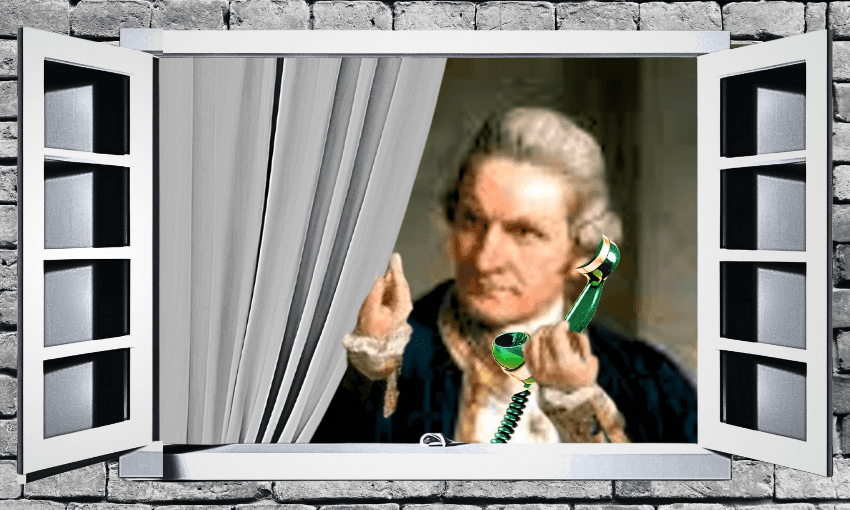

James Cook has been dead for 247 years today, yet he still managed to land Ben Fagan a visit from police because of another anniversary – the 250th anniversary of his arrival in New Zealand.
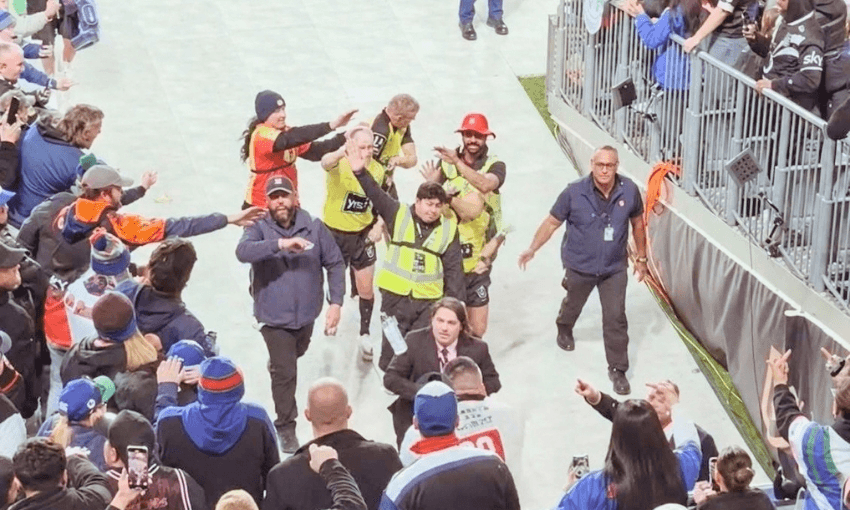
When the police arrived at my house, I wasn’t there. My partner Sara raced through the possibilities as she answered the door. Maybe I’d died, or been hurt, or broken the law. In reality I was at a work Christmas party tucking into a cheesecake. Police intelligence had put my name on a list, they told her. “We just want to make sure everyone is safe.”
The story of why they were there started in October 1728. A boy named James Cook was born in a thatched cottage with mud walls. Two hundred and fifty years later, in 1978, on the same spot, the Captain Cook Birthplace Museum was opened.
We had been in the UK on a trip, visiting old friends and their new babies. A few of us had travelled to Middlesbrough in the north of England for a weekend away. The museum’s name jumped out at me on Google Maps so one lunchtime, while the babies were asleep, I paid it a visit.
The museum is one of many landmarks that make up the Captain Cook Country Tour, a 110km circular route of places that “young James Cook knew and loved”. An initiative of the Captain Cook Tourism Association, the grounds are picturesque, with rolling fields, old trees and, for some reason, an urn to mark the exact place of birth.
A large Moai head keeps watch outside the museum, created by UK artist David Gross and France-based artist George Nuku (Kahungunu, Tūwharetoa). Cook’s name generates varying levels of unease here in New Zealand, so visiting a tourist attraction set up to venerate him was like falling into an alternate timeline.
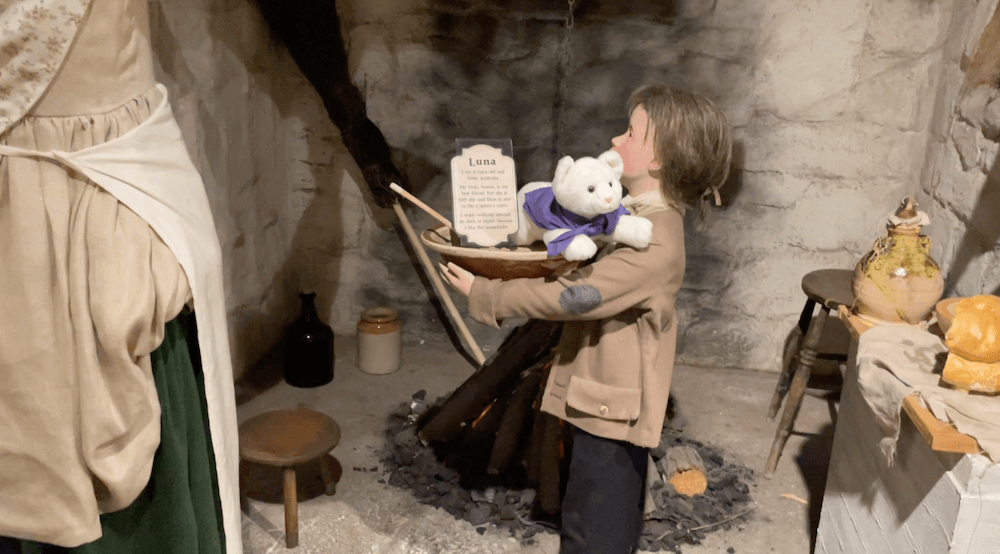
The museum was officially reopened by Sir David Attenborough in 1998, after being “superbly refurbished”. My first observation stepping inside was that almost every word was in Comic Sans. Every panel, every description, every citation, every sign.
Cook was “probably the greatest maritime explorer, navigator and chart maker the world has ever known”, a sign at the entrance declared in its signature font. “His achievements are acknowledged by many people throughout the world and are considered to be on par with modern space travel.”
Dioramas and wall displays charted Cook’s life from his birth, just metres away, to his time working for a grocer and haberdasher, to being the “first person to circumnavigate the world in both directions”. One sign concluded, “His three great voyages of exploration between 1769 and 1780 … sparked the start of the European colonisation of the Pacific – a legacy that still proves controversial to this day.”
There was a substantial New Zealand section. “With a good supply of fresh food and water and the usually friendly Māori people, it was an ideal location from which to set out to explore the Pacific Ocean.”
A small monitor played a video entitled The Middlesbrough Haka. “Young adults from The Prince’s Trust worked with Māori Jordan Young to create their own haka,” reads the placard. A grandmother and her small grandchildren paused to watch the video. “What’s that?” asked one child. “The haka what they do at the rugby,” the grandmother replied. Their favourite part is “Makariri kohu, Mākū te whenua”. “Cold and wet”, they laughed to each other, “that sounds like Middlesbrough”.
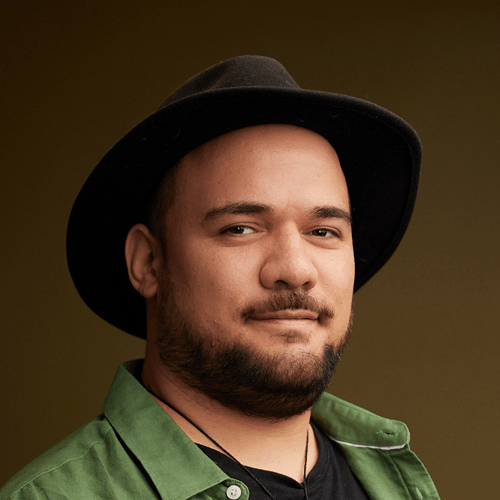
With the tino rangatiratanga flag tied around his waist, Jordan (Ngāti Porou) is an engaging kaiako. As he worked through the basics the children lost interest and shuffled off into the next room to learn how Cook’s relations with native Hawaiians became “strained”. These days Jordan lives in London and reviews sneakers on his popular YouTube channel.
There were two info boards about Cook’s quest to observe the transit of Venus. One paragraph mentions that he received secret instructions to find a southern continent rich with resources. No mention of the doctrine of discovery, issued by the Vatican and part of British law at the time, allowing him to claim land, subjugate or kill any non-Christians living on that continent.
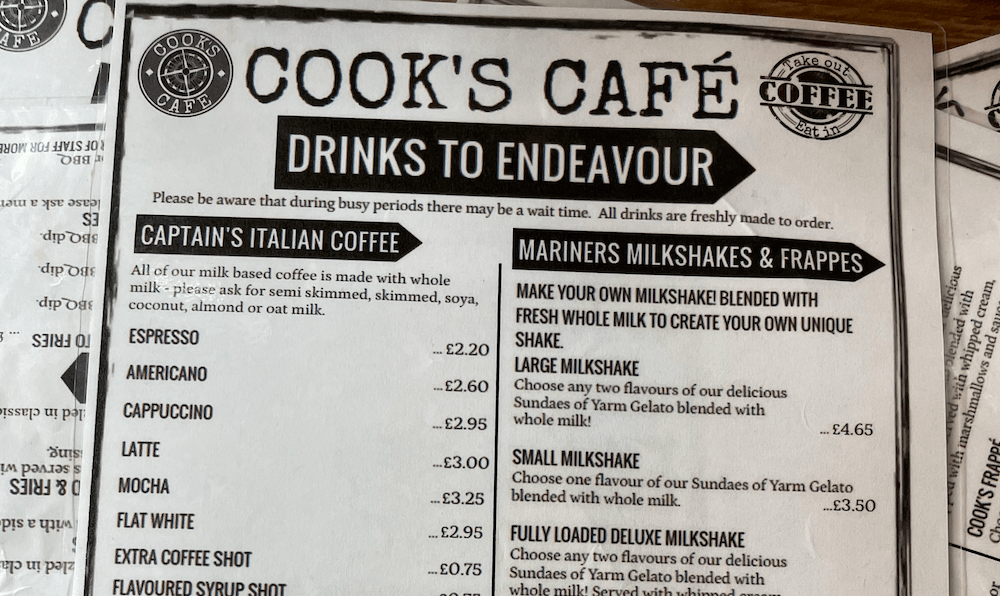
On my way out of the museum I picked up a coffee from Cook’s Café. The menu was all Cook themed. There was Captain’s Coffee, Tall Ship Tea, Helmsmen’s Hot Drinks, Sailor’s Soft Drinks, and Cook’s Frappe. The cafe has the catchphrase “Drinks to Endeavour” which seemed a bit unfair on the perfectly fine brew.
The museum opened to mark 250 years since Cook’s birth. Walking through it I kept thinking back to our own sestercentennial commemoration. In 2019 we marked 250 years since Cook arrived in New Zealand. Events were organised across the country and while there was a strong showing from Māori and other Pacific cultures, it was a visit from a replica of Cook’s ship the Endeavour that made headlines and provoked strong reaction.
Cook and his crew killed nine Māori during their short first visit to the East Coast. Had it been my family killed I wouldn’t be interested in a reenactment, so I took the view that sailing the Endeavour replica around the country would be inappropriate. I wrote a short poem to that effect, filmed it by a statue of Cook in London and posted it once I was back in Wellington. Despite some dodgy rhymes the video got a bit of attention – including from the New Zealand police.
“Does Ben Fagan live here? We’ve seen some of the stuff he’s put up online. We want to check if he’s got anything planned for when the boat comes through.” The cops were from the iwi liaison office. Sara offered to pass on a message but they already had my phone number. Jason the police officer called me shortly after. “Don’t worry we don’t bundle people into vans any more,” he said, trying very hard to be jovial.
“We like to keep track of people who we think might protest,” Jason informed me. I told him I wasn’t planning to go and see the ship, which was true. He asked me if I knew of anyone else who was going to protest, which I judged to be none of his business.
In 2024 the British High Commission continued their dialogue with Rongowhakaata iwi after expressing regret for Cook and his crew’s killings of their whānau, in 2025 the Endeavour was confirmed found off the coast of Rhode Island, just last week a pou that was taken by Cook on the Endeavour was given back to Ngāti Hauiti.
Two days after the police visited my house the Endeavour replica sailed into the Wellington harbour. “Hoea tū tonu” says the Middlesbrough haka, paddle forward. Somehow Cook’s story isn’t over yet.