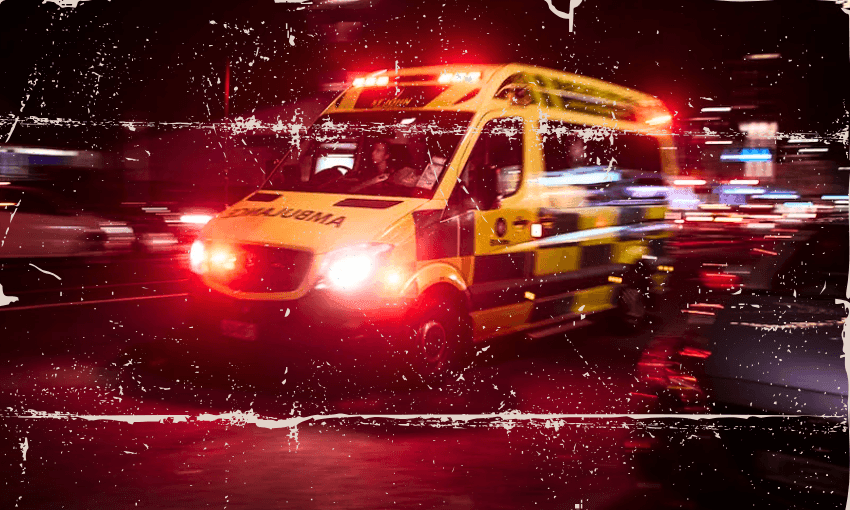

After a record number of calls to emergency services last week, one ambulance officer talks about the realities of their job.
As told to Tara Ward.
This winter’s been particularly bad. The call volume breaking a record three times in a week is insane. I thought working through the Covid-19 outbreaks in 2021 and 2022 was horrible, but we’re seeing worse call volumes now than we were during the pandemic.
We go through normal seasonal peaks and troughs – we get lots of respiratory illness through winter – but the last couple of winters have been particularly busy. I’ve noticed the difficulty that people have trying to get into primary care to see their GP. Even though there’s other options out there, like virtual telehealth GP appointments that are subsidised by Health New Zealand, people either don’t know about them or they prefer the convenience of calling an ambulance. I can call this number, and I might have to wait a few hours, but someone will turn up and assess me. It’s the convenience of having someone come to your door and see you at home, which you won’t get any other way.
I also find people don’t really know how to make sense of their symptoms any more and there’s a lot of health anxiety. I don’t know but it might be from Covid-19, when people were really worried about complications and dying. People might have a common cold or mild flu with a bit of chest pain because they’ve been coughing, but they think they’re having a heart attack.
A lot of people think what burns us out in our job or makes us change careers is seeing lots of death or trauma, but it’s really not. It’s the stuff we didn’t sign up for, like hospital ramping [when you’re delayed at the hospital for more than 30 minutes from the time you arrive] and going to a lot of low acuity work that doesn’t really need an ambulance response – but it does, because it’s the ambulance at the bottom of the cliff.
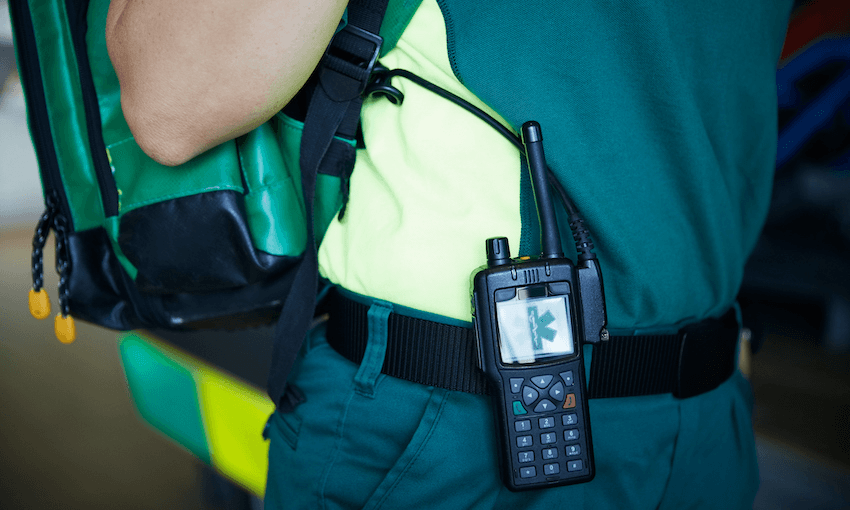
We spend a lot of our day sitting at hospitals waiting for patients to get beds. Yesterday, I spent two hours waiting to get a bed for my patient, and there were six other crews there also waiting for a bed. Because the patient is still on our stretcher, they’re still in our care. They’ve been triaged and the hospital knows they’re there, but there’s no physical space for nursing staff to look after them.
So it’s a matter of sitting with the patient in a corridor. It’s usually a very cold, draughty corridor with lots of people coming through, so there’s no privacy for the patient, who is sitting on an ambulance or hospital stretcher. We’re having to provide care to those patients in those corridors, which is awful for them and their family, because they don’t know how long they’re going to sit there. It’s not a private place. It’s not very dignified. You can’t have private conversations, because there’s dozens of people around you. You’re sitting there for hours, waiting.
Sometimes you’re ramping in a less than ideal area, like a corridor between the ambulance bay and resuscitation rooms, far away from staff for extra help. You’ve got no emergency bell if your patients deteriorate. You can’t get help from staff in the hospital. There’s no emergency equipment, so you have to go back to your ambulance to get your gear. That’s when the care starts to slip, and you’re not able to provide that care that you want to.
In an ideal world, you’ll hand the patient over and they’re in a hospital bed with care of medical staff within an hour of you seeing them. But if you’re ramping with the patient and it’s two, three, four hours down the track where they haven’t been seen by a doctor or assessed by a nurse and they’ve had no tests, patients are often at risk of deterioration. Things aren’t being investigated in a timely manner. You take someone to hospital with chest pain and they need bloods done to see if they’re having a heart attack, and they’re not getting those for a couple of hours after you’ve arrived. It’s just delayed care.
It can be quite stressful, particularly if there’s been a change in your patient’s condition and you’re trying to escalate that. Sometimes the charge nurse will say, “I hear you. I understand that your patient’s becoming more unwell, but I’ve got nowhere to put them and I’ve got no staff to deal with them.”

People are always shocked to learn that we do 12-hour shifts. We do four of them a week, and we get two 30-minute meal breaks in that shift. Sometimes you’ll be out the door at six o’clock in the morning, you have a 30-minute break, and then you might have another one. But today, I didn’t get a second break. If you get a late job, you’ll finish late. It’s very unpredictable. That pattern can be quite fatiguing, and the high workload contributes to that, because there’s no downtime.
On that weekend of record 111 calls, I watched from afar, thinking, thank goodness I wasn’t at work. But even on my days off, I got several text requests for staff. On my last day off, I got two texts. The day before, I got four texts. A friend sent me another text that said they needed 14 staff for different vehicles because they were single crewed. If you don’t get those staff, those vehicles have to pair up. Then that shift is short of seven ambulances, and that workload has to be picked up by the rest of the ambulances and staff on duty.
It’s a very common occurrence. I don’t think a day off goes by where I don’t get texts, and on other days you get texts asking you to do extra shifts, four or five days in advance. On Saturday night, they sent a text out at 9.15pm asking for officers to assist as soon as possible due to the workload. Who’s taking an extra shift at 9.15pm on a Saturday, on their day off? If they don’t fill those vacancies, we just run short-staffed. The ambulances are parked at a station, not being used, and that’s where you see those clips in the media about someone who’s had to wait on the floor for hours, and a family member has gone past the station and seen the ambulance parked there. It’s probably because there’s no crew.
Abuse [of ambulance officers] has been ongoing since forever, but thankfully there’s a lot more understanding out there about the workload and the wait times. People understand that it’s not my fault that they’ve had to wait a few hours for an ambulance. I’ve been really busy too, going to patients all day, and I haven’t had a break. They understand that it’s an organisational, systemic problem.
It’s all very political about what to fund and what not to fund. It’s a political decision about how much the government is willing to spend on health, and how much Health NZ is able to spend on the ambulance service. But if you look at the biggest issues we’re facing at the moment, ramping is a hospital problem, not an ambulance problem. It starts at the top – how much money they spend on beds and hiring nurses. They’ll choose not to and spend the money elsewhere, but you could solve a lot of ramping issues and flow-on effects, so that it trickles down right through the system.