In defence of gossip and its potential to save lives

“It was only by talking amongst themselves as they scrubbed clothes together in the communal laundry or organised social events in the dining hall, that they could form a clearer picture of their world and its dangers.”
Gossip has earned a negative reputation, but PhD candidate Eleanor Black argues its historical significance shouldn’t be overlooked.
I’ve always enjoyed gossip, in a covert, mildly shameful, this-reflects-poorly-on-me kind of way. Talking about people behind their backs was something my parents taught me not to do. It got me in trouble with high school friends and made me look like an arse in the workplace, before I learned to keep quiet.
Even as I delighted in the early-2000s heyday of celebrity scuttlebutt, buying bundles of glossy scandal mags so I could keep up with Britney’s exploits, I felt bad about it. Nice girls don’t. Baked into my morality was a sense that gossip was unkind, unbecoming and anti-women. Because, no surprises here, negative gossip affects women more harshly than men.
Having spent two decades working in journalism (an elevated form of gossip, you might say), I am now an English PhD candidate at Waipapa Taumata Rau, University of Auckland, and gossip is the cornerstone of my thesis. I still believe that gossip can be an absolute scourge (see: Britney in 2026, still dealing with this shit).
But it can also be a literal lifesaver, as it was for the women whose historic gossip preoccupies me, the wives and daughters of the bushmen and shearers who followed British journalist William Lane to Paraguay in 1893 to found a utopian socialist colony called New Australia. When the colony failed within six months (gossip suggests the split was as much ego-driven as philosophically based), the faithful formed a second colony, Cosme. They kept gossiping.
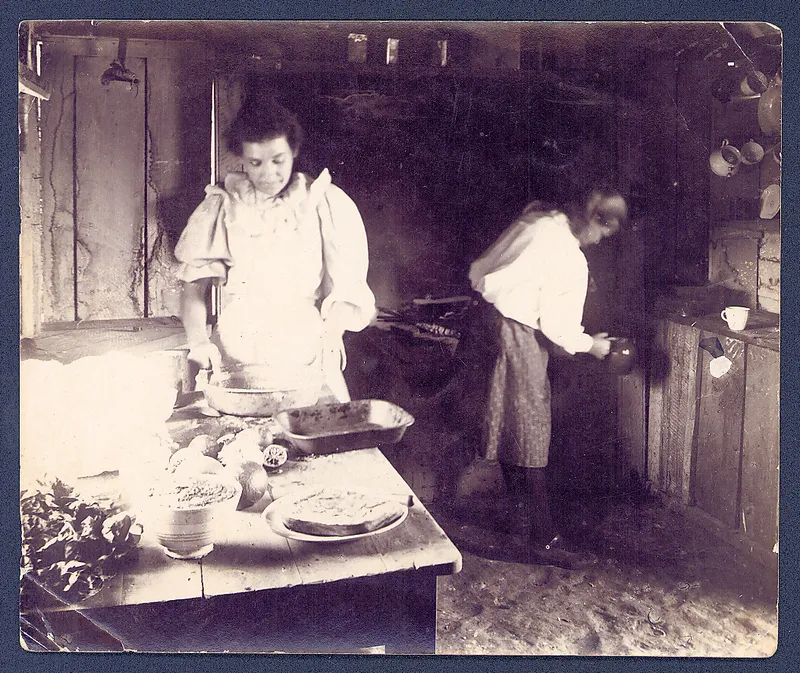
Despite its socialist roots and revolutionary ambitions, Cosme was a fairly traditional Victorian patriarchal society, in which married women could neither vote nor choose their own work, and no one could make their own money. The colony’s official narrative (presented in colony publications printed by hand on site) was controlled by a small group of men, who purposely hid uncomfortable facts about their community–things like financial mismanagement, spousal abuse and sexual assault.
For Cosme women, gossip represented power and opportunity. It was only by talking amongst themselves as they scrubbed clothes together in the communal laundry or organised social events in the dining hall, that they could form a clearer picture of their world and its dangers, and start to think about how they might improve it.
A very very short history of gossip
The Old English word “godsibb”, first recorded in 1014, refers to a “god sibling” or family intimate, someone who would be present at births, help with the mother’s recovery and then act as a godparent, vouching for the child when needed. The talking that took place between god siblings was understood to be familiar and deep, not the kind of surface-level transactional chat that would happen between more distant friends or mere acquaintances. It was the stuff which embeds friendships and helps to bind people together. By this definition, gossip was female. If the men who were excluded from birthing spaces disliked these intimate conversations (which may well reflect poorly on the men themselves), they outwardly dismissed them as unimportant.
This changed through the centuries, as gossip expanded beyond the intimate conversation of the birthing space to the speculative conversation carried out in drawing rooms and kitchens, in shops and on factory floors. Gossip was underground information about engagements and babies, money and misdeeds. The first volume of the Oxford English Dictionary, published in instalments between 1884 and 1928, defined gossip as “idle talk, trifling or groundless rumour; tittle-tattle”.
By this time, the very word “gossip” was used as a pejorative and its association with women was ironclad despite the fact that men – obviously! – gossiped too. Reputation aside, gossip crossed social boundaries, it covered great physical distances, it was often the main focus of letters, and was shared between friends in a process of meaningful bonding. Gossip became a tool favoured by those on the fringes of power, such as women and people of colour. It gave voice to the unheard and the discounted. In short, gossip proved incredibly useful.
The risky ‘flip side’ of knowledge
At the same time, by its very nature, gossip can be problematic. When you gossip, you speak about someone who is not present and therefore unable to correct or challenge the information you share. Just as you might expose terrible wrongs being committed by them, you might unfairly malign them. Gossip is tainted by uncertainty, which historian Sebastian Jobs calls “the risky ‘flip side’ of knowledge”. We have to treat it with care. Gossip is often information that was not intended to be saved for posterity. It can be emotional and inconsistent, spiteful.
The gossip I encounter, as I trawl libraries and personal collections, is what was recorded in diaries, letters, newspaper and magazine reports, court proceedings, oral history projects and family stories passed down the generations. It offers alternative perspectives on the official, usually male-centric, stories preserved in national archives. It can utterly transform the way you see historical events.
Patricia Meyers Spacks, a specialist in English literature and cultural history, points out that gossip can reveal hidden truths and suggest the emotional and social context of historical events which would not otherwise be accessible to us. How exciting is that? In my work, I compare the differences between the sanctioned narrative of William Lane’s colonies with what the gossip suggests. Diaries and letters from 130 years ago capture the personalities of the people involved in disputed events and their all-too-human concerns.
These little tidbits help me distinguish between what the male leadership shared with the wider world about the colony’s goings on and what the women living in the colonies could see with their own eyes to be true, and chose to gossip about. Exposing those gaps allows me to consider reasons for them, and sometimes to provide a fuller understanding of what took place.
Three years into my thesis, my perspective on gossip (and my own role in it) has softened as I have used it to fill in the outlines of archival stories, adding the light and shade that brings them to life. Now, I bristle when people complain about gossip, because they tend to lump it all into one category. Gossip is as varied as the people who use it.

Eleanor Black
Eleanor Black is an Auckland-based writer and researcher. Her interests include gossip, 19th century settler communities and utopian literature.


