
Changing the times at which we use electricity could save $3bn and have immediate environmental benefits, according to new research – suggesting that building more stuff is not the only path forward.
A surprise bestseller last year, Ezra Klein and Derek Thompson’s book Abundance won converts the world over with its vision of a better life attained through building more stuff. The key to tackling climate change, the cost of living and other crises, Klein and Thompson argued, was to sweep away bureaucratic obstacles, embrace a growth mindset, and construct copious amounts of houses and windfarms.
Closer to home, The Spinoff recently anointed housing minister Chris Bishop the king of “abundance” politicians for his pro-growth reforms. A study published on Monday, however, suggests we should also be pursuing a far less sexy approach: doing more with what we already have.
The study, commissioned by the Energy Efficiency and Conservation Authority, shows that simply by changing the times at which we use electricity, we could avoid $3 billion in spending that would otherwise be needed for new energy generation and network infrastructure. Such infrastructure is often designed to provide extra capacity at peak times. But if we adopted practical, ready-to-implement measures to shift demand away from the peak – battery storage, for instance, or mechanisms that change the times at which dishwashers run – we could avoid those costs.
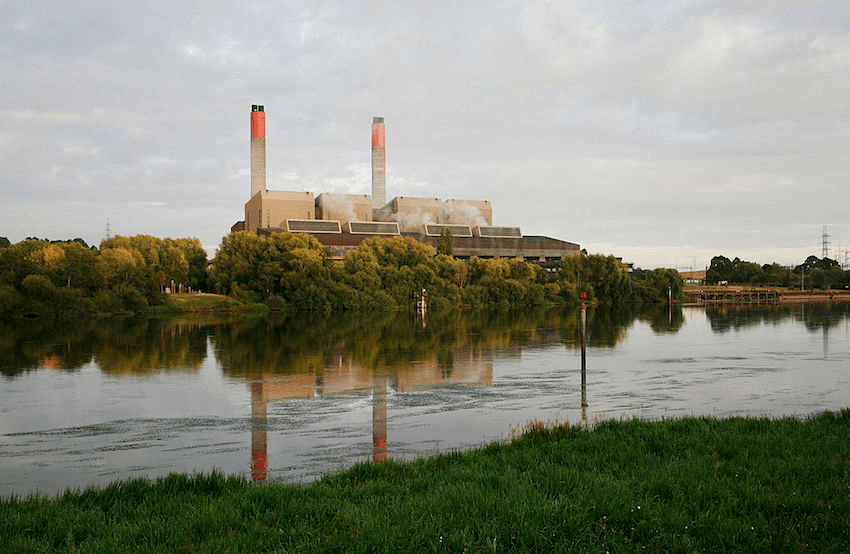
This proposal would have immediate environmental benefits because the energy supplied during peak periods is often the dirtiest, and because it accounts for renewable energy’s intermittency. But it also poses a wider challenge to the abundance agenda.
The book Abundance has proved popular for several reasons: it has a very simple formula, it encapsulates younger generations’ frustrations with the current system, and – crucially – it promises us that a better world can be achieved with essentially no personal sacrifice. A startling flaw in the book’s case, however, is that it never even attempts to prove that this is possible – that, in other words, we can build our way out of things like the climate crisis.
Any building process, after all, starts with digging the raw materials out of the ground, often at substantial environmental cost. The construction phase can likewise be damaging to delicate wetlands and the habitats of endangered species: hence so many projects get knocked back.
Funds for new infrastructure are increasingly under strain, as governments face rising healthcare costs and maintenance bills for existing hospitals and power plants. And then there’s the irony that we generate emissions even when building the infrastructure designed to reduce them.

Concrete production alone comprises around 8% of the world’s carbon pollution. Even if one assumes, somewhat heroically, that the carbon used to produce each kilogram of concrete could rapidly be halved, this gain would be completely wiped out by a doubling of concrete production. (And it’s worth remembering that, every two years, China consumes more cement than the US did in a century.)
Such points could be mobilised to serve bad-faith arguments that we should not, for instance, build more houses because of steel and concrete’s embodied carbon. In reality, we need more homes, hence the welcome upzoning of recent years, itself a prefiguration of the abundance agenda. The wider difficulties inherent in building our way out of climate change should, however, give us pause for thought.
For instance, three-quarters of the world’s energy currently comes from fossil fuels. The recent growth in renewable generation is, admittedly, one of our age’s great success stories. Last year, wind and solar farms generated more electricity than coal plants for the first time – and at a rapidly diminishing cost. But is it really conceivable that we can build so much renewable energy that it rapidly replaces almost all fossil fuels, and keeps up with population growth, and meets increased expectations of affluence, while also restoring nature and reducing emissions at the pace the planet demands?

It would, of course, be wonderful if that were true. And the abundance agenda is – it bears repeating – not entirely wrong. Building more homes in city centres, for instance, enables a future of far fewer work commutes, and thus lower emissions. But many of the other innovations designed to deliver us a sacrifice-free but environmentally sustainable economy, such as greener aviation fuels and carbon capture and storage, have failed to produce anything meaningful, and look utterly insufficient in a world where we need to halve emissions by 2030. EVs, meanwhile, are splendid, but replace perhaps 70% of a petrol-fuelled car’s lifetime emissions, not 100%.
We should, at the very least, be placing far more emphasis on exploring whether we can get more out of what we already have. It’s not just peak electricity demand: we might, for instance, avoid the need for a new $4 billion tunnel through Wellington if we could spread out the morning and evening peaks in traffic, through congestion charging, working from home and staggered workday start times. (Better options for cycling, walking and public transport – which, in fairness, Klein and Thompson advocate – are also essential.) It’s unclear if that plan would work – but it should at least be properly explored.
Some years back, Britain’s energy ministry calculated that if everyone boiled only the water they needed for their cup of tea rather than filling the jug, the country could mothball an entire power plant. Equivalent New Zealand calculations are frustratingly hard to find, but we are surely passing up similar opportunities.
Abundance’s boosters would argue that this alternative approach, and indeed anything that involves living more lightly on the earth, relies on heroic assumptions about the sacrifices individuals are willing to make. But this is not a matter of sweeping lifestyle change, just relatively simple things, like switching the times at which we use electricity. To take another example, smart appliances and the like held electricity demand constant throughout much of our last decade. The potential for further innovation is undoubtedly there.
Think of it this way: surely the only logical approach in life is to establish what more one can extract from a given thing, before one goes out and builds a new one. This does not mean abandoning abundance entirely. At least at the level of vibes, its agenda is useful: we should certainly face the future with as much optimism as possible. But building new things is certainly not the only path forward.