Department stores aren’t dead yet

Department stores have a past, but do they have a future? (Images: Faradays, Smith & Caughey’s in 1910, Auckland Libraries Heritage Collections 1934-071; Ballantynes Department Store 2011 by David Ayling, Canterbury Stories; Milne & Choyce Ltd in the 1890s, Auckland Libraries Heritage Collections 5-2603)
With luxury retailer Faradays coming to Queen Street, what does the past, present and future of these hallowed shopping halls look like?
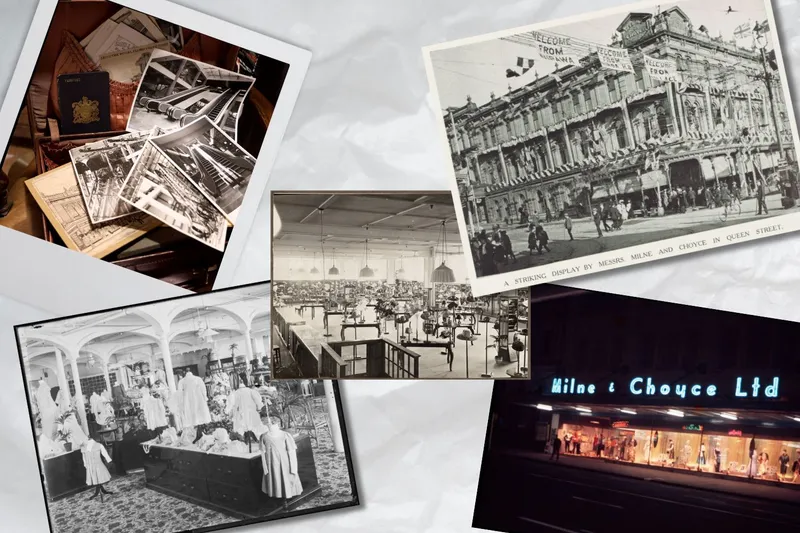
Amidst all the headlines about Auckland’s CBD last week came one with a positive spin: high-end Parnell retailer Faradays would be opening a three-storey “luxury department store” in the heritage-listed Milne & Choyce building at 131 Queen Street. The glamorous vision (with a $30m price tag) includes hospitality, valet parking and a spiral staircase. Brands are yet to be confirmed, but categories will include apparel, homeware, beauty and luxury. The store will cater to a “broader market” than the original Faradays, which stocked very high-end labels. The whole thing is meant to be open by mid-2026 and Wayne Brown is reportedly “thrilled”.
Wait, what’s a Faradays?
A ritzy multi-brand concept store in Auckland. The format rests on having a broad range of categories and brands under one roof, with an interesting fit out. It opened on Parnell’s Faraday Street – named after scientist Michael Faraday – in 2021 on the ground floor of the historic Textile Centre.
That building’s worth a quick sidebar: Built in the 1900s, it housed wool and hemp and, for a “brief time” in the 1980s, members of Centrepoint. Changing hands in 1989, it was transformed into the Textile Centre, before the “collapse of the textile industry” was cause for another reinvention: premium office spaces.
Faradays joined them to considerable fanfare, heralding a “new era of luxury” with the kind of retail that once required a passport and disposable income (it was the first store in the Southern Hemisphere to sell Alaïa).
Interesting! What’s about the Milne & Choyce building on Queen St?
Good question. Built in 1926 by pioneering department store Milne & Choyce, shoppers could buy custom-made apparel, in-house labels and access international trends (Italian fashion was shown to “great excitement” according to New Zealand Fashion Museum). There was a rooftop garden, Queen Street’s first escalator and six elevators. For a period it was “one of the largest and most modern department stores in the country”, but in 1976 the company’s flagship location closed.
Its competitors eventually did too. Karangahape Road lost Rendell’s (1884-2006) and George Court & Sons (1926-1988). Retailing was a family business for the Courts; George’s brother John established his eponymous Queen Street department store (Farmers is in that spot now) while his great grandson Steve Tindall founded a little business known as The Warehouse.
Hmm, a Queen Street department store sounds vaguely familiar. Weren’t we all talking about this recently?
Good memory. Auckland lost Smith & Caughey’s (and its Christmas windows) in June after 145 years. The past five had seen a 40% drop in revenue due, chairman Tony Caughey told the Herald, to a “perfect storm” of contributing factors, including declining foot traffic and increased competition. Around the corner, in the historic Customhouse building, T Galleria also shut. Owner DFS shut down its New Zealand and Australia operations after 30 years, citing “challenging economic conditions”.
Another, Takapuna’s The Department Store, closed in 2020. Launched a decade earlier, it was declared the world’s best new retail destination by Monocle magazine, reinvigorating the retail format by combining designer fashion, a cafe and salon in a stylish, modern fit out. It was worth crossing the Harbour Bridge for. “Most of our customers were coming from the cityside,” co-founder Karen Walker told The Spinoff about the closure. “Ten years ago that was the concept of a destination store and now it’s not. Ten years is a long time, especially when you’re dealing with fast, powerful tech. Now, the idea of a destination store [involves] browsing with your thumbs. That’s how people shop. Retail now is about small local stores and web.”
Oh dear. What about the rest of the country?
A similar story. Queenstown lost its luxury department store when DFS departed this year, taking the Resort Galleria concept store, which opened in 2022, with it.
Wellington’s Kirkcaldie & Stains closed in 2016 (“financial pressures”) after 150 years. It was replaced by David Jones which, after a rumoured $20m refurbishment, left in 2022 (declining foot traffic). Cuba Street department store James Smiths, which traded for 126 years and once stocked a three-seater aeroplane, closed in 1993 (“falling profits and changing shopping habits“).
Palmerston North had Watchorns Ltd, Garners and Watson Bros, among its retailers.
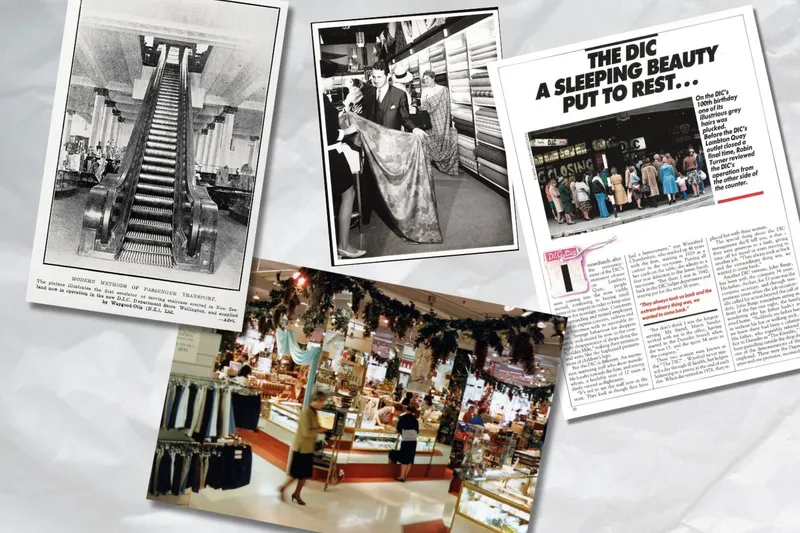
Department store chain D.I.C. was founded by Bendix Hallenstein (yes, that one) in 1884 in Dunedin. It had 16 stores at its peak, absorbing other department stores like Christchurch’s Beath’s. However, changing consumer habits (shopping malls) contributed to its sale to competitor Arthur Barnett in the late 1980s, which was in turn sold to H&J Smith in 2015. That closed in 2022 after 123 years.
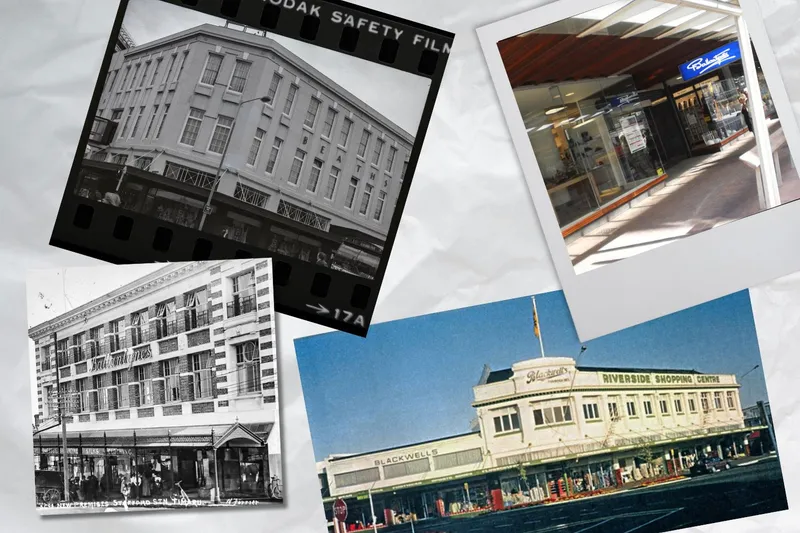
Bucking the trend is Canterbury; Kaiapoi’s Blackwell’s Department Store, established in 1871, is still trading. So is Ballantyne’s, though the retailer announced last week it would be cutting staff due to rising costs and “evolving consumer behaviour”.
I’ll be honest, I didn’t realise they were so popular…
Oh, yes. Many had tea rooms and other novelties, acting as a third space. Department stores evolved with the times, transforming their made-to-measure services and drapers to ready-to-wear as they benefited from disposable incomes and rising consumerism. Relaxed import restrictions from 1982 meant international labels were more accessible, but it also led to competition; international chains entered the market and shopping malls cropped up offering more choice than ever.
Department stores held onto the glamour and exclusivity that fueled aspirational shopping through the 1990s and early 2000s. Overseas, retailers like New York’s Bergdorf Goodman and Barney’s retained cachet as designer awareness increased (some even stocked New Zealand brands like Karen Walker).
Competition increased when online shopping took off and changed everything. Evolving consumer behaviour was exacerbated by the conditions of the pandemic, as well as rising living costs. Who or what’s to blame for retail’s woes has been analysed ever since. While some fingers have been pointed at Gen Z’s shopping, they’re not the only demographic to change its habits.
Oh boy. Is there hope?
There is! While US department stores had lost market share, international behemoths Nordstrom, Macy’s, Bloomingdale’s have all reported growth this year after reducing their store footprints, adjusting assortments and improving store experience. David Jones is investing AU$65m in transforming its tech capabilities and gross profits are up at Aussie retailer The Iconic, which has announced a focus on New Zealand designers.
You’d be right to assume overwhelmed shoppers might be looking for a curated point of view and offline interaction. At a purely problem-solving level, there’s validity in well-executed multi-brand stores; rather than look through every white shirt on the internet, you could go in the store and try several on.
While New Zealand’s per-person volume retail sales has been falling for years and a growing number of shoppers choose low-cost offshore websites, the tide may be turning and local retailers are “confident”. Though spending has been up and down, Auckland’s downtown saw a significant bump with the return of New Zealand Fashion Week. At the upper end of the market, experts point to increasing local demand for designer fashion, noting in-store experience is “critically important” to luxury retailing.
Foot traffic has increased on some blocks of lower Queen Street, where Faradays will join brands like Gucci and Prada. Cartier is coming too. (Many more can be found at Westfield Newmarket, where David Jones is an anchor tenant).
So who’s left standing?
Some high-end department stores, like Ballantyne’s, are holding on, as is Farmers. Luxury shoppers are well catered too, with flagship stores and multi-brand boutiques like Edit, Muse and Scotties. In the CBD, many apparel retailers have migrated downtown to Commercial Bay, Britomart and the lower blocks of Queen Street. They’ll soon be joined by three floors of Faradays.

Emma Gleason
Emma Gleason is a staff writer at The Spinoff and an award-winning fashion journalist. But it’s not just clothes that interest her, you’ll find her exploring tasty cheese, influenza outbreaks and more important things right here. She has experience with some of the country’s leading media outlets as well as the toaster in our kitchen.


