This week shattered any illusions New Zealand is a faraway haven

Pete Hegseth, slayer of freeriders. Photo by Ezra Acayan/Getty Images
The world keeps shaking our windows.
Volatile, volatile, volatile. It’s a word Christopher Luxon has deployed dozens of times in diagnosing the condition of the world since his state of the nation setpiece in January. “Our global rules-based system is rupturing,” he observed then, a day before Canadian prime minister Mark Carney’s big rupture speech at Davos, if anyone’s counting.
The same theme elbowed its way into Luxon’s mid-May pre-budget address, titled “Securing New Zealand’s future in a more volatile world”. In a speech ostensibly about the state of the economy, he traversed inflection points in world history, and said we’re in the middle of another right now. He noted surging American self-interest and rising Chinese assertiveness.
Did he mention that the world was volatile? Yes, he did, nine times over.
Much of this is an exercise in political hedging – obviating blowback by pointing out all the things New Zealand can do little or nothing about. But he’s not wrong, either. The immediate pain is the price of filling a tank. Zoom out a bit and the overarching geopolitical challenge New Zealand confronts is navigating competing pressures from Chinese and US behemoths.
One is led by an increasingly authoritarian president who changed the constitution to remove time limits on his rule, the other by a man whose tariff showers, vengeful tempers and appetite for posting (861 posts on TruthSocial last month) leaves the world in a state of permanent dread. One shows disdain for democracy, the other runs communist China. And they happen to be our two biggest trading partners.
This week’s news sharpened that focus. Over the weekend in Singapore, Pete Hegseth, who self-identifies as the secretary of war, delivered a speech warning of an expansionist China, reiterating the Trump administration’s determination to end the days of US “protectorates”, castigating “those who believe they can continue to free ride on the generosity of the American taxpayer”, demanding other nations lift defence spending to the “global standard of 3.5%”, and praising a handful of Asian countries that were increasing their spend: South Korea, Japan, the Philippines, Thailand, Malaysia, Indonesia and Australia.
Missing in the Asia-Pacific roll call was Five Eyes partner New Zealand, despite having just committed to boosting its defence budget to 2% of GDP. That prompted journalist Anna Fifield, who writes the Between Giants newsletter and the World Bulletin for The Spinoff, to leap into the queue of questioners and ask: “I couldn’t help but notice that New Zealand was missing from your list of countries. There, they have recently outlined a plan to get from 1% to 2% of GDP, a long way from 3.5%. Would you consider New Zealand to be a free rider?”
“If I’m being honest, 2% is not enough,” said Hegseth, “and so 2% is freeloading”. He added, presumably to a breath of relief from New Zealand’s new defence minister, Chris Penk, who was seated just a few metres away, “But I don’t have anything against New Zealand. I want partners to step up. I didn’t intentionally leave it off my list. I look forward to working with the new defence minister there and enhancing those capabilities”.
Penk was soon in the news again, after telling a Bloomberg interviewer that there might just be an “interesting conversation” to be had in New Zealand about nuclear powered vessels, what with Australia having some nuclear-propelled submarines on order and all. It would be tempting to imagine that was a deliberate effort to change the subject, were it not for the fact he recorded that interview a couple of hours before the freeloader moment. In any case, it went down in the Beehive like a turd in a punchbowl.
Penk had put his foot on a third rail of New Zealand politics. It is true that propulsion and weapons are markedly different categories. A 1992 government-commissioned study said the risk of nuclear-powered ships was minimal, finding that Auckland hospital equipment pumped twice as much radioactivity into the world as “the entire US nuclear fleet and support facilities”. But then-prime minister Jim Bolger quietly shelved the doorstopper report; he’d long before determined that nuclear-free New Zealand had become a non-negotiable part of a burgeoning national identity.
(Don McKinnon had resigned as National’s defence spokesperson when its caucus voted to get in line on Labour’s nuclear-free policy. He told me last year in an interview for Juggernaut that, on reflection, National’s U-turn probably helped them too much, delivering a landslide, super-sized crop of MPs. “We would not have ended up with that tail end of that caucus, who proved to be very difficult,” he said.)
It was a reminder, too, of Aukus Pillar II – a second-tier in the military pact between Australia, the UK and the US. The subject remains live, with ministers of the three countries discussing it in Singapore, even if the question of any New Zealand participation is presently in a holding pattern.
There’s every chance that will rear back into the foreground in the months ahead, testing again the levels of trust between the New Zealand prime minister and a foreign minister he not long ago seethed at for “putting politics ahead of the national interest”.
Hegseth might have left New Zealand off its list, but it is very much on the radar in US posturing against China. Trump’s choice as ambassador to New Zealand, just approved by the Senate, emphasised as a priority “expanding our defence partnership with New Zealand”. Noting the contest for allegiance in the Pacific and pointing to examples of Beijing’s “alarming, even destabilising behaviour” in the region, he said: “Few countries understand the darkening security environment in the Pacific better than New Zealand.”
China is paying attention, too. Yesterday brought the news that four New Zealand parliamentarians had been banned from entering the country by way of penalty for visiting Taiwan last month. Politicians from other countries have faced similar bans before, but it appears to be new as far as we’re concerned.
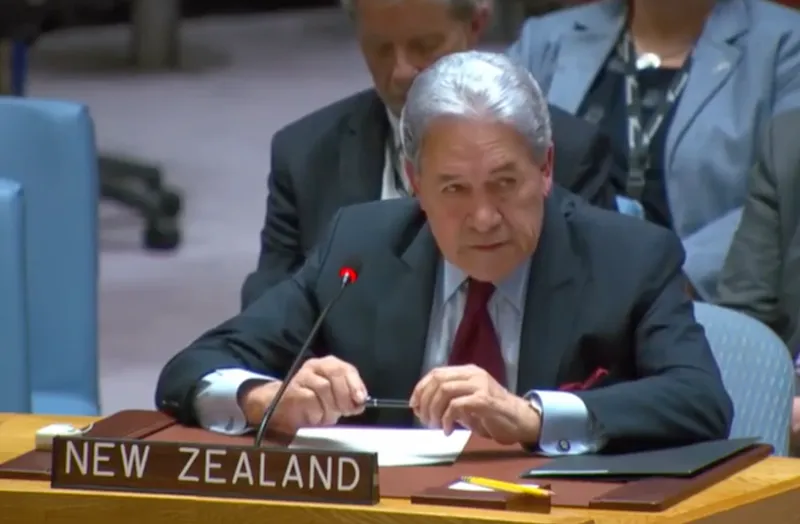
Foreign minister Winston Peters defended the MPs, and asked officials to “express concern” with their Chinese counterparts. Their trips were outside official government business, he said, and therefore consistent with New Zealand’s “One China” policy, an approach which, like that of the US, maintains a “strategic ambiguity” over China and Taiwan. As far as Beijing was concerned, however, the message was that “anyone who tramples on the red line and oversteps on the Taiwan question must pay the price”.
Apart from anything else, it is a reminder of how strongly China views its claim on Taiwan, a place it considers not a neigbouring state but a recalcitrant limb of its own body. There are any number of views on whether Xi Jinping will move to take Taiwan militarily; almost everyone agrees it is more likely now that it was at the start of the decade.
On a more immediate and palpable level in New Zealand, the price of petrol stays high. The economy continues to run downstream from a war – an ongoing war – launched by the US and Israel in Iran and Lebanon that has fanned out across the region.
One large real estate company issued a press release this week headlined “Auckland Housing Market Shrugs Off Middle East Concerns”. Mostly, it’s funny – the image of a housing market looking the Strait of Hormuz up and down and swaggering insouciantly on – but at the same time it betrays a truth about our economic susceptibility, even when we’re selling houses to one another.
The glimmer of good news trumpeted by Nicola Willis in her budget last week – a return to surplus by 2028-29 – depends entirely on Treasury predictions of an average 2.7% annual growth across the next four years. That number, in turn, is firmly hitched to the wagon of restored shipping in the Persian Gulf, a forecast that already looks, some reckon, outdated and fanciful.
“The world is unsettled,” said Luxon in that speech in May. “The order we depended on is under real pressure. And there are forces in global politics that none of us can fully control.” This week made those words bold, then went back and underlined them. It will not be the last week of its kind before November’s election.

Toby Manhire
Toby Manhire is editor-at-large at The Spinoff. He loves to cast a pod, whether it's Gone By Lunchtime, At Large or Juggernaut. He is a former editor of The Spinoff and has worked as a journalist in NZ and the UK since the last millennium.


