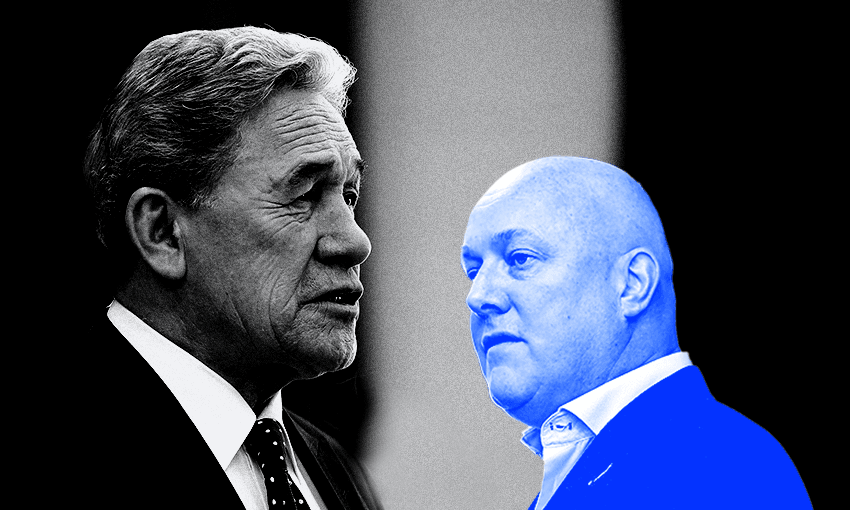



When a prime minister is accusing his foreign minister of ‘putting politics ahead of the national interest’, it’s way beyond a squabble.
By the end of last week, it looked like the conflagration within the governing coalition was over.
Winston Peters had waded into the febrile episode that saw Christopher Luxon call a confidence vote in Christopher Luxon, castigating an “ego trip” that just invited further caucus dissent and instability. Luxon and his deputy National leader, Nicola Willis, struck back, telling voters that a vote for Peters could mean a vote for Labour. Peters, in turn, scrambled to give perhaps his most cast-iron yet undertaking on the matter. And the flames, it seemed, had burned out.
Come Thursday morning, however, a new and more profound inferno roared up, again stemming from a Thomas Coughlan scoop. There had been “crisis talks” in the Beehive. Peters had been given a dressing down by the prime minister after an astonishing official information release to the Herald political editor. That release included largely unredacted messages dating from early March, just after the US-Israeli strikes on Iran.
The documents painted a picture of a prime minister looking to shift the New Zealand position on the war from one of acknowledgment to one of support, in keeping with the lines from the leaders of Canada and Australia.
‘Politics ahead of the national interest’
In the messages released to the Herald, an adviser in Peters’ office stressed that the foreign affairs minister opposed any “move towards explicit support, like Australia/Canada have expressed”, adding: “He sees value, from a foreign policy perspective, in walking the careful line we established yesterday via the written statement and in his stand-up – which neither condemns nor gives explicit support to the US action.”
Peters’ office this week told the Herald he had regarded Luxon’s “suggestion to be an imprudent course of action, which would run counter to New Zealand’s national interests”, adding: “Experience matters in foreign policy.”
Coming so soon after last week’s squabble, the release appeared to mark not just a resumption but a major escalation in coalition hostilities. The damage was not simply in the revelation of differences of opinion between these two coalition leaders, but also the manner by which it was revealed.
The prime minister’s office said it had been blindsided by the release of the messages – messages which, of course, shone a light back on one of the prime minister’s worst days, when he stumbled through attempts to articulate the New Zealand position on the war and attempted to suggest that there was no real difference between New Zealand’s statement and Australia’s.
There has from time to time been a tension between the twin roles of foreign minister Winston Peters, bestriding the globe statesmanlike, and New Zealand First leader Winston Peter, kicking up an undiplomatic storm at home. Yesterday, Luxon effectively said, the streams had indefensibly crossed.
The decision to release the emails, which “mischaracterised” the prime minister’s stance, “clearly put politics ahead of the national interest”, said a spokesperson. “The PM would expect Mr Peters to show better judgement after more than 40 years in politics.”
According to Luxon’s office, it was a mischaracterisation because “the PM’s job [is] to always challenge the advice he receives and, in this case, he sought to test New Zealand’s position against that of Canada and Australia.”
Upon learning that the messages were soon to be published, Luxon expressed his disappointment in a meeting with his coalition partner on Wednesday night. “Mr Peters acknowledged he made a mistake,” said a spokesperson.
In the hours that followed Peters was reported as saying he had been mistaken in saying it was a mistake, though by the afternoon he seemed to suggest it was a mistake to say he was mistaken to say it was a mistake, when he told parliament: “We have a habit, when we make a mistake: we admit it. We don’t think that we’re perfect … In this case I made an assumption and I should have had it checked out and that’s the reason we’re updating our systems.”
Willis latched on to the apparent “confusion”, telling reporters: “What is to say he won’t have a bout of similar confusion in the coalition talks? … He has said that he won’t support a Labour-Green-Te-Pāti-Māori government, but what if he gets confused?”
‘A total failure of communication’
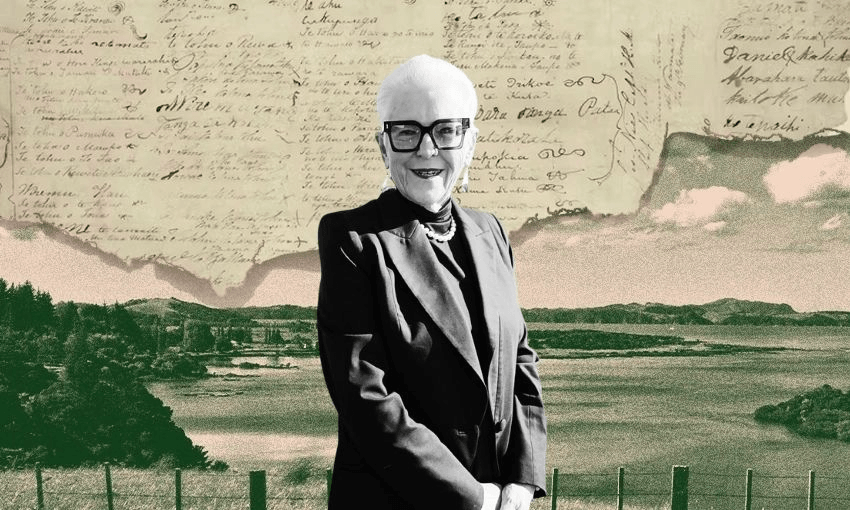
“The charitable explanation is that it was an honest mistake to have put [the messages] out,” said Helen Clark, a former Labour prime minister who worked with Winston Peters when he was foreign minister for three years from 2005. The alternative was “a very calculated, deliberate act”.
The disagreement laid bare in the emails released “provides much more clarity about why Luxon got into such trouble trying to explain the position”, Clark told the Spinoff. They suggested that the foreign minister understood that “to have explicitly supported the US action would have been a disgraceful position … Peters obviously appreciated it would become a quagmire.”
Of her own experience working with Peters as a foreign minister, she said: “He did the job diligently. I had no difficulty. But we did communicate. There were no surprises. And that is clearly not the way this government operates.”

The very existence of the messages, the fact that this conversation had been put in writing, pointed to a problem, she added. “If they were constantly communicating this would never happen – it’s a total failure of communication at the levels needed.”
How would she have dealt with such a situation, had there been a difference of opinion from her foreign minister on something so important? “I would have sent Heather Simpson down the staircase,” said Clark, in reference to her long-serving chief of staff. “That’s how you deal with it.”
The episode was “dumb on so many levels”, said Clark. A consistent critic of the current government, she suspected the very survival of the coalition was being tested. In scrapping over the same group of voters, National and NZ First were “feasting on each other”, she said. “What are they going to do? Keep putting sticking plasters over this relationship?” The question had become whether the coalition “can stagger through to November 7”.
An unfamiliar transparency
It is difficult to imagine the messages having been released in such a form, if at all, had the request had been referred to the prime minister’s office.
One of the grounds for withholding release under the Official Information Act is to protect the free and frank expression of opinions by or between ministers and officials, or to protect exchanges involving advice – it was a surprise not to see those invoked, said Steven Price, a media lawyer and official information expert.
Price, who stressed that he had not seen the request or the documents themselves, said it was “possible the ‘prejudice to international relations’ ground might apply, too. I would also have expected consultation before release in something as sensitive as this.”
He added, by email: “The grounds protecting opinions and advice are subject to a public interest override, but that’s rarely paid more than lip service (that is, some OIA responses will say they’ve thought about whether the public interest in the information outweighs the reasons for withholding it, but they will almost invariably conclude that it doesn’t).”
On the public interest question, Clark said it clearly met the bar. “Aren’t we entitled to know how fractious the coalition is on foreign policy, on the major issues of the day?”
‘Extremely irritated’
Peters’ decision to release the messages was “slightly surprising”, said Professor Robert Patman, an international relations expert at the University of Otago, given that Peters has previously presented as the keener of the two men to keep New Zealand aligned with the US.
A year ago, Peters criticised efforts by Luxon to rally together with other world leaders in the face of Trump’s tariffs, and called the “trade war” language used by the prime minister “hysterical” and “short-sighted”.
The decision to release the emails this week, however, “seems to be trying to depict Mr Luxon as more pro-Trump than Mr Peters.”
It seemed that Peters was “anxious to show that he was the originator of the ‘neither support nor explicitly criticise’ position,” Patman told The Spinoff. “Mr Luxon is likely to be extremely irritated because he has seen himself as less supportive of the Trump administration than Mr Peters.”

Patman’s own view was that “both Mr Luxon and Mr Peters were wrong. I think our position lacked moral and legal clarity, and that hasn’t helped us defend our national interests in an unfolding but predictably dire situation.”
While it was concerning to see a prime minister accuse his foreign minister of putting party politics over the national interest, it is “no secret there’s been tensions within this coalition over foreign policy for some time”, said Patman. It was disappointing, he said, to see stances in world affairs framed as a subplot in national political scraps.
“Foreign policy matters in this country, and too often it’s treated as a sort of disposable item in domestic politics, which is totally wrong. It’s the face we present to the world. New Zealand’s voice does count. Unfortunately, we haven’t had much voice or clarity on major international issues. And, boy, has it been noticed.”
The wider reality, said Patman, is a domestic-international dichotomy that is melting away, meaning international affairs cannot be pushed to the periphery in an election year.
“Many of the issues we’re confronting don’t respect borders,” he said. “Initially, this conflict involved the United States and Israel against Iran and nobody else.
“Well, the rest of the world is now bearing the consequences, including our own country. And it seems to me that the old-fashioned idea that elections are just about bread-and-butter issues at home? That that doesn’t carry much traction when bread-and-butter issues at home are deeply influenced by an interconnected international environment.”